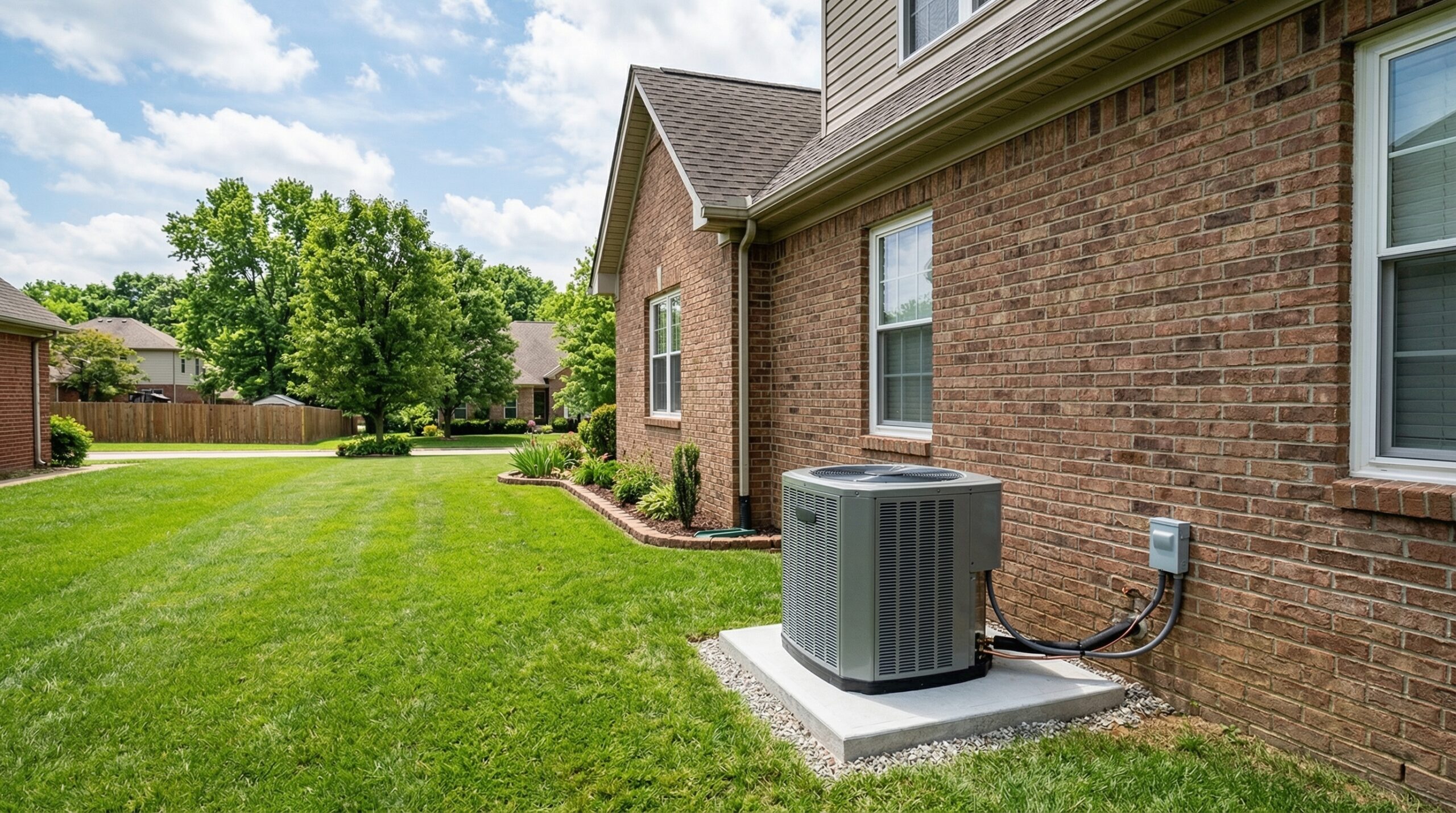
AC replacement cost ranges from $3,500 to $14,000 in 2026 for a central air conditioner, according to our analysis of contractor pricing surveys and manufacturer data. In high-demand cooling markets like Las Vegas, NV, costs trend toward the upper end of this range due to larger system sizes and premium summer labor. In Midwest metros like St. Louis, MO, labor rates track closer to the national average, bringing AC-only replacements into the $4,800 to $7,800 range. This covers removing an existing condenser, evaporator coil, and refrigerant lines and installing new equipment, including all labor and disposal. That range is wide because your actual price depends on your home’s square footage, the efficiency rating you choose, your region, and whether your ductwork needs attention. For homes adding central air for the first time, see our guide on central air installation cost because the new-vs-replacement breakdown changes significantly without existing ductwork. Most third-party pricing surveys cite a single 2026 national average around $5,992, but that flat figure obscures the swing from a $3,500 budget swap in a 1,200 sq ft home to a $14,000 high-SEER install in 3,000+ sq ft homes. See the size table below for the actual range that applies to your home.
If you’ve searched for “air conditioner replacement cost” and found nothing but vague national averages, you’re not alone. Most sites quote a single number without showing how they got there. This page breaks down central air replacement cost by home size, SEER rating, brand tier, and region, with full tables so you can find the range that matches your situation.
These are planning estimates based on 2026 market data, not contractor quotes. In reviewing pricing data from multiple contractor surveys, we’ve found that actual costs vary based on local labor rates, equipment recommendations, and your home’s setup. For a personalized range, try our HVAC replacement cost estimator. Northeast homeowners can also compare state-level pricing in the New Jersey HVAC replacement cost guide and New Hampshire HVAC replacement cost guide.
TL;DR: A central AC replacement runs $3,500–$14,000 in 2026. A mid-range system for an average-sized home (1,500–2,000 sq ft) costs around $6,600. Your home size and efficiency rating are the two biggest cost drivers. The U.S. Department of Energy sets split-system minimums at 13.4 SEER2 in the North, and 14.3 SEER2 below 45,000 Btu/h or 13.8 SEER2 at or above 45,000 Btu/h in the Southeast and Southwest. The Southwest also has EER2 requirements. In hot-humid markets like Houston, TX, where Climate Zone 2A drives 8 to 10 months of active cooling, larger systems and higher-efficiency ratings pay back faster. See our Houston AC replacement cost guide or the Memphis AC replacement cost guide for local pricing, or the Germantown, TN AC replacement cost guide for this affluent Memphis suburb where larger homes and premium equipment push costs to $5,200 to $14,500. Get your personalized estimate here.
In hot-humid markets like San Antonio, TX, where AC runs 8 to 9 months per year, a high-efficiency central AC replacement is one of the highest-impact home upgrades you can make. See our San Antonio HVAC replacement cost guide for local pricing, CPS Energy rebates, and permit requirements. Homeowners in the Austin suburb of Round Rock face the same Zone 2A cooling demands with PEC rebates up to $350.
Virginia’s coastal markets, particularly Virginia Beach and the Hampton Roads region, face above-average AC replacement costs tied to salt air corrosion and high seasonal cooling demand. Northern Virginia homeowners near DC pay 10 to 15 percent more than the state average due to metro labor rates. See the Virginia AC replacement cost guide for regional pricing and Dominion Energy rebate details.
How Much Does AC Replacement Cost by Home Size?
A new AC unit cost ranges from $3,000 for a small home under 1,000 sq ft to $14,000 for homes over 3,000 sq ft. Based on ACCA Manual J sizing guidelines, most homes need between 1.5 and 5 tons of cooling capacity, and each additional ton adds roughly $1,000–$1,500 to the project. Here’s what to expect across six common home size brackets.
| Home Size (sq ft) | Low Estimate | Mid Estimate | High Estimate |
|---|---|---|---|
| Under 1,000 | $3,000 | $5,100 | $8,500 |
| 1,000–1,500 | $3,500 | $6,000 | $10,000 |
| 1,500–2,000 | $3,900 | $6,600 | $11,000 |
| 2,000–2,500 | $4,200 | $7,200 | $12,000 |
| 2,500–3,000 | $4,600 | $7,800 | $13,000 |
| Over 3,000 | $4,900 | $8,400 | $14,000 |
The “low” column assumes a budget-tier unit with standard efficiency. The “high” column reflects a premium brand with high-efficiency equipment. Most homeowners land somewhere in the middle.
Why does square footage matter so much? AC systems are sized in tons (1 ton = 12,000 BTU/hour of cooling). A 1,200 sq ft home typically needs a 2-ton system, while a 2,500 sq ft home might need 4 tons. Bigger units cost more to buy and take longer to install. An undersized unit runs constantly and fails early. An oversized one short-cycles, wastes energy, and leaves your home humid. See our 2-ton vs 3-ton AC cost comparison for a detailed breakdown of the price gap between the two most common residential sizes.
Proper AC sizing depends on far more than square footage alone. The ACCA Manual J load calculation is the industry-standard method contractors use to determine the correct tonnage for a specific home. It accounts for insulation R-values, window area and orientation, climate zone, ceiling height, number of occupants, and duct losses. According to AHRI (Air-Conditioning, Heating, and Refrigeration Institute), which certifies HVAC equipment performance ratings, over 90 million central air conditioning units are currently installed in U.S. homes. An improperly sized system (whether too large or too small) reduces equipment lifespan, increases energy consumption, and creates comfort problems. Oversized units short-cycle, running in brief bursts that fail to dehumidify indoor air. Undersized units run continuously during peak heat, straining the compressor. If you’re unsure what tonnage your home needs, check your existing unit’s nameplate or ask your contractor to run a full Manual J calculation before quoting a replacement. For a broader view of full-system costs including heating, see our HVAC replacement cost guide.
How Does SEER Rating Affect the Cost to Replace an AC Unit?
Upgrading from a standard 14 SEER to a premium 21+ SEER system adds roughly 30% to your total project cost. Under U.S. Department of Energy standards effective January 1, 2023, split-system units in the North need at least 13.4 SEER2. In the Southeast and Southwest, the minimum is 14.3 SEER2 for units below 45,000 Btu/h and 13.8 SEER2 for units at or above 45,000 Btu/h. Southwest installations also must meet EER2 requirements. Here’s how efficiency tiers affect your total cost. For a detailed breakdown by SEER2 tier, see AC replacement cost by SEER rating.
| Efficiency Tier | SEER Range | Cost Multiplier | Example (1,500–2,000 sq ft home) |
|---|---|---|---|
| Standard | 14–16 SEER | 1.00x (baseline) | $3,900–$11,000 |
| High-Efficiency | 17–20 SEER | 1.15x | $4,500–$12,700 |
| Premium | 21+ SEER | 1.30x | $5,100–$14,300 |
For most homeowners, a 16 SEER unit hits the sweet spot between upfront cost and long-term savings. Moving to 20+ SEER makes more sense in hot climates (Southeast, Southwest) where your AC runs 6–8 months per year. Columbia, SC and Atlanta, GA homeowners, for example, run cooling from May through October. In milder climates, the payback period on a premium unit can stretch past 10 years.
The cost table uses legacy SEER tiers for planning comparisons. SEER and SEER2 use different test procedures, so compare the exact matched system’s certified SEER2 and EER2 ratings when checking regional compliance. EPA retired the ENERGY STAR specification for central air conditioners on February 1, 2026. ENERGY STAR certification for air-source heat pumps continues under a separate current specification. For a new central AC, compare its EnergyGuide label and certified efficiency ratings rather than treating an old ENERGY STAR threshold as current eligibility. Upgrading from a 10 SEER unit to a 16 SEER model can reduce cooling energy use by approximately 38% under the same rating method, but actual savings depend on climate, installation, and usage. For a deeper look at how efficiency changes your total project cost, see our HVAC cost by efficiency rating breakdown.
What Factors Drive AC Replacement Cost?
Beyond home size and efficiency, several other factors can shift your final cost of AC replacement by 30% or more. In reviewing contractor pricing across multiple regions, we’ve found that brand selection, labor rates, and ductwork condition account for the widest price swings. Here’s what to watch for.
- Tonnage and home size: equipment price alone varies $2,000–$4,000 between a 1.5-ton and 5-ton system
- Brand tier: premium brands like Trane and Lennox cost roughly 20% more than mid-range brands like Carrier and Rheem. For a direct Trane vs Lennox price comparison, see our Trane or Lennox cost guide. Shopping Lennox specifically? See Lennox AC unit cost for condenser-only and installed pricing by model and tonnage. Carrier sits a tier below Lennox on price; see Carrier AC unit cost for the current 2026 model lineup and installed prices by tonnage.
- Labor and regional pricing: Western and Northeastern states pay 15–25% above the national average
- Ductwork condition: repairs or replacement can add $500–$5,000 to the project total
- Refrigerant type: R-22 systems require costly recycled refrigerant or full replacement
- Permitting and code requirements: these vary by municipality, adding $100–$500 in some areas
How Does Tonnage Affect AC Replacement Price?
Equipment costs jump $2,000 to $4,000 between a 1.5-ton unit for a small condo and a 5-ton system for a large home. That gap covers more than just the condenser itself. Labor also scales up because a bigger unit is heavier to position, holds more refrigerant charge, and requires larger electrical connections and a dedicated circuit breaker with higher amperage. A 1.5-ton condenser weighs roughly 100 pounds, while a 5-ton unit can exceed 250 pounds, often requiring a two-person crew and additional rigging time. Contractors also spend more time brazing larger refrigerant lines and pressure-testing the system before commissioning.
How Much More Do Premium AC Brands Cost?
Premium AC brands cost roughly 20% more than mid-range options, and budget brands run about 10% less. The price gap reflects differences in compressor technology, noise ratings, and warranty coverage. A budget-tier Goodman unit typically ships with a single-stage compressor and a 10-year parts warranty, while a premium Trane or Lennox system often includes a two-stage or variable-speed compressor, sound ratings below 72 decibels, and extended labor warranty options through authorized dealers.
| Brand Tier | Examples | Cost Multiplier |
|---|---|---|
| Budget | Goodman, Amana, Payne | 0.90x |
| Mid-Range | Carrier, Rheem, York | 1.00x (baseline) |
| Premium | Trane, Lennox, American Standard | 1.20x |
A premium brand doesn’t automatically mean a better system for your home. A well-installed mid-range unit will outperform a poorly-installed premium one. Focus on finding a reputable installer first, then discuss brand options with them. If you are debating compressor types, our variable speed vs single speed AC cost guide walks through the payback math by climate zone.
How Do Labor Rates and Location Change AC Prices?
Regional labor rates create the widest price swings in AC replacement projects, adding 15% to 25% above the national average in Western and Northeastern states. Where you live affects permitting costs, code requirements, and local contractor competition. In Germantown, TN, an affluent Shelby County suburb, AC replacement costs run $5,200 to $11,500, with MLGW customers eligible for up to $400 in TVA EnergyRight rebates.
| Region | Adjustment | Mid Estimate (1,500–2,000 sq ft) |
|---|---|---|
| Southeast / Midwest | Baseline | $6,600 |
| Southwest | +5% | $6,900 |
| Northeast | +15% | $7,600 |
| West | +25% | $8,300 |
Regional AC replacement cost differences stem primarily from labor rate variation across the country. According to the Bureau of Labor Statistics (BLS) Occupational Employment and Wage Statistics, the median hourly wage for HVAC mechanics and installers (SOC 49-9021) varies from roughly $22/hour in lower-cost Southeastern states to over $35/hour in California and the Northeast. That $13/hour gap translates directly into the 15–25% regional price differences shown in the table above, since a typical AC replacement requires 8–14 hours of labor. Western states also tend to have stricter permitting requirements, seismic bracing codes, and higher material transport costs. In the Northeast, older homes with smaller mechanical closets and complex ductwork layouts add installation time. These factors compound the labor rate gap, which is why a homeowner in San Francisco or Boston should expect to pay $1,200–$1,700 more than someone in Atlanta, Oklahoma City, OK, or Indianapolis for the same equipment. Our 2026 HVAC Replacement Cost Study measured the same effect across 62 Census-defined metropolitan statistical areas, where regional medians are Northeast $11,175, West $10,500, Midwest $10,000, and South $9,613.
Can Ductwork Add to AC Replacement Cost?
Yes, ductwork repairs or replacement can add $500 to $5,000 or more to an AC replacement project. If your existing ducts are in good shape, the installer simply connects your new unit to the current system at no extra charge. If the ducts are leaking, damaged, or undersized for the new equipment, you will need repairs or a full duct replacement before the new AC can run at its rated efficiency.
| Ductwork Condition | Additional Cost |
|---|---|
| Good condition (no work needed) | $0 |
| Minor repairs (sealing, insulation) | $500–$1,500 |
| Full replacement | $2,000–$5,000 |
Ductwork is the hidden cost that catches homeowners off guard. If your home is older than 20 years and you’ve never had the ducts inspected, plan for at least minor repairs. The Department of Energy estimates leaky ducts waste 20–30% of conditioned air, which means your new high-efficiency AC won’t perform as advertised. If your system is struggling but still runs, check whether a failed AC capacitor replacement ($150–$400) is the cause before committing to a full replacement.
If you’re already replacing the AC, it might make sense to look at replacing your AC and furnace at the same time. Bundling the work can save on labor and ensures both components are matched for efficiency. For furnace-only pricing, see our furnace replacement cost guide.
Is Central AC Worth the Cost Compared to Window Units?
Central AC replacement runs $3,500–$14,000 installed, while window units cost just $150–$700 per unit with no installation labor. According to ENERGY STAR, central systems deliver 20–40% better energy efficiency than window units when cooling an entire home. Everything on this page covers central AC, a split system with an outdoor condenser and indoor air handler connected by refrigerant lines and ductwork.
Window units make sense for single rooms, rentals, or homes without ductwork. But they can’t match central AC for whole-home comfort, noise levels, or efficiency. If you’re cooling more than two rooms, central AC almost always wins on cost-per-room over a 10-year period. For a detailed breakdown of upfront, operating, and total ownership costs, see our window AC vs central air cost comparison.
If you’re exploring alternatives to central AC, a ductless mini-split might be worth considering, especially for additions, converted garages, or homes without duct access. See our mini-split vs. central AC cost comparison for a side-by-side breakdown. You might also want to compare heat pump vs. AC costs, since modern heat pumps can both heat and cool your home. For a head-to-head breakdown specifically against central air, see our heat pump vs central air cost guide. For heat pump pricing specifically, see our heat pump replacement cost guide.
When Should You Replace Your AC?
Most central AC systems last 15 to 20 years with proper maintenance, according to the Department of Energy. But age alone doesn’t decide whether it’s time to replace. In our experience analyzing homeowner situations, repair frequency and refrigerant type matter just as much as the unit’s birthday.
- Your system is 10 to 15+ years old and needs frequent repairs. If a single repair costs more than $500 on a system over 10 years old, replacement usually makes more financial sense. Multiply the repair cost by the unit’s age. If the result exceeds $5,000, it’s replacement territory.
- Your energy bills keep climbing. A 15 to 20% increase in cooling costs over two summers without a change in usage signals declining efficiency. The gap between an aging 10 SEER system and a new 16 SEER unit can mean $400 to $800 per year in savings.
- Your system uses R-22 refrigerant. Per EPA regulations, R-22 (Freon) production and import ended in January 2020. Recycled R-22 now costs $100 to $200 per pound, and a full recharge on a leaking system can exceed a year’s payments on a new unit.
- Uneven cooling or humidity problems. Hot spots, rooms that won’t cool, or persistent indoor humidity are signs your system can’t keep up, whether from an undersized unit, failing compressor, or ductwork problems.
The Department of Energy reports that central air conditioners have an expected service life of 15 to 20 years, though systems in coastal or high-humidity climates often degrade faster due to corrosion. Meanwhile, EPA regulations that ended R-22 refrigerant production in January 2020 have created a secondary cost pressure: recycled R-22 now runs $100 to $200 per pound, and a typical residential system holds 6 to 12 pounds. That means a full recharge on a leaking R-22 system can cost $600 to $2,400, money that buys no new equipment and no efficiency improvement. For homeowners with R-22 systems older than 12 years, compare a full replacement using newly manufactured lower-GWP equipment, commonly R-32 or R-454B. Federal rules still allow eligible pre-2025 R-410A inventory to be installed, subject to state and local requirements. A newer refrigerant does not guarantee lower future service costs; compare the actual equipment, efficiency, warranty, and installation quote.
What’s the Best Time of Year to Replace Your AC?
Scheduling your replacement during off-peak months can save 10 to 20% compared to emergency summer installations, based on seasonal pricing patterns from contractor surveys. We’ve found that homeowners who get quotes in February or March consistently pay less than those who wait until their system fails in July. Timing your purchase right gives you both price and scheduling advantages.
Best time to buy: late spring (March through May) or early fall (September through October). HVAC contractors are less busy during these shoulder seasons. They’re more willing to negotiate on price, offer promotions, and schedule work at your convenience. You also won’t be sweating through a week without AC while waiting for the install.
Worst time to buy: mid-summer (June through August). When it’s 95 degrees and your AC dies, you’ll pay whatever it takes to get cool again. Emergency replacements during peak season carry a 10 to 20% premium, and you may wait days for an available installer. Contractors know you have no bargaining power when you’re desperate.
Pro tip: Get quotes in February or March, even if you don’t plan to replace until spring. Having multiple written estimates gives you negotiating power, and you’ll have time to compare options without the pressure of a broken system. Many manufacturers run early-season rebate programs that can knock $200 to $500 off the equipment cost.
How Can You Get a Personalized AC Replacement Estimate?
Ready to see what a replacement AC unit cost would look like for your specific home? Our free calculator builds a personalized estimate based on your home size, preferred efficiency level, region, and ductwork situation. No email address or phone number required. Just answer a few questions and see your numbers.
Use the HVAC Replacement Cost Estimator
The estimator uses the same pricing data behind the tables on this page. You can adjust inputs and compare scenarios (for example, seeing how much you’d save by choosing a 16 SEER over a 20 SEER, or what ductwork repairs would add to the total).
What Questions Do Homeowners Ask About AC Replacement Cost?
Homeowners usually ask whether the quoted price matches their home size, whether a repair is still worth it, and how efficiency choices change the final installed cost. The answers below summarize the most common AC replacement cost questions before you compare contractor bids.
How much does it cost to replace a central AC unit?
$3,500 to $14,000 in 2026 for a full central AC replacement, according to contractor pricing surveys. The average homeowner with a 1,500 to 2,000 sq ft home pays around $6,600 for a mid-range system. Add $500 to $5,000 if ductwork needs repair or replacement.
How much is a new AC unit for a 1,500 sq ft house?
$3,500 to $10,000 for a full AC replacement including installation, according to our 2026 pricing analysis. A standard-efficiency, mid-range brand lands around $6,000. Upgrading to high-efficiency (17 to 20 SEER) adds roughly 15%, bringing the mid-range to about $6,900.
How much does an air conditioner cost for a 2,000 sq ft home?
$4,200 to $12,000, according to our cost model. A 2,000 sq ft home typically needs a 3 to 3.5 ton system. The mid-range estimate is $7,200 for standard efficiency. In higher-cost regions like the Northeast or West Coast, add 15 to 25% per BLS labor rate data. In Denver, CO, altitude factors add another 5 to 10% due to equipment oversizing requirements; see our Denver AC replacement cost guide for Mile High pricing specifics. California is among the highest-cost AC markets nationally, with Title 24 efficiency minimums and rebates from PG&E, SoCal Edison, and LADWP offsetting some of the upfront cost. See our California AC replacement cost guide for state-specific pricing and rebate details. In cold-climate states, see the New Hampshire HVAC replacement cost guide for NH Saves rebates and Zone 5A/6A heat pump selection.
How much does it cost to replace just the AC compressor?
$1,100 to $4,650 installed when the compressor is out of warranty, or $600 to $2,650 when the part is covered by a manufacturer warranty, according to our 2026 planning ranges. A compressor swap keeps your existing condenser, coil, and refrigerant lines. It makes sense on systems under 8 to 10 years old. If the quote exceeds 50% of a new unit’s cost, price out a full replacement instead. For the full breakdown by system size, warranty status, and the R-410A refrigerant line, see the AC compressor replacement cost guide.
What SEER rating should I get for my AC?
Choose a matched system that meets your region’s SEER2 and EER2 minimums, then compare annual energy use and installation cost. In hot climates with 6 to 8 months of cooling, upgrading to 18 to 20 SEER saves $300 to $600 annually, enough to recoup the 15% cost premium in 5 to 7 years. In milder climates, standard efficiency is more practical.
Is it cheaper to replace AC before it completely fails?
Yes. Planned replacements during off-peak months (spring or fall) cost 10 to 20% less than emergency summer jobs, according to contractor pricing surveys. You’ll also have time to compare multiple quotes and choose preferred equipment instead of accepting whatever’s available.
Should I repair or replace my AC unit?
Use the $5,000 rule: multiply repair cost by unit age. Above $5,000, replacement wins financially. A $700 repair on a 10-year-old system ($7,000) favors replacement, according to HVAC industry guidelines. Also replace if your system uses R-22 refrigerant and needs major work.
How Did We Calculate These AC Replacement Costs?
Every number on this page comes from our cost model, which combines equipment pricing from manufacturer databases, regional labor rate data from the Bureau of Labor Statistics, and contractor surveys. We cross-reference against published data from AHRI equipment certification databases and update quarterly. Virginia homeowners replacing just the AC can compare Roanoke, VA AC replacement costs, where inland mountain pricing runs 5 to 12% below Virginia coastal averages. For a full explanation of our data sources, assumptions, and calculation methodology, see our methodology page.
Disclaimer: These are planning estimates, not contractor quotes. Actual costs vary based on your home’s specific conditions, local labor rates, and the contractor you choose. Always get at least three written quotes before committing to a replacement.
Looking for city-specific AC pricing? The Little Rock, AR AC replacement guide covers local labor rates, Entergy Arkansas programs, and permit requirements for Pulaski County homeowners.
Homeowners in arid western markets face unique AC demands. In Reno, Nevada, hot dry summers with temperatures reaching 90°F and the city’s high elevation affect equipment sizing and efficiency. See our Reno AC and HVAC replacement cost guide for local pricing and NV Energy rebate details.
When choosing a new central AC system, the brand you select has a major impact on both price and long-term value. See our AC replacement cost by brand guide for a full comparison of Carrier, Trane, Lennox, Goodman, Rheem, York, and Daikin with installed cost ranges and warranty details.
Put the numbers in context
What would it cost for your home?
Get a planning range based on your home, system and region. Free, with no email required.
Get my cost estimate