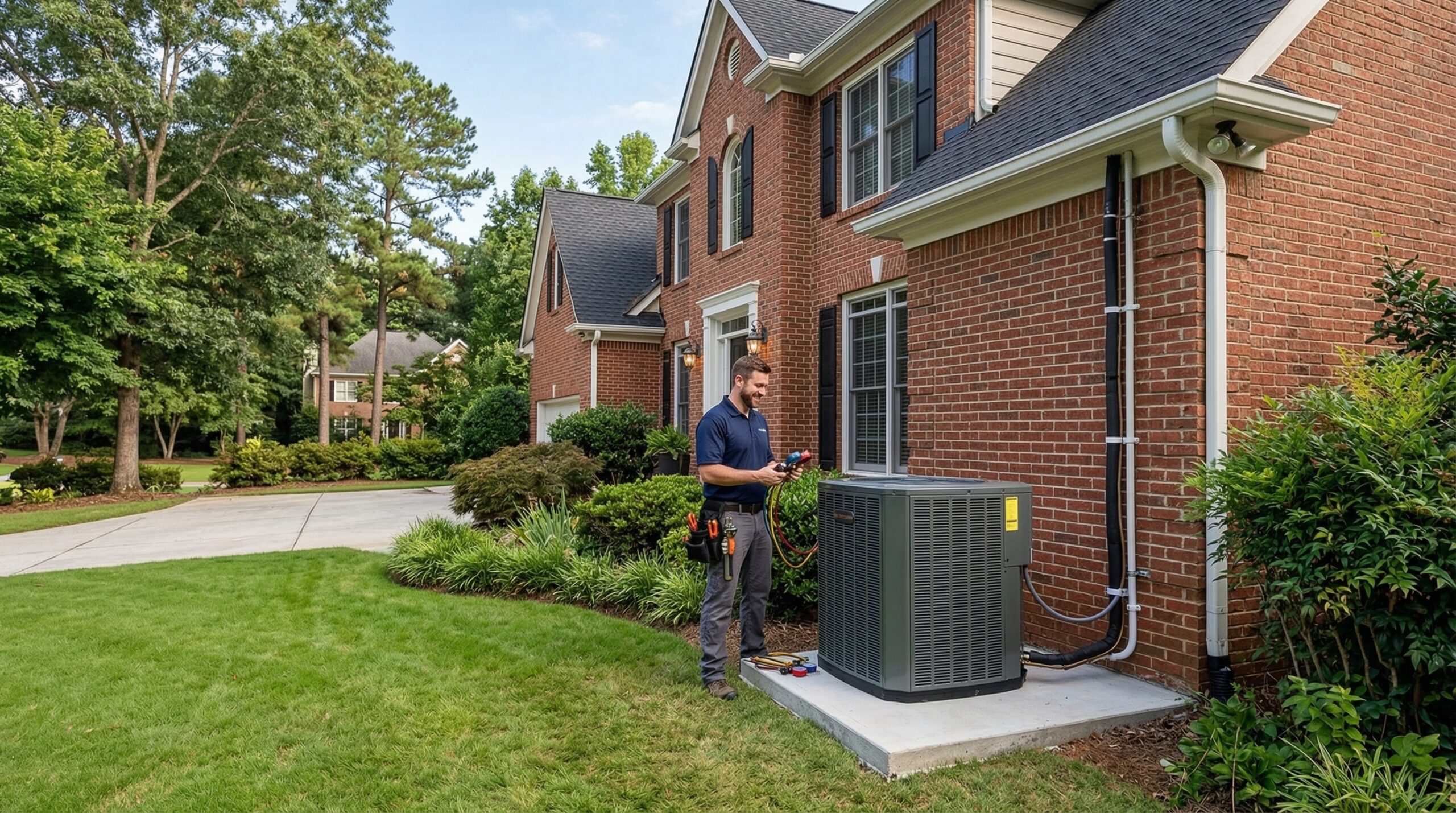
Atlanta is the only major Southeast metro where homeowners face a genuine dual season: more than 3,000 cooling degree days in summer and real heating demand in winter, with design temperatures dropping to 22°F. That combination places Atlanta in ASHRAE Climate Zone 3A (Warm-Humid), a meaningful distinction from Florida cities where heating barely registers. This guide covers what Atlanta homeowners pay for HVAC replacement in 2026, how to qualify for Georgia Power and GEFA rebates, and what the permit process looks like across Fulton, DeKalb, Cobb, and Gwinnett counties.
TL;DR: HVAC replacement in Atlanta runs $4,800–$13,500 depending on system type and home size. Atlanta sits in Climate Zone 3A (Warm-Humid), so both heating and cooling carry real load. Georgia Power residential customers replacing an electric furnace with an eligible air source heat pump may receive 50% of cost, up to $1,500, through HEIP. Georgia HEAR is paused as of October 2026 and offers no current standalone heat pump rebate. A mechanical permit is required in the four major metro counties, and your licensed contractor pulls it. Get your estimate.
What Does HVAC Replacement Cost in Atlanta?
Atlanta homeowners pay $4,800 to $13,500 for a full HVAC replacement in 2026, depending on system type, home size, and efficiency rating. Atlanta labor costs run about 9% below the national average, one reason the metro’s prices often come in below comparable cities in other regions despite strong contractor demand during the summer peak.
| System Type | Atlanta Cost Range (2026) | Notes |
|---|---|---|
| Central AC only | $4,550–$7,000 | Replacing condenser + air handler only |
| Heat pump system | $5,000–$10,000 | Handles both heating and cooling; qualifies for rebates |
| Gas furnace + AC | $7,000–$13,500 | Full system replacement; common in older homes with gas lines |
| Mini-split (ductless) | $3,500–$9,000 | Per zone; no ductwork required |
| Geothermal heat pump | $18,000–$30,000 | Highest efficiency; largest upfront cost |
Prices include equipment, labor, refrigerant handling, and standard installation. Ductwork repairs or replacements add $1,500–$5,000 on top of these figures. Most Atlanta HVAC contractors pull the required mechanical permit as part of the installation package.
What Drives HVAC Costs in Atlanta?
Atlanta sits in ASHRAE Climate Zone 3A (Warm-Humid), which means the metro faces both meaningful heating loads in winter and intense cooling demand through the long summer. This is a critical difference from Florida cities in Zone 2A, where heating is minimal. Atlanta homeowners need equipment sized for both seasons.
Key cost factors for Atlanta specifically:
- System sizing: Atlanta’s summer design temperature is 94°F with a wet bulb of 75°F, requiring robust cooling capacity. Most single-family homes need 2–5 ton systems.
- Dual-load climate: Unlike purely cooling-dominant markets, Atlanta winters require genuine heating (design low 22°F). Heat pumps run efficiently at Atlanta’s typical winter temps; only extreme cold events push performance lower.
- Home age: A large portion of Atlanta’s housing stock was built in the 1970s–1990s. Older ductwork, R-22 refrigerant systems, and aging electrical panels can add $500–$3,000 in ancillary work.
- Labor market: BLS 2024 data shows Atlanta-area HVAC technicians earn a median of $56,830/year ($27.32/hr), compared to the national median of $59,810. This translates to slightly lower labor charges than coastal metros.
- Permit requirements: Mechanical permits are mandatory across Fulton, DeKalb, Cobb, Gwinnett, and Cherokee counties. Fees typically run $100–$400 with 2–5 business day processing.
Does Georgia Power Offer Rebates for HVAC Replacement?
Georgia Power’s Home Energy Improvement Program (HEIP) offers specific rebates to Georgia Power residential customers. Its August 1, 2026 requirements limit the air source heat pump conversion rebate to replacement of an electric furnace. The installation must use a licensed HVAC installer, an AHRI-listed indoor/outdoor combination, and an installer attestation. Apply within 60 days of purchase or installation. Read the current HEIP requirements.
| Improvement | Rebate Amount | Key Requirement |
|---|---|---|
| Air source heat pump replacing electric furnace | 50% of cost, up to $1,500 | Licensed HVAC installer, AHRI-listed indoor/outdoor combination, installer attestation |
| Ground source heat pump conversion | 50% of cost, up to $300 | Licensed HVAC installer and AHRI-listed geothermal heat pump |
| HVAC maintenance and tune-up | 50% of cost, up to $75 | Electric heating equipment, licensed HVAC installer |
| Home Comfort Bundle, electric | 50% of cost, up to $1,700 | Program installer and required insulation, air sealing, duct repair and sealing |
The air source heat pump rebate applies only to an eligible electric-furnace conversion, not every heat pump installation. Georgia Power says complete applications are processed in approximately 6 to 8 weeks. Confirm your existing furnace, matched equipment, installer documentation, and current terms before treating the rebate as an offset. View the 2026 HEIP requirements.
What Is the Georgia HEAR Status in Atlanta?
Georgia’s Home Electrification and Appliance Rebates (HEAR) program is paused and not accepting new applications as of October 2026. The state plans a limited reopening for single-family electrical wiring and panel upgrades only when paired with an eligible HER project. Standalone heat pump HEAR rebates are not available under that plan. See the official HEAR update.
| Current Status | Heat Pump HEAR Rebate | Planned Limited Reopening |
|---|---|---|
| Paused since August 14, 2026 | No new standalone heat pump applications | Single-family wiring and panel upgrades with an eligible HER project only, subject to available funding |
Do not subtract a HEAR heat pump rebate from an Atlanta quote while the program is paused. If a contractor mentions a state rebate, ask for the current program pathway and reservation status in writing; check the state update before committing.
Should I Choose a Heat Pump or Gas Furnace + AC in Atlanta?
Atlanta’s Zone 3A climate makes it one of the best regions in the country for heat pump performance. Here’s how to decide:
- Heat pump advantages in Atlanta: Winters are mild enough that air-source heat pumps operate efficiently through most cold weather. The 22°F winter design temperature rarely occurs for more than a few days per year. Heat pumps also cool, eliminating the need for a separate AC unit. The Georgia Power HEIP conversion rebate can apply if an eligible heat pump replaces an electric furnace; Georgia HEAR is paused.
- Gas furnace + AC advantages: Lower upfront cost if you already have gas lines. Gas provides faster, more intense heat during brief cold snaps. Preferred by homeowners who want a dual-fuel fallback in very cold weather or who heat primarily with gas.
- Dual-fuel hybrid systems: A heat pump paired with a gas furnace backup gives you heat pump efficiency for most of the year with gas backup when temperatures fall. Costs $1,000–$2,500 more than a single-system approach.
For most Atlanta homeowners replacing an aging system, a heat pump is the right long-term choice: lower operating costs, available rebates, and a single system that handles both heating and cooling. For homes with existing gas infrastructure and no interest in electrification, a gas furnace + AC remains a solid value.
Do You Need a Permit for HVAC Replacement in Atlanta?
HVAC system replacements require a mechanical permit in all Atlanta-area counties. Routine maintenance (filter changes, coil cleaning, refrigerant top-offs without major component work) is exempt.
What to know before your project:
- Cost: Permit fees range from $100 to $400 for residential HVAC replacement, depending on the county and scope of work.
- Timeline: Processing typically takes 2 to 5 business days. Rush processing may be available for AC failures during summer heat events.
- Who pulls it: Your licensed HVAC contractor should pull the permit as part of the job. Always confirm this is included in your quote.
- Inspection: One inspection is required after installation. The inspector checks refrigerant lines, electrical connections, and proper equipment sizing documentation.
- Why it matters: Unpermitted HVAC work can create issues when selling your home and may void manufacturer warranties. Georgia law requires permits for mechanical system replacements.
For Fulton County permits, use the online portal at Fulton County Planning and Inspections. DeKalb, Cobb, and Gwinnett counties each have their own portals. Your contractor will know which applies to your address.
How to Get the Best Price on HVAC Replacement in Atlanta
Atlanta’s competitive HVAC market gives homeowners real negotiating power, if you time it right and shop strategically:
- Schedule in spring or fall. Atlanta HVAC demand peaks sharply in July. Scheduling your replacement in March–May or October–November typically means faster scheduling and more competitive pricing.
- Get three quotes. Atlanta has hundreds of licensed HVAC contractors. Three quotes is the minimum: the spread between high and low bids often exceeds $2,000 on identical systems.
- Ask for itemized quotes. Require separate line items for equipment, labor, refrigerant handling, and permit.
- Check HEIP before installation. Confirm your Georgia Power account, existing electric furnace, AHRI-listed equipment combination, licensed installer, and required attestation.
- Check HEAR status. The program is paused; the planned limited reopening does not include standalone heat pump rebates. Verify the state update before budgeting any state rebate.
For a regional comparison, see our Louisiana HVAC replacement cost guide, where the neighboring Gulf Coast market runs 10–15% below Atlanta on most system types due to lower labor costs statewide.
Frequently Asked Questions: Atlanta HVAC Replacement Costs
How much does HVAC replacement cost in Atlanta, GA?
Atlanta homeowners typically pay $4,800 to $13,500 for a full HVAC replacement in 2026. The range depends on system type:
- Central AC only: $4,550–$7,000
- Heat pump system: $5,000–$10,000
- Gas furnace + AC: $7,000–$13,500
Atlanta labor costs run about 9% below the national average, helping offset equipment prices. See our full HVAC replacement cost guide for national benchmarks.
Does Georgia Power offer rebates for HVAC replacement?
Yes. For Georgia Power residential customers, HEIP may cover 50% of cost, up to $1,500, when an eligible air source heat pump replaces an electric furnace. Key details:
- Air source heat pump replacing electric furnace: up to $1,500 (50% of cost)
- Ground source heat pump conversion: up to $300
- Electric HVAC tune-up: up to $75
- Apply within 60 days of purchase or installation
- Use a licensed HVAC installer, AHRI-listed indoor/outdoor combination, and installer attestation for the air source conversion
Visit the Georgia Power HEIP page to verify current program terms.
Do I need a permit for HVAC replacement in Atlanta?
Yes. All full HVAC system replacements require a mechanical permit in Atlanta-area counties. Permit details:
- Fee: $100–$400 depending on county (Fulton, DeKalb, Cobb, Gwinnett)
- Processing time: 2–5 business days
- Inspections: 1 required after installation
- Who pulls it: Your licensed contractor should handle this; confirm it’s included in your quote
Routine maintenance (filter changes, refrigerant top-offs) does not require a permit.
Should I get a heat pump or a gas furnace and AC in Atlanta?
For most Atlanta homeowners, a heat pump is the right call. Reasons specific to Atlanta:
- Zone 3A winters are mild enough (design low 22°F) for air-source heat pumps to run efficiently
- A heat pump replaces both your AC and furnace in one system
- Georgia Power HEIP may rebate up to $1,500 only for eligible air source heat pumps replacing an electric furnace
- Georgia HEAR is paused and does not accept new standalone heat pump applications
- Compare projected operating costs using your actual utility rates and equipment quotes
Gas furnace + AC is still a solid choice if you have existing gas lines and want the lowest upfront equipment cost, or if your home is very large and cooling-dominant. See our heat pump vs. AC cost comparison for a full breakdown.
What is the HEAR program and do I qualify in Atlanta?
Georgia’s Home Electrification and Appliance Rebates (HEAR) program is federally funded and administered by GEFA. It has been paused since August 14, 2026, and is not accepting new applications. The state plans a limited October reopening only for single-family wiring and panel upgrades tied to an eligible HER project. The planned pathway does not cover a standalone heat pump. Check Georgia’s current HEAR notice.
- Current HEAR status: paused for new applications
- Standalone heat pump HEAR rebate: unavailable under the planned limited reopening
- Possible future single-family wiring or panel rebate: only with an eligible HER project, subject to funding and state reopening details
- Check the official state update before signing a contract
Do not use the former $8,000 standalone heat pump maximum as an expected 2026 discount. See our HVAC tax credits and rebates guide for other incentive pathways.
What time of year is cheapest for HVAC replacement in Atlanta?
Spring and fall are the best seasons for HVAC replacement in Atlanta for two reasons:
- Lower demand: Search data shows Atlanta HVAC inquiries peak in July (nearly triple winter lows), meaning contractors are hardest to reach (and least likely to discount) in summer.
- Better scheduling: Spring and fall installations can be scheduled with more lead time, giving you better contractor selection and more time for the permit process.
If your system fails mid-summer, you don’t have the luxury of waiting. But if you’re planning ahead, aim for March–May or September–November. That’s when contractors have more availability and competitive pricing.
Homeowners in Cobb County suburbs like Marietta typically find pricing 3 to 7 percent below Atlanta proper, reflecting the lower overhead of suburban contractors in the same competitive Zone 3A market.
Put the numbers in context
What would it cost for your home?
Get a planning range based on your home, system and region. Free, with no email required.
Get my cost estimate