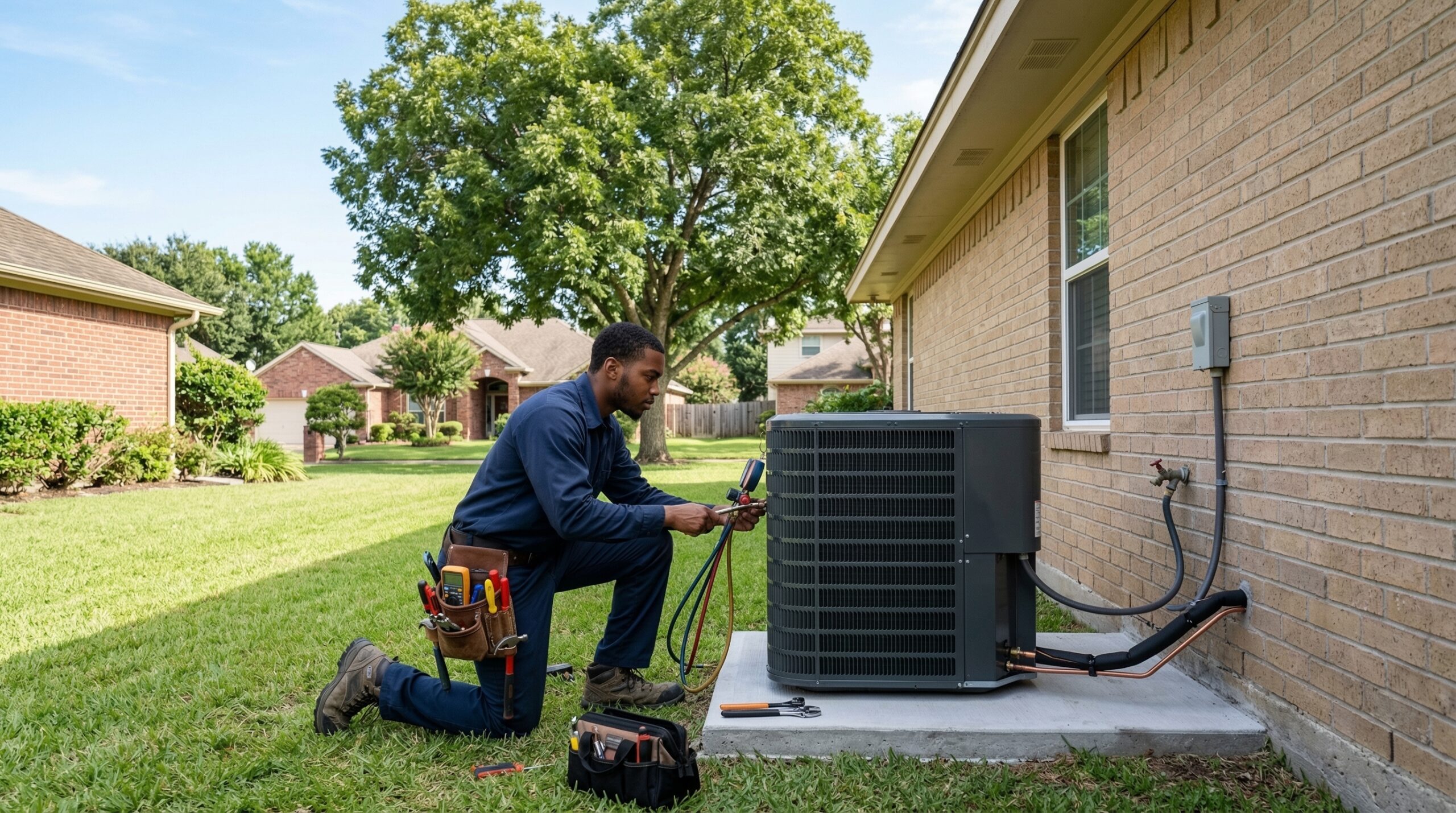
Houston homeowners replace HVAC systems in one of the most punishing climates in the US: Climate Zone 2A delivers roughly 3,100 cooling degree days annually, air conditioning runs 8 to 10 months per year, and the region’s high humidity means undersized or improperly installed systems struggle from day one. This guide covers what full replacement actually costs in the Houston metro, which CenterPoint Energy rebates are available in 2026, permit requirements, and what to know about sizing for a Texas-scale cooling load. Austin homeowners in the same Zone 2A climate typically pay 5 to 8% more than Houston due to the tech sector labor premium; see our Austin HVAC replacement cost guide for the comparison.
TL;DR: Houston HVAC replacement costs $5,800 to $14,500 installed (most homeowners pay $8,000 to $11,500). Zone 2A hot-humid climate means large, high-capacity systems are standard. CenterPoint’s CoolSaver program offers a free A/C tune-up valued at $150 to $200, and the SOP program delivers cash incentives on high-efficiency replacements through participating contractors. A mechanical permit is required: $100 to $400, approved in 2 to 5 days. Get your Houston estimate here.
What Does HVAC Replacement Cost in Houston?
Houston’s labor costs run about 11% below the national average, which gives the city a modest pricing advantage versus other large metros. Equipment costs reflect the same national market pressures as everywhere else, but lower contractor wages keep total project costs competitive.
If you live in a southwest Houston suburb, pricing will be very similar. See also: Sugar Land HVAC replacement costs for Fort Bend County-specific rebate details and permit requirements.
| System Type | Houston Cost Range |
|---|---|
| Central AC only (3-4 ton) | $4,800 to $8,500 |
| Gas furnace + central AC combo | $6,500 to $12,000 |
| Heat pump (replaces AC + heat) | $7,500 to $14,500 |
| Ductless mini-split (per zone) | $3,500 to $7,500 |
These ranges reflect installed costs including equipment, labor, basic electrical connections, refrigerant, old-system disposal, and the City of Houston mechanical permit. Ductwork repairs or replacement are not included and can add $1,500 to $5,000 if your existing ducts are in poor shape. Texas sales tax on materials runs 8.19%, which is already baked into contractor quotes for most projects.
Titan HVAC, a Houston-based contractor, notes that “leaky ducts waste 25 to 40 percent of conditioned air in typical Houston homes.” Getting a duct inspection alongside your HVAC replacement quote can uncover efficiency losses that offset some of the upgrade cost. Use our free Houston cost estimator to get a baseline figure before you call contractors.
Why Do Houston Homes Need Larger HVAC Systems?
Houston sits in ASHRAE Climate Zone 2A, which means hot and humid year-round. The city accumulates roughly 3,100 cooling degree days annually compared to fewer than 500 for northern cities like Minneapolis. Your AC doesn’t just cool the air in Houston: it also has to remove enormous amounts of moisture from a subtropical climate with frequent heat index values above 100 degrees.
Sizing rules of thumb that work in other parts of the country often undersize systems in Houston. The standard 500-sq-ft-per-ton ratio used for moderate climates typically drops to 400 sq ft per ton or less here, meaning:
- 1,500 sq ft home: typically 3.5 to 4 tons
- 2,000 sq ft home: typically 4 to 4.5 tons
- 2,500 sq ft home: typically 4.5 to 5 tons
- 3,000+ sq ft home: 5 tons or more, or multi-zone
Always request a Manual J load calculation from any contractor you hire. Oversized systems are a real problem in Houston: they cool the air quickly but don’t run long enough to dehumidify it, leaving the home feeling clammy at 74 degrees and causing premature wear from frequent short-cycling. See our HVAC cost by home size guide for a full breakdown of how square footage drives system selection.
Houston’s clay soil adds a factor most HVAC guides ignore. Seasonal moisture changes cause the ground to swell and contract, shifting foundations and stressing refrigerant lines and ductwork connections over time. Quality contractors in the area use flexible line set connections and expansion loops to accommodate this movement. Skipping these steps can lead to refrigerant leaks within the first two years of a new system.
What Does a Permit Cost for HVAC Replacement in Houston?
A mechanical permit is required for any HVAC system replacement in Houston. The City of Houston Permitting Center handles these permits, and fees are based on project value.
- Typical permit fee: $100 to $400 for residential HVAC replacement
- 2026 minimum building code enforcement permit: $91.06 (after January 1, 2026 CPI increase)
- Processing time: 2 to 5 business days
- Inspections required: 1 (after installation)
Your contractor is responsible for pulling the permit before work begins. Always confirm this before signing any contract. An unpermitted installation can void the manufacturer warranty on the equipment, create liability issues, and complicate a future home sale. Houston’s permit requirements apply regardless of whether the work is a straight swap of the same size or a system upgrade.
What HVAC Rebates Are Available in Houston in 2026?
Houston sits in a deregulated electricity market. CenterPoint Energy owns the wires and delivers electricity to the Houston metro, but you choose your own retail electricity provider (Reliant, NRG, TXU, or dozens of others). Rebate programs come from CenterPoint as the distribution utility, not from your retail provider.
CenterPoint offers three programs relevant to HVAC in 2026:
CoolSaver A/C Tune-Up
This is CenterPoint’s most popular residential program. A CoolSaver-approved contractor performs a comprehensive tune-up at no cost to you, including condenser coil cleaning, refrigerant check, and airflow inspection. The service is valued at $150 to $200. Eligibility requirements:
- You must be a residential customer in the CenterPoint Houston Electric territory
- Your central AC or heat pump must be at least 1 year old
- The system must be operational
- You have not received a CoolSaver tune-up in the last 5 years
Residential Standard Offer Program (SOP) — HVAC Upgrades
When you replace an older system with a higher-efficiency model (typically SEER2 15.2 or higher), CenterPoint’s SOP program pays cash incentives to the participating contractor, who applies them directly to your invoice. You don’t fill out a rebate form or wait for a check. Ask any contractor you hire: “Are you a CenterPoint Approved Service Provider and will you apply the SOP incentive to my quote?” If they are not, you may be leaving money on the table.
Smart Thermostat Rebate
CenterPoint offers a $50 instant rebate on ENERGY STAR certified smart thermostats (Google Nest, ecobee, Honeywell Home). Available at participating retailers (Home Depot, Lowe’s) as an in-store coupon. You can also enroll in CenterPoint’s Smart Cycle demand response program for additional bill credits during peak summer demand periods.
Federal Section 25C Status for 2026
The federal Section 25C credit expired December 31, 2025 and is not available for equipment placed in service in 2026. Do not subtract the former credit from a current Houston estimate.
Are Heat Pumps Worth It in Houston?
Heat pumps have historically been recommended for mild climates, but they have become increasingly viable for Houston over the past several years. Here’s why they work well here:
- Houston winters are mild (average January low around 42 degrees), so heat pumps rarely struggle to extract heat from the outdoor air
- Modern cold-climate heat pumps maintain efficiency down to about 17 degrees, far below what Houston typically sees
- Federal Section 25C: Expired December 31, 2025; unavailable for 2026 installations.
- A heat pump replaces both the AC and the furnace in one system, which can simplify the equipment and reduce long-term maintenance costs
The tradeoff is upfront cost. A heat pump typically runs $1,000 to $2,500 more than a comparable gas-and-AC combo. In Houston’s mild winters, the energy savings from avoiding gas heat are smaller than in cold climates, so payback periods are longer. Many Houston homeowners keep gas heating as a backup, which adds cost. Our heat pump replacement cost guide covers the full economics with a regional comparison.
If you’re replacing an older AC-only system and your home already has a gas furnace in good condition, a straight AC replacement often makes the most financial sense. See our AC replacement cost guide for pricing details on that path.
Houston HVAC Replacement FAQ
How much does HVAC replacement cost in Houston, TX?
A full HVAC system replacement in Houston typically costs $5,800 to $14,500 installed. Most homeowners in a 2,000 sq ft home pay $8,000 to $11,500 for a mid-range system. Houston’s labor costs are about 11% below the national average, which helps offset the need for larger systems. Here’s a quick breakdown:
- Budget central AC: $4,800 to $6,500
- Mid-range AC or heat pump: $8,000 to $11,500
- Premium variable-speed system: $12,000 to $14,500+
- Ductwork replacement (if needed): add $1,500 to $5,000
Does CenterPoint Energy offer HVAC rebates in Houston?
Yes. CenterPoint Energy offers three programs in 2026 for Houston residential customers:
- CoolSaver A/C Tune-Up: A free professional maintenance service valued at $150 to $200 for existing systems at least one year old.
- Residential Standard Offer Program (SOP): Pays cash incentives to approved contractors on high-efficiency HVAC replacements (SEER2 15.2+), with savings passed to you on your invoice.
- Smart Thermostat Rebate: A $50 instant rebate at participating retailers on ENERGY STAR certified thermostats.
All programs are exclusively for customers in the CenterPoint Houston Electric service territory. Ask your contractor whether they are a CenterPoint Approved Service Provider before signing any contract.
Why do Houston homes need larger HVAC systems than most US cities?
Houston is in ASHRAE Climate Zone 2A, with roughly 3,100 cooling degree days per year and air conditioning that runs 8 to 10 months annually. The combination of high heat and subtropical humidity means Houston homes need more tons of cooling capacity per square foot than the national rule of thumb suggests. A 2,000 sq ft Houston home typically requires a 4 to 4.5 ton system. Undersized systems cannot keep up with the cooling load and fail prematurely. Always get a Manual J load calculation before any replacement.
Do I need a permit for HVAC replacement in Houston?
Yes. The City of Houston requires a mechanical permit for any HVAC system replacement. Fees run $100 to $400 depending on project value, with the 2026 minimum set at $91.06. Processing takes 2 to 5 business days, and one post-installation inspection is required. Your contractor is responsible for pulling the permit. Skipping this step can void equipment warranties and create problems at resale.
When is the best time to replace HVAC in Houston?
October through February is Houston’s off-season for HVAC. During these months, contractors have more availability, scheduling is easier, and some companies offer off-season pricing. The off-season window is narrower in Houston than in northern markets because the city’s mild winters still generate some heating calls, but it remains the best time to get competitive quotes without the pressure of a failed system in summer heat. Fall replacement also gives you time to identify permit or ductwork issues before the next cooling season begins in March.
Is a heat pump a good choice for Houston homes?
Heat pumps are increasingly practical for Houston. The city’s mild winters mean heat pumps rarely struggle to extract heat from the outdoor air, avoiding the efficiency penalty that hurts them in northern climates. The federal Section 25C credit expired December 31, 2025 and is not available for equipment placed in service in 2026. The main tradeoff is upfront cost: heat pumps run $1,000 to $2,500 more than a comparable gas-and-AC combo. For homes replacing an existing gas furnace that still works well, a straight AC replacement is often the more economical short-term choice. For homes with aging or undersized heat sources, a full heat pump replacement makes more sense.
West Texas markets like El Paso see different pricing dynamics than the Houston metro. Desert climate, lower labor wages, and evaporative cooler conversions create a distinct cost picture. See our El Paso HVAC pricing guide for details.
For a full look at Texas HVAC pricing across all major cities, see our Texas HVAC replacement cost guide. For Mid-South pricing comparisons, see the Memphis, TN HVAC replacement cost guide. For a desert climate comparison, Phoenix homeowners in IECC Zone 2B pay $5,400–$14,200 installed with SRP Cool Cash Rebates up to $1,125. See the Phoenix HVAC replacement cost guide. Irving, TX is another major Texas HVAC market with similar summer heat: see the Irving HVAC replacement cost guide.
Put the numbers in context
What would it cost for your home?
Get a planning range based on your home, system and region. Free, with no email required.
Get my cost estimate