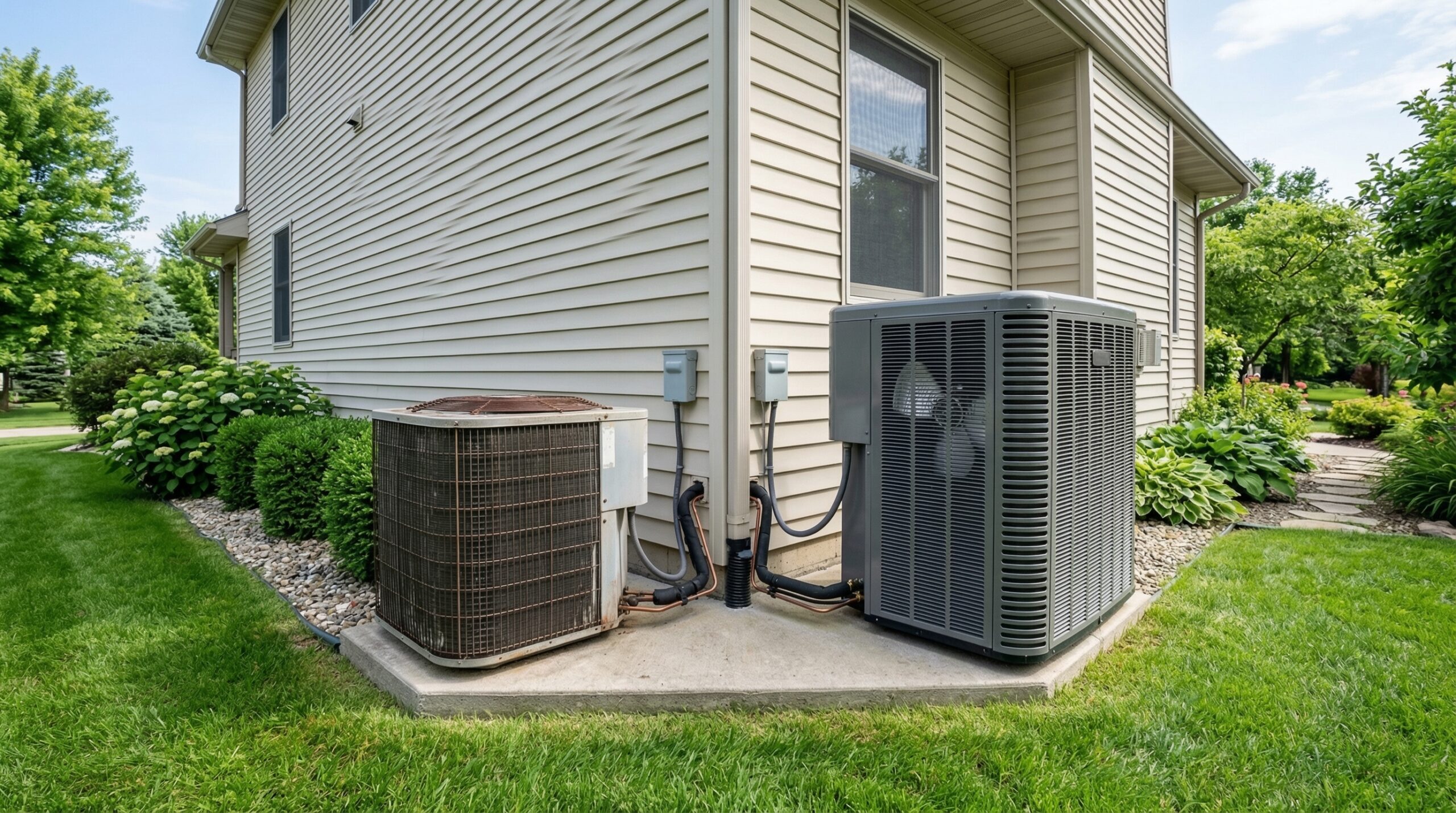
When your air conditioner dies, the question isn’t always just “how much does a new AC cost?” It’s “should I upgrade to a heat pump while I’m at it?” Heat pumps cost more upfront than a central AC unit alone, but they replace both your cooling and heating system in one installation. In mild and moderate climates, the math often favors the heat pump over a 10-year window. For the lowest installation cost on either system, spring and early fall are the cheapest windows: see when to replace HVAC for off-peak pricing. This guide breaks down the full cost comparison (upfront, operating, tax credits, and climate considerations) so you can make the call with real numbers. If you are comparing AC options at different efficiency levels, see our detailed breakdown of SEER rating cost differences between 14, 16, and 18 SEER tiers.
A standard heat pump runs $4,500–$10,000 installed (cooling + heating combined), while a central AC unit alone costs $3,500–$7,500. If you’re also replacing a gas furnace, the total for two separate systems reaches $6,000–$12,000, often more than a heat pump doing the same job.
How Much Does a Heat Pump Cost vs. Central AC?
The table below reflects fully installed costs: equipment plus labor, using existing ductwork. Heat pump pricing covers both heating and cooling replacement. Central AC pricing covers cooling only.
| System | Installed Cost | Annual Operating Cost | Typical Lifespan |
|---|---|---|---|
| Heat pump (standard) | $4,500–$10,000 | $500–$900 (heat + cool) | 15 years |
| Heat pump (high-efficiency) | $7,000–$14,000 | $400–$700 (heat + cool) | 15–20 years |
| Central AC only | $3,500–$7,500 | $300–$500 (cooling only) | 15–20 years |
| Central AC + gas furnace | $6,000–$12,000 | $800–$1,400 (combined) | 15–20 years |
Note: All costs assume existing ductwork in serviceable condition. New ductwork adds $3,000–$8,000 to any system. See our free HVAC cost estimator for a personalized range based on your home size and region.
For homeowners who installed a heat pump in 2025, the federal 25C tax credit (up to $2,000) can still be claimed on your 2025 return. See our heat pump tax credit 2026 guide for full filing details. For a 2026 installation, compare a heat pump at $6,000–$10,000 against replacing your AC and furnace separately ($6,000–$12,000 combined) without subtracting the expired federal credit.
When Does a Heat Pump Save You More Money?
A heat pump beats the AC+furnace combo on total cost of ownership in these five scenarios:
- Mild climates (rarely below 25°F): Heat pumps handle heating efficiently year-round in Zones 1–3. Operating costs stay $500–$900/year for both heating and cooling combined, compared to $800–$1,400/year for a gas furnace and AC running separately.
- You have a confirmed current rebate: A utility or state incentive can reduce the heat pump premium. Verify the amount and approval requirements before subtracting it from your comparison.
- You’re replacing both AC and furnace: If both systems are nearing end of life simultaneously, one heat pump installation often costs less than two separate replacements and eliminates one outdoor unit.
- You have existing ductwork in good condition: Heat pumps use the same duct infrastructure as forced-air AC systems. No duct modification means installation is straightforward.
- You’re in a Zone 4–5 climate (Mid-Atlantic, Midwest): Cold-climate heat pumps (HSPF2 ≥ 10) handle temperatures down to -13°F efficiently. For most winters in these zones, a cold-climate HP outperforms a standard HP and may match or beat gas furnace operating costs when electricity rates are reasonable.
When Is Central AC + Furnace the Better Choice?
A heat pump isn’t always the right answer. Central AC paired with a gas furnace still wins in these situations:
- Cold climates regularly below 25°F (Zones 6–7): Standard heat pumps lose efficiency rapi For Illinois homeowners in Zone 5A Illinois, where Chicago winters regularly hit -10°F, this is a key consideration.dly below 35°F and struggle below 25°F. Auxiliary electric resistance heat kicks in, which is expensive. A gas furnace is often cheaper to run in consistently cold winters.
- Your furnace is under 10 years old: Replacing a functioning, mid-life furnace with a heat pump rarely pencils out financially. Replace only the AC now; revisit the heat pump when both systems are near end of life.
- Natural gas is significantly cheaper than electricity in your area: In regions where gas prices are very low relative to electricity, gas heating can still beat heat pump efficiency gains. Check your local utility rates before deciding.
- You plan to sell within 5 years: The payback period for the heat pump premium is typically 5–8 years. Short-term homeowners often don’t recoup the upfront difference.
Climate Matters — What Temperature Is Too Cold for a Heat Pump?
In North Carolina, the piedmont climate (Raleigh, Charlotte, Greensboro) sits squarely in heat pump sweet spot territory. Winters rarely drop below 15F, keeping heat pumps efficient year-round without gas backup. Duke Energy Smart $aver rebates (up to $500) sweeten the economics further. See the North Carolina HVAC replacement cost guide for a full climate zone breakdown by region.
Georgia suburbs in Zone 3A are a strong case for comparing heat pumps with central AC and a furnace. In Alpharetta, long hot summers and mild winters favor heat pump operation. Georgia Power’s HEIP rebate can reduce upfront cost only if an eligible heat pump replaces an electric furnace on a Georgia Power residential account; it covers 50% of cost, up to $1,500, subject to the current requirements.
This is the most commonly misunderstood part of the heat pump debate. Here’s how performance breaks down by temperature:
- Above 35°F: Heat pumps operate efficiently, typically 2–3x more efficient than electric resistance heating (COP of 2.0–3.5).
- 25°F to 35°F: Standard heat pumps lose efficiency but still function. COP drops to 1.5–2.0. Supplemental heat may run occasionally.
- Below 25°F: Standard heat pumps struggle significantly. Most systems switch to auxiliary electric resistance heat at this point, which costs 2–3x more per BTU than the heat pump itself.
- Cold-climate heat pumps (HSPF2 ≥ 10): Models like the Mitsubishi Hyper Heat and Bosch IDS are rated to -13°F. When comparing brands for your heat pump replacement, our heat pump cost by brand guide covers installed price ranges for all major manufacturers. Trane’s cold-climate models are priced tier by tier in our Trane heat pump cost guide. They maintain reasonable efficiency even in severe winters. These systems cost $1,000–$3,000 more than standard heat pumps but are the right choice for Zones 5–7.
Climate zone breakdown:
- Zones 1–3 (South, Southeast, Pacific Coast): Heat pump clearly the better choice: winters rarely challenge the system.
- Zones 4–5 (Mid-Atlantic, Midwest, Mountain West): Cold-climate heat pump recommended. Standard HP may leave money on the table during cold snaps.
- Zones 6–7 (Northern states, Upper Midwest, Mountain): Gas furnace + AC is still often preferred unless you’re committed to a cold-climate HP and willing to accept higher upfront cost.
Heat Pump Tax Credits and Rebates: How Much Can You Save?
Current state and utility incentives can close part of the cost gap between heat pumps and central AC systems. The federal Section 25C credit expired for equipment placed in service after December 31, 2025:
- Federal Section 25C credit: Not available for equipment placed in service after December 31, 2025. Homeowners with qualifying 2025 installations can still review Form 5695 filing guidance.
- State-administered electrification rebates: Availability, income limits, and amounts vary by state. Confirm that your state program is open before relying on it.
- State and utility rebates: See our HVAC rebates by state guide and the program administrator’s site for current requirements.
- Net effective cost: Subtract only rebates that the program has confirmed for your project. Do not subtract the expired $2,000 federal credit from a 2026 quote.
Important: Neither a central AC nor a heat pump placed in service in 2026 qualifies for the expired federal Section 25C credit. The equipment distinctions on this page apply only to qualifying 2025 installations.
For homeowners comparing heat pump replacement cost to central AC replacement cost side by side in 2026, use equipment cost, operating cost, climate performance, and confirmed current rebates. Do not use the expired federal credit in the comparison.
Installation Complexity: Is a Heat Pump Harder to Install?
For ducted systems, the installation process is nearly identical to central AC. Both require:
- Refrigerant-certified HVAC technician (EPA 608 certification)
- Electrical connections for the outdoor unit
- Connection to existing air handler and ductwork
- Refrigerant line set installation or reuse
Heat pumps require one additional technical step: the reversing valve, which switches the system between heating and cooling modes. This adds modest complexity for the installing technician but typically adds only $200–$500 to labor cost compared to a straight AC swap. Installation time is similar: 6–8 hours for most standard replacements.
If you’re also considering a ductless option, see our mini split vs. central AC cost comparison or get full pricing in our mini-split installation cost guide ($2,000–$14,000 depending on zone count and brand); ductless heat pumps have a different installation profile and cost structure. For homeowners currently using window units, our window AC vs central air cost guide covers the full upgrade math. If you are pricing a specific brand rather than the category, our Carrier heat pump cost guide shows what the heat pump side costs across Carrier’s Comfort, Performance, and Infinity series, which is the cleanest way to see the heat pump premium on a single brand’s lineup.
How We Calculate These Costs: Our cost data is sourced from contractor invoices, manufacturer pricing, and regional labor surveys across 12 U.S. metro areas. All prices reflect fully installed costs including equipment, labor, and standard materials using existing ductwork. Federal tax credit information reflects current IRS guidance. See our Methodology page for data sources and update frequency. In Oregon, heat pumps often deliver better long-term value than central AC in Zone 4C markets. See the Oregon HVAC replacement cost guide for Energy Trust incentive details and a Portland-vs-Bend cost comparison.
Frequently Asked Questions
Is a heat pump cheaper to run than AC?
A heat pump costs $500–$900 per year to cover both heating and cooling. Central AC plus a gas furnace typically runs $800–$1,400 per year combined. In most climates, a heat pump is cheaper to operate annually, especially in Zone 1–4 states where winters don’t regularly push below 25°F. Tucson, AZ (Zone 2B) is a strong heat pump market: see Tucson HVAC replacement costs for desert Southwest pricing and TEP rebates up to $720.
Do heat pumps work in cold weather?
Standard heat pumps work efficiently above 25–35°F. Cold-climate models such as the Mitsubishi Hyper Heat, Bosch IDS, and Daikin Aurora operate down to -13°F while maintaining reasonable efficiency. Below your heat pump’s rated temperature, auxiliary electric resistance heat activates, which costs more to run. For Zone 5+ climates, choose a cold-climate rated model (HSPF2 ≥ 10).
What is the heat pump tax credit in 2025?
For a qualifying heat pump placed in service in 2025, the federal Section 25C credit covered 30% of eligible installed cost, up to $2,000. The credit is claimed on the 2025 federal return. It is not available for a heat pump or central AC placed in service in 2026.
Should I replace my AC with a heat pump?
If your furnace is over 15 years old or you live in a mild climate (rarely below 25°F), replacing your AC with a heat pump eliminates two future equipment replacements and often saves money long-term. If your furnace is under 10 years old and you live in a cold climate (Zone 5+), replacing only the AC is often the more practical financial move. Then transition to a heat pump when both systems need replacement simultaneously.
How much more does a heat pump cost than central AC?
A heat pump typically costs $1,000–$3,000 more upfront than a comparable central AC unit alone. However, when you’re replacing both an AC and a furnace at the same time, a heat pump is often cost-competitive or even cheaper than buying two separate systems ($6,000–$12,000 for AC + furnace vs. $4,500–$10,000 for a heat pump). For a 2026 project, compare those prices without subtracting the expired federal credit.
For more context on the full HVAC replacement landscape, see our complete HVAC replacement cost guide. To compare energy efficiency tiers and what they cost, see our HVAC cost by efficiency tier breakdown.
Get a Personalized Cost Estimate
Use our free estimator to get a low/mid/high cost range for your specific home size, system type, and region, no email required.
See also: Tennessee HVAC replacement cost guide for state-level heat pump pricing and TVA rebates. For a plain-English breakdown of SEER2, HSPF2, and AFUE ratings, see our HVAC efficiency ratings explained guide. Milwaukee homeowners in Zone 5A weighing heat pump options will find local pricing and We Energies rebate details in our Milwaukee, WI HVAC replacement cost guide.
Ohio homeowners choosing between heat pumps and AC should check our Ohio HVAC replacement cost guide for Lake Erie snowbelt dual-fuel recommendations. For Carrier-equivalent equipment at lower prices, see our Bryant HVAC cost guide.
Put the numbers in context
What would it cost for your home?
Get a planning range based on your home, system and region. Free, with no email required.
Get my cost estimate