
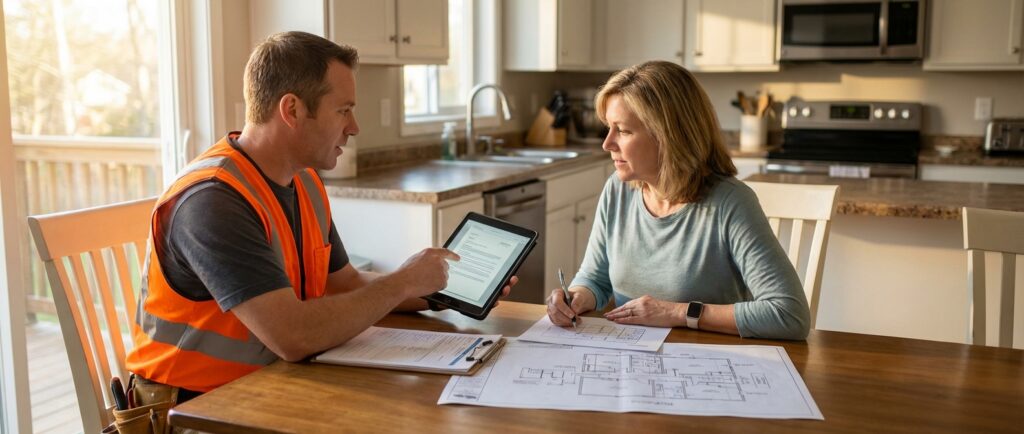
New York is one of the most climatically diverse states in the country, which means HVAC replacement costs vary more here than almost anywhere else. A homeowner in Buffalo replacing a gas furnace and central AC faces a very different project than a homeowner in Queens doing the same job. This guide covers pricing by region, available rebates through NYSERDA, permit requirements across the state, and city-by-city cost benchmarks for 2026.
Use our free HVAC cost estimator to get a personalized range for your home and system type.
What Does HVAC Replacement Cost in New York State?
New York homeowners pay $4,800 to $22,000 for a full HVAC system replacement in 2026, with the enormous range driven almost entirely by geography. Upstate cities like Buffalo, Rochester, and Albany cluster at $4,800 to $13,500 for a gas furnace plus central AC. The NYC metro area and Long Island sit at $8,500 to $22,000 for the same scope of work, reflecting higher labor rates, permit costs, and the logistical complexity of dense urban housing. The table below breaks this down by system type and region.
| System Type | Upstate NY | Hudson Valley | NYC Metro / Long Island |
|---|---|---|---|
| Central AC only | $3,000–$7,500 | $4,000–$9,000 | $5,500–$13,000 |
| Gas furnace only | $2,800–$6,500 | $3,500–$8,000 | $5,000–$12,000 |
| Full system (AC + furnace) | $4,800–$13,500 | $6,500–$15,000 | $8,500–$22,000 |
| Heat pump (air-source) | $4,500–$12,000 | $6,000–$14,000 | $7,500–$18,000 |
| Mini-split (single zone) | $2,500–$5,500 | $3,000–$6,500 | $4,000–$9,000 |
These ranges include equipment and installation labor but exclude permit fees, ductwork modifications, and electrical upgrades. A standard like-for-like replacement on the low end of each range assumes existing ductwork in good condition and straightforward access. For a detailed breakdown of what drives each line item, see the full HVAC cost breakdown.
New York City has the highest costs and the most complex permitting in the state. For homeowners in the five boroughs, the New York City HVAC pricing guide covers DOB permits, union labor, co-op requirements, and borough-level pricing in full detail.
How Do HVAC Costs Vary Across New York Regions?
New York’s cost variation is driven by three overlapping factors: labor markets, climate loads, and housing stock. NYC metro labor rates ($100–$200/hr) reflect union density and high cost of living, according to Bureau of Labor Statistics OEWS data for 2024. Upstate rates ($65–$100/hr) sit closer to national averages. Here’s how each region breaks down.
NYC Metro — Highest Costs in the State
The five boroughs and close suburbs (Westchester, northern New Jersey spillover) represent the most expensive HVAC market in the Northeast. Union labor is common on residential projects, especially in large buildings. The NYC Department of Buildings requires a filed permit for virtually all HVAC work, and older apartment buildings often involve asbestos surveys, freight elevator coordination, and co-op board sign-off that add both time and cost to the project.
Long Island — Slightly Below NYC Metro
Nassau and Suffolk County homeowners typically pay 10 to 20 percent less than NYC metro for the same project. The housing stock is predominantly single-family homes with existing ductwork, which simplifies installs compared to urban apartments. Nassau County and individual municipalities have their own permit requirements with separate inspection processes. PSEG Long Island serves the territory and offers rebates that layer on top of NYSERDA incentives.
Hudson Valley — Moderate Costs, Older Housing
The Hudson Valley corridor from Poughkeepsie to the NYC suburbs falls into a mid-range cost zone. Labor rates are moderate, but the region has a large share of older colonial and Victorian-era homes where ductwork additions or modifications add $1,500 to $4,000 to a typical project. Climate Zone 5A applies to most of the region, which means heating capacity requirements are meaningful but not at the extreme level seen in Buffalo.
Capital Region — Mid-Range Pricing, National Grid Territory
Albany, Schenectady, and Troy sit solidly in Zone 5A with design temperatures around -5°F. Full system replacements in this area run $5,800 to $14,000, reflecting moderate labor costs and a housing stock that’s a mix of colonials, ranch homes, and newer builds with existing forced-air systems. National Grid serves most of the Capital Region and offers energy efficiency rebates that stack with NYSERDA Clean Heat incentives.
Western NY — Heaviest Heating Load, Competitive Labor
Buffalo (Zone 6A) and Rochester (Zone 5A) have the heaviest heating loads in the state. Buffalo averages approximately 6,900 heating degree days per year, compared to roughly 4,900 in Albany and 4,600 in NYC (NOAA Climate Data, 2024). Despite this, labor costs run 15 to 25 percent below NYC metro, which keeps total project costs below the state average even though equipment capacity requirements are higher. Gas furnaces remain the dominant heating system in Western NY, with 80,000 to 120,000 BTU units standard for Buffalo-area homes.
What NYSERDA Rebates Can New York Homeowners Get?
The NYSERDA Clean Heat Program offers the most significant HVAC rebates available to New York homeowners in 2026, with amounts up to $3,500 for qualifying cold-climate heat pump installations (NYSERDA.ny.gov, 2026). The program is available statewide regardless of your utility company. Rebates are tiered by equipment type and building size.
NYSERDA Clean Heat — Rebate Tiers
- $1,400 for a standard air-source heat pump (ENERGY STAR rated)
- $1,700 for a cold-climate heat pump rated to -13°F or lower
- $3,500 for a cold-climate heat pump in a building with larger square footage (contact NYSERDA for current threshold)
- Equipment must be installed by a NYSERDA-enrolled contractor
- Ground-source (geothermal) heat pumps have separate, higher rebate tiers
You can find enrolled contractors and confirm current rebate amounts at nyserda.ny.gov/cleanenergy. Rebate amounts can change; always verify before signing a contract.
Utility Rebates by Territory
In addition to NYSERDA, your local utility may offer separate rebates that stack on top of the state program:
- Con Edison (NYC, Westchester): Equipment efficiency rebates for qualifying heat pumps and central AC units; amounts vary by model
- National Grid (upstate NY, Long Island): Energy efficiency incentives through the Efficiency: New York program; check nationalgrid.com for current offers
- PSEG Long Island (Long Island): Separate rebate program for Long Island customers; $0–$300+ depending on equipment
- NYSEG (Southern Tier): Energy efficiency rebates for qualifying equipment
- Central Hudson (Hudson Valley): Rebates for heat pumps and efficient HVAC through the Mid-Hudson Clean Energy Hub
Federal Section 25C Status for 2026
The federal Section 25C credit expired December 31, 2025 and is not available for equipment placed in service in 2026.
What Are the Permit Requirements for HVAC Replacement in New York?
Every New York jurisdiction requires a permit for HVAC replacement, but the complexity varies enormously from one address to the next. NYC is the most complex permit environment in the state by a significant margin. Upstate municipalities process permits in days; NYC often takes weeks before work can begin.
New York City DOB Permits
The NYC Department of Buildings requires a filed mechanical permit for HVAC replacement in all five boroughs. Requirements include:
- A licensed HVAC contractor with a valid NYC Department of Buildings registration
- A filed permit before work begins (not a post-installation permit)
- Permit fees calculated as a percentage of job cost under the NYC Building Code fee schedule
- Post-installation inspection by a DOB inspector or a Special Inspection Agency for larger systems
Co-op and condo buildings add a board approval layer on top of DOB requirements. Many NYC buildings also require an asbestos survey before any mechanical work in pre-1980 construction. Your contractor should be familiar with your building’s specific requirements before you sign a contract.
Upstate NY and Long Island Permits
Outside NYC, New York municipalities adopt the New York State Mechanical Code, which is based on the International Mechanical Code. A mechanical permit is required for full HVAC replacement in virtually all upstate jurisdictions. Typical permit fees run $50 to $200 for a standard residential replacement, with post-installation inspection required in most cases. Nassau and Suffolk County on Long Island have their own permit offices with separate inspection requirements from the municipal level.
New York has strong contractor licensing requirements statewide. Verify your contractor holds a valid NY State or local license before any work begins. No licensed contractor should suggest skipping the permit.
Are Heat Pumps a Good Choice for Upstate New York?
The answer depends heavily on your specific location within the state. Buffalo (Zone 6A) has a design temperature of approximately -2°F and over 6,900 annual heating degree days, which puts standard air-source heat pumps at a disadvantage as the sole heat source (ASHRAE 2021 Fundamentals). Rochester, Albany, and most of the Capital Region fall into Zone 5A, where cold-climate heat pumps perform much better.
Zone 6A — Buffalo: Dual-Fuel Is the Recommended Approach
Standard air-source heat pumps lose significant heating capacity as outdoor temperatures drop below 20°F, which is a regular occurrence in Buffalo. Cold-climate models rated to -13°F or lower (such as the Mitsubishi Hyper Heat, Bosch IDS, or Carrier Infinity 20 series) can handle most Buffalo winter days on their own, but the most reliable approach is a dual-fuel system: a cold-climate heat pump as the primary heat source, paired with a gas furnace that takes over during the coldest stretches. This setup maximizes efficiency for moderate weather while ensuring reliability at design temperature extremes.
Zone 5A — Rochester, Albany, Syracuse: Cold-Climate Pumps Work Well
Rochester (design temp around -5°F) and Albany (design temp around -9°F) are well within the operating range of modern cold-climate heat pumps. A properly sized cold-climate unit can serve as the sole heat source in Zone 5A with good efficiency. NYSERDA’s $1,700 cold-climate rebate makes the economics work better than in many other states. Many homeowners in these cities are making the switch, especially when their existing gas furnace is near end of life and they want to reduce utility costs.
NYC and Hudson Valley (Zone 4A/5A) — Heat Pumps Are Practical
NYC’s Zone 4A climate (design temp around 11°F) is well-suited for standard heat pumps and excellent for cold-climate models. The biggest barrier in NYC is not climate but housing type: many older apartments and row houses lack the ductwork needed for a central heat pump. Mini-split heat pumps fill this gap, providing both heating and cooling without duct modifications. Con Edison offers rebates for qualifying heat pump installations in its service territory.
HVAC Replacement Costs in Key New York Cities
The table below summarizes estimated full system replacement costs (gas furnace plus central AC, or equivalent heat pump) across nine major New York markets in 2026. These are contractor-level estimates for a standard 2,000–2,500 sq ft home with existing ductwork in fair condition.
| City | Climate Zone | Full System Cost | Key Utility |
|---|---|---|---|
| Buffalo | 6A | $5,500–$14,500 | National Grid |
| Rochester | 5A | $5,000–$13,000 | RG&E / National Grid |
| Syracuse | 5A | $5,200–$13,500 | National Grid |
| Albany | 5A | $5,800–$14,000 | National Grid |
| Binghamton | 5A | $4,800–$12,500 | NYSEG |
| Poughkeepsie | 5A | $6,500–$15,500 | Central Hudson |
| White Plains | 4A | $7,500–$17,000 | Con Edison |
| Long Island (Nassau) | 4A | $7,000–$16,500 | PSEG LI |
| NYC (all boroughs) | 4A | $8,500–$22,000 | Con Edison |
For NYC-specific pricing that covers borough-level variation, DOB permit costs, and union versus non-union contractor differences, see the New York City HVAC pricing guide. For pricing in other cities nationwide, the city-by-city HVAC pricing directory covers over 70 markets.
What Factors Drive High HVAC Costs in New York?
New York sits at the upper end of the national cost range for HVAC replacement for several structural reasons. Understanding these factors helps you evaluate contractor bids and identify where there’s room to negotiate versus where costs are fixed by the market.
- Labor rates: NYC and metro area contractors often employ union mechanics. Bureau of Labor Statistics 2024 OEWS data shows NY statewide HVAC technician wages averaging $35–$40 per hour, but this figure is pulled down by upstate markets. NYC metro rates of $100–$200 per hour fully loaded are common for union shops.
- Permit complexity: NYC DOB permits require licensed contractors, filed applications before work starts, and post-inspection. This adds 2–4 weeks to a project timeline versus the 1–3 day permit processing common in most upstate municipalities.
- Housing stock: NYC’s older apartment buildings, row houses, and pre-war co-ops frequently lack existing ductwork, require asbestos surveys in pre-1980 construction, or have access constraints that require freight elevator use and limited work windows.
- Climate load (upstate): Buffalo-area homes routinely need 80,000–120,000 BTU furnaces to meet Zone 6A design loads, which costs more in equipment than the 60,000–80,000 BTU units standard in the NYC metro area.
- Access and logistics (NYC): High-rise and mid-rise installs involve freight elevator scheduling, building superintendent coordination, and union building service requirements that add $500–$2,500 to a typical residential project.
- Mini-split prevalence: Many NYC apartments and older homes are converting from window units to multi-zone mini-split systems. A three-zone mini-split installation runs $9,000–$20,000 in NYC, significantly above the national average for the same equipment.
Frequently Asked Questions — HVAC Replacement Cost in New York
How much does HVAC replacement cost in New York state?
New York HVAC replacement costs $4,800 to $22,000 for a full system depending on region. Upstate NY (Buffalo, Rochester, Albany) runs $4,800 to $13,500 for a gas furnace plus central AC. NYC metro and Long Island run $8,500 to $22,000 for the same scope. Heat pump systems run $1,000 to $2,500 higher before NYSERDA rebates are applied.
What NYSERDA rebates can I get for heat pump installation in New York?
The NYSERDA Clean Heat Program offers three rebate tiers for qualifying heat pump installations:
- $1,400 for a standard air-source heat pump (ENERGY STAR rated)
- $1,700 for a cold-climate model rated to -13°F or lower
- $3,500 for a cold-climate model in a qualifying larger building
You must use a NYSERDA-enrolled contractor to receive the rebate. The federal Section 25C credit expired December 31, 2025 and is not available for equipment placed in service in 2026.
Do I need a permit to replace HVAC in New York?
Yes, a permit is required in all New York jurisdictions. NYC DOB requires a filed mechanical permit and a licensed HVAC contractor before work begins. Upstate municipalities follow the New York State Mechanical Code and charge $50 to $200 for a standard residential replacement permit. Nassau and Suffolk County on Long Island have their own permit and inspection processes. Never let a contractor skip the permit in New York.
Are heat pumps a good choice for Buffalo and upstate New York?
Cold-climate heat pumps rated to -13°F are viable in Buffalo (Zone 6A) when used in a dual-fuel system paired with a gas furnace backup. Standard air-source heat pumps are not recommended as the sole heat source in Zone 6A, where the design temperature reaches -2°F and heating degree days exceed 6,900 annually. Rochester and Albany (Zone 5A) are better suited for cold-climate heat pumps as a primary heat source, particularly with NYSERDA Clean Heat rebates improving the payback period.
How does HVAC replacement in NYC differ from upstate New York?
Three factors make NYC meaningfully different from upstate. NYC labor rates ($100–$200/hr) run 40 to 80 percent above upstate rates ($65–$100/hr). NYC DOB permits require licensed contractors, filed applications before work starts, and post-installation inspections, compared to straightforward 1–3 day permit processing in most upstate municipalities. And NYC housing stock often lacks existing ductwork, requires co-op board approval, or involves high-rise access constraints that add cost. The New York City HVAC pricing guide covers these differences in full detail.
Which utility offers the best HVAC rebates in New York?
NYSERDA is the best starting point because its Clean Heat Program applies statewide regardless of your utility. Beyond NYSERDA, utility rebates depend on your service territory:
- Con Edison (NYC, Westchester): equipment efficiency rebates for qualifying heat pumps and high-efficiency AC
- National Grid (upstate NY, Long Island): energy efficiency incentives through the Efficiency: New York program
- PSEG Long Island (Long Island): separate rebate program for Long Island customers
- NYSEG (Southern Tier): efficiency rebates for qualifying equipment
- Central Hudson (Hudson Valley): rebates available through the Mid-Hudson Clean Energy Hub
Stack your NYSERDA rebate with your utility rebate for the maximum savings. Start at nyserda.ny.gov/cleanenergy to check eligibility and find enrolled contractors.
Ready to see what HVAC replacement costs for your specific home? Use the free HVAC cost estimator to get a personalized range in minutes.