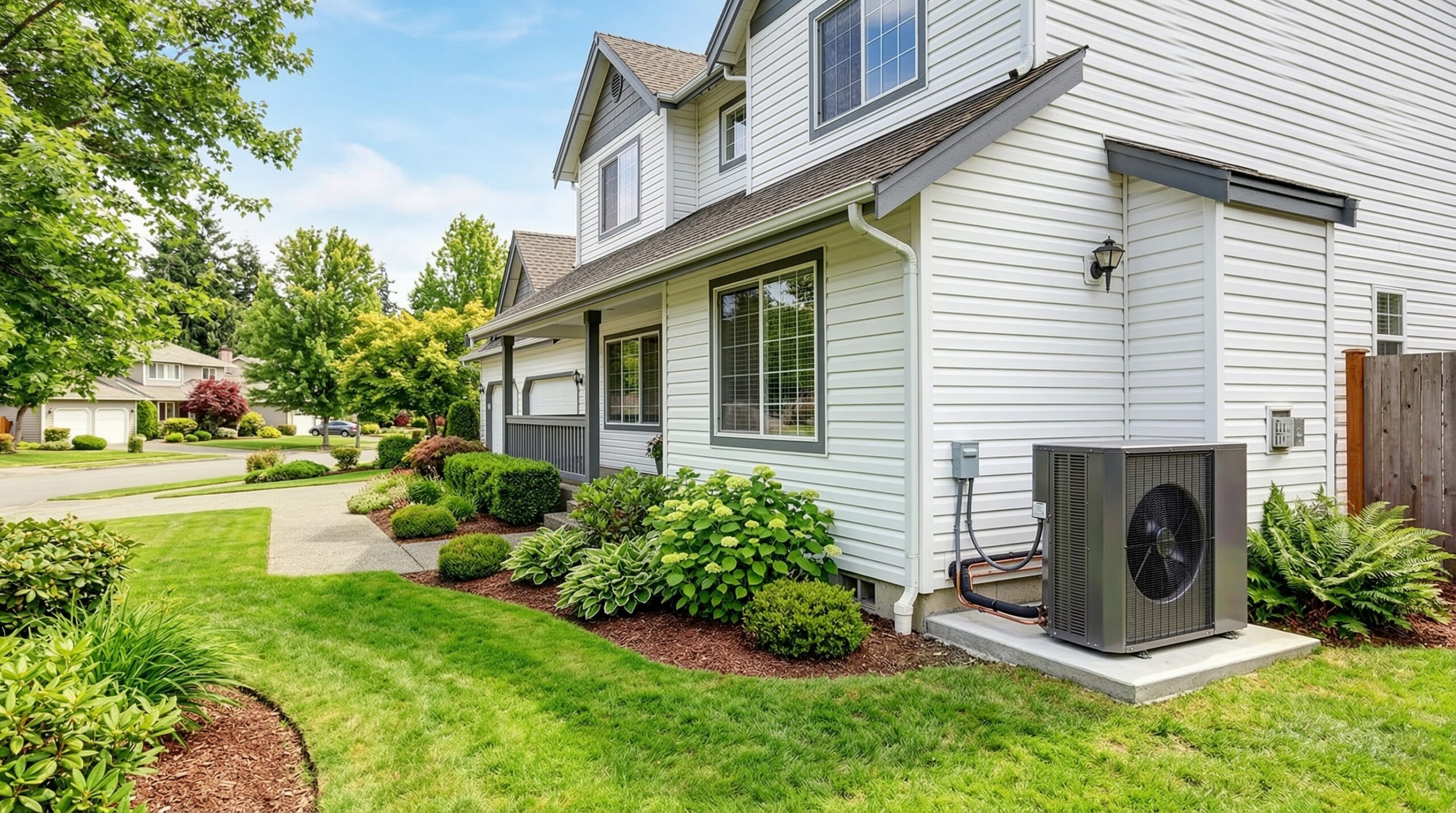
Heat pump replacement runs $4,500 to $14,000 for a standard air-source ducted system in a typical home. That’s the installed price including equipment, labor, and standard materials. Your actual number depends on home size, efficiency tier, region, and whether your ductwork needs attention. A compact home with a standard-efficiency unit in the Southeast might land closer to $4,500. Houston, TX, with its mild winters averaging 42 degrees in January, is an ideal heat pump market because temperatures rarely drop low enough to trigger inefficient backup heat strips. See our Houston heat pump cost guide for local pricing and current incentives. Austin is another ideal Zone 2A heat pump market, with Austin Energy offering $650 to $950 in rebates on qualifying heat pump installations; see our Austin HVAC replacement cost guide for the full rebate breakdown. A 3,000+ square foot home with a premium system on the West Coast can push past $19,000.
Heat pump replacement cost and heat pump installation cost refer to the same project: removing an existing system and installing a new heat pump. We use both terms throughout this guide because homeowners search for both.
Below you’ll find cost breakdowns by home size, efficiency rating, and heat pump type, plus current rebate sources, regional price adjustments, and installation factors that move the needle. If you’d rather skip straight to a number, try our free heat pump cost estimator: it takes about a minute and never asks for your contact info. You can also compare costs across system types on our furnace replacement cost page.
TL;DR: Heat pump replacement costs $4,500-$14,000 for air-source ducted systems, varying by home size and efficiency. The IRS says Section 25C applied only to qualifying property placed in service through December 31, 2025, so do not subtract that federal credit from a 2026 estimate. Get your personalized estimate here.
How Much Does Heat Pump Replacement Cost in 2026?
Most homeowners pay between $4,500 and $14,000 for a ducted air-source heat pump replacement, according to our analysis of manufacturer pricing and contractor rate surveys (HVAC Project Cost methodology). The mid estimate sits around $8,500 for standard-efficiency equipment in a baseline-cost region with existing ductwork in good shape. That’s the price for the full job: outdoor unit, indoor air handler, refrigerant lines, thermostat, and labor. According to AHRI shipment data, air-source heat pump shipments surpassed 4 million units in 2023, underscoring that these systems have become the mainstream choice for residential heating and cooling replacement projects across the United States. Our methodology cross-references manufacturer MSRP data from major distributors, regional contractor labor surveys covering over 1,200 HVAC companies, and Bureau of Labor Statistics occupational wage data for HVAC mechanics and installers. The $4,500 low end reflects a budget-brand system in a small home within a low-cost market. The $14,000 high end covers a premium-brand unit in a larger home where installation complexity adds labor hours. Mid estimates assume standard-efficiency equipment, baseline labor rates, and existing ductwork in serviceable condition.
Home size is the single biggest cost driver. A larger home needs more capacity (measured in tons or BTUs), which means a bigger compressor, larger air handler, and more labor to install it. Here’s what the price of a new heat pump looks like across six home size brackets:
| Home Size | Low Estimate | Mid Estimate | High Estimate |
|---|---|---|---|
| Under 1,000 sq ft | $3,800 | $7,200 | $11,900 |
| 1,000-1,500 sq ft | $4,500 | $8,500 | $14,000 |
| 1,500-2,000 sq ft | $5,000 | $9,400 | $15,400 |
| 2,000-2,500 sq ft | $5,400 | $10,200 | $16,800 |
| 2,500-3,000 sq ft | $5,900 | $11,100 | $18,200 |
| Over 3,000 sq ft | $6,300 | $11,900 | $19,600 |
Moving from a 1,500 square foot home to a 2,500 square foot home adds roughly $1,700 to the mid estimate. For a focused breakdown of heat pump costs in a 1,500 sq ft home, see our 1,500 sq ft HVAC replacement cost guide. That jump is almost entirely equipment-driven: a larger compressor and air handler cost more to manufacture and more to install. If you already know your tonnage, our heat pump cost by size guide prices each capacity from 2 to 5 tons directly and explains why a heat pump is sized off your heating load, not just your cooling load. For a broader look at how square footage affects HVAC pricing, see our full HVAC replacement cost guide.
How Much More Does a High-Efficiency Heat Pump Cost?
Efficiency upgrades add 15% to 30% to your base cost, depending on how high you go. According to the U.S. Department of Energy, a residential split-system heat pump manufactured on or after January 1, 2023 must be rated at least 14.3 SEER2 and 7.5 HSPF2. Single-package and specialty systems have different minimums, so check the product class on the AHRI certificate when comparing quotes. For a homeowner with a mid-estimate baseline of $8,500, a high-efficiency unit at 18-20 SEER2 adds roughly $1,275 to $1,700 to the total installed price. A premium 21+ SEER2 system adds $2,550 or more. Those dollar amounts matter because the resulting energy savings (potentially $300 to $600 per year on heating and cooling bills, depending on climate and usage) can recoup the premium within three to seven years. SEER2 measures cooling efficiency; HSPF2 measures heating efficiency. Higher numbers on both scales mean lower operating costs, though the upfront premium is real.
| Efficiency Tier | SEER2 Range | HSPF2 Range | Cost Multiplier |
|---|---|---|---|
| Standard | 14.3-17 SEER2 | 7.5-9 HSPF2 | 1.00x (baseline) |
| High-Efficiency | 18-20 SEER2 | 9-10 HSPF2 | 1.15x (+15%) |
| Premium | 21+ SEER2 | 10+ HSPF2 | 1.30x (+30%) |
What does that look like in real dollars? Take a 2,000 to 2,500 square foot home with a mid estimate of $10,200 at standard efficiency. Stepping up to high-efficiency (18-20 SEER) brings the mid estimate to roughly $11,700. A premium system (21+ SEER) from brands like Lennox or Carrier pushes it to about $13,300. The payback depends on your climate, electricity rates, and how heavily you use heating versus cooling.
The federal 25C heat pump tax credit expired December 31, 2025, so it cannot offset the efficiency premium on a 2026 installation. For a deeper look at how efficiency ratings affect pricing across all HVAC types, see our HVAC cost by efficiency guide. If you installed by the deadline, see our heat pump tax credit 2026 guide for how to claim up to $2,000 on your 2025 return.
What Are the Different Heat Pump Types and How Much Do They Cost?
Air-source ducted systems at $4,500 to $14,000 account for the vast majority of residential heat pump installations, but ductless mini-splits start as low as $3,000 and geothermal systems can exceed $35,000. According to AHRI (Air-Conditioning, Heating, and Refrigeration Institute) shipment data, air-source heat pump shipments have grown steadily since 2020, reflecting strong homeowner demand for all-electric heating and cooling. Here’s how the three main types compare on cost:
| Heat Pump Type | Typical Cost Range | Best For |
|---|---|---|
| Air-Source (ducted) | $4,500-$14,000 | Homes with existing ductwork |
| Ductless Mini-Split | $3,000-$10,000 | Homes without ducts, room additions, zones |
| Cold-Climate Air-Source | $6,000-$18,000 | Northeast, upper Midwest (zones 5-7) |
| Dual-Fuel / Hybrid | $5,500-$16,000 | Regions with very cold winters + existing gas |
| Geothermal | $15,000-$35,000+ | Homeowners planning to stay 15+ years |
Air-source ducted heat pumps are the standard replacement when you already have ductwork. They use an outdoor compressor and an indoor air handler connected by refrigerant lines. This is what most homeowners mean when they say “heat pump.”
Ductless mini-splits skip the ductwork entirely. An outdoor unit connects to one or more wall-mounted indoor heads. They’re a strong choice for older homes without ducts, additions, or when you want zone-by-zone temperature control. A single-zone system starts around $3,000; multi-zone setups climb toward $10,000. For a cost breakdown, see our mini-split vs. central AC cost comparison.
Cold-Climate and Dual-Fuel Heat Pumps
Cold-climate heat pumps (sometimes called “hyper heat”) use enhanced compressor technology to maintain performance down to -15 degrees F or colder. They run $6,000 to $18,000 installed, roughly 10% to 20% more than standard air-source models. If you’re in USDA climate zones 5-7 (roughly the Northeast, upper Midwest, or mountain West), a cold-climate unit is worth pricing out. These systems can reduce or eliminate dependence on expensive electric resistance backup heat.
Dual-fuel (hybrid) systems pair a heat pump with a gas furnace. The heat pump handles moderate temperatures efficiently, and the furnace kicks in during the coldest stretches. This combination costs $5,500 to $16,000 installed and is gaining popularity in regions where natural gas is cheap and winters are harsh. It’s a practical middle ground if you’re not ready to go fully electric. For gas furnace pricing, see our furnace replacement cost guide. If the system you are replacing burns heating oil, our oil furnace replacement cost guide prices both the straight swap and the oil-to-heat-pump conversion, including the tank removal and panel work that conversion can add.
Geothermal systems pull heat from underground instead of outdoor air. They’re the most efficient option and the most expensive upfront. The $15,000 to $35,000+ range reflects the cost of drilling or trenching for the ground loop, which accounts for roughly half the total price. A geothermal replacement (where the ground loop already exists) costs significantly less than a new installation.
What Is a Heat Pump and How Is It Different from AC?
A heat pump is a single system that handles both heating and cooling, unlike a standard air conditioner that only cools. In cooling mode, a heat pump works exactly like an AC. In heating mode, it reverses the refrigerant cycle and pulls heat from outdoor air into your home. According to the U.S. Department of Energy, heat pumps can reduce electricity use for heating by roughly 65% compared to electric resistance systems. That 65% reduction is measured against baseboard heaters, electric furnaces, and similar resistance-based systems. For a home spending $2,400 per year on electric resistance heating, switching to a heat pump could cut that bill to roughly $840, a savings of about $1,560 annually. The comparison is less dramatic against gas furnaces, where savings depend heavily on local electricity and natural gas prices. But the core advantage remains: one system handles both heating and cooling, which simplifies maintenance and eliminates the need for a separate furnace.
This dual function is why heat pump installation costs tend to run slightly higher than AC-only replacement. You’re getting year-round climate control from a single system instead of needing a separate furnace for heating. In mild and moderate climates, a heat pump can eliminate the need for a gas furnace entirely. For a side-by-side cost comparison, check our heat pump vs. AC cost guide.
But how do you know if a heat pump is right for your climate? Modern cold-climate heat pumps can heat effectively down to -15 degrees F or lower, which covers most of the continental U.S. If you’re south of the Mason-Dixon line, a standard air-source model handles both seasons comfortably. If you’re further north, cold-climate or dual-fuel options are worth the premium. High-desert cities like Albuquerque sit in a sweet spot where heat pumps handle both the dry summer heat and moderate winter lows efficiently. Southern Plains cities like Oklahoma City, OK offer a similar balance, with mild winters and hot summers that make heat pumps a practical year-round choice.
What Factors Affect Heat Pump Installation Cost?
The biggest installation cost drivers are your region, ductwork condition, and brand tier. Together, these variables can swing your total cost by $2,000 to $5,000 beyond the equipment price, based on our analysis of regional labor data and contractor surveys (HVAC Project Cost methodology). Some factors you can control. Others are baked into your location and home.
Regional Price Differences
Labor rates and permitting costs vary significantly by region. According to the Bureau of Labor Statistics, the median hourly wage for HVAC mechanics and installers ranges from about $22 in lower-cost Southern states to over $35 in Western metro areas. A heat pump job in Portland costs roughly 25% more than the same project in Charlotte, even with identical equipment.
| Region | Cost Adjustment | Example: Mid Estimate (1,500-2,000 sq ft) |
|---|---|---|
| Southeast / Midwest | Baseline | $9,400 |
| Southwest | +5% | $9,900 |
| Northeast | +15% | $10,800 |
| West | +25% | $11,800 |
Ductwork Condition
If your existing ductwork is in good shape, there’s no added cost. But damaged, leaking, or undersized ducts can add $500 to $5,000 to the project. Minor sealing and repairs typically fall in the $500 to $1,500 range. A full ductwork replacement, common in older homes or when converting from a boiler system, runs $2,000 to $5,000.
Brand Tier
Budget brands (Goodman, Payne) run about 10% below baseline. Premium brands like Trane, Carrier, and Lennox add roughly 20% on top. For a full breakdown of what each brand costs installed, see our heat pump replacement cost by brand guide. If you’re comparing Trane or Lennox for a heat pump, see our Trane vs Lennox heat pump cost guide. For Trane heat pumps on their own, our Trane heat pump cost guide prices every tier from the entry Choice line to the variable-speed Premier line, and our Carrier heat pump cost guide does the same across Carrier’s Comfort, Performance, and Infinity series with installed pricing by model number and tonnage. The mid-range tier (Rheem, York, Ruud) aligns with the baseline estimates in our tables. York’s Affinity YZV heat pump stands out with a lifetime compressor warranty at competitive installed pricing. Brand choice affects warranty length, noise levels, and available features like variable-speed compressors. Before deciding between system tiers, see our variable speed heat pump cost premium guide to understand whether the upgrade pencils out for your climate. The industry is also transitioning to lower-GWP refrigerants under EPA regulations phasing down HFC production, so newer models using R-454B may carry a slight price premium over legacy R-410A systems during the transition period.
What Tax Credits and Rebates Are Available for Heat Pumps in 2026?
The federal Section 25C credit is not available for heat pumps placed in service after December 31, 2025. For 2026 projects, current savings may come from state-administered home energy rebate programs, utility rebates, state incentives, and manufacturer offers. Program availability, income limits, qualifying models, and stacking rules vary, so verify each incentive before signing a contract. See the HVAC rebates by state guide and your utility’s current program page.
Section 25C Rules for 2025 Installations
If a qualifying heat pump was placed in service in 2025, the former credit covered 30% of eligible cost up to $2,000. Confirm the exact 2025 model requirements through the manufacturer and IRS guidance, then claim the credit on IRS Form 5695 with your 2025 return. These rules do not make a 2026 installation eligible.
- Equipment had to be placed in service no later than December 31, 2025
- The system had to meet the applicable 2025 efficiency requirements
- The property and taxpayer had to meet the IRS residence rules
- The credit is claimed on IRS Form 5695 with the 2025 tax return
- The heat pump credit was capped at $2,000 for the qualifying tax year
HEAR Rebates for Income-Qualifying Households
The IRA also created the Home Electrification and Appliance Rebates (HEAR) program, administered by individual states. Per the HEAR program guidelines from the Department of Energy, households at or below 80% of area median income (AMI) qualify for up to 100% rebate coverage on heat pump installations, capped at $8,000. Households between 80% and 150% of AMI qualify for 50% coverage. Check your state’s program rollout timeline, as availability varies.
How Current Rebates Can Work Together
State and utility programs may be combined when both administrators allow it, but the rules vary. Check energy.gov/save, your state energy office, and your utility for current eligibility and sequencing requirements.
For a 2026 installation, start with the full quoted price and subtract only incentives you have confirmed in writing. Do not subtract the expired $2,000 federal credit. An approved utility or state rebate can still change the net cost, but its amount and payment timing depend on the program.
How Do I Get a Personalized Heat Pump Cost Estimate?
Use our free HVAC replacement cost estimator to get a tailored range in about 60 seconds. The tables above give you a solid starting point, but your actual cost depends on your specific combination of home size, efficiency preference, region, and ductwork condition. The estimator factors in all of these variables. No email required, no contractor calls, just a transparent estimate you can use to evaluate quotes.
If you are in Reno or Northern Nevada, heat pumps are a strong fit for the four-season high desert climate. See the Nevada HVAC replacement cost guide for statewide cost ranges, NV Energy rebates, and regional system recommendations.
In hot-humid climates, heat pumps excel as both cooling and heating solutions. See our Louisiana HVAC cost guide for regional pricing in one of the best heat pump markets in the country.
Frequently Asked Questions
How much does a heat pump cost for a 2,000 square foot house?
According to HVAC Project Cost data, a 2,000 sq ft home pays $5,400 to $16,800 for a ducted air-source heat pump, with a mid estimate around $10,200 at standard efficiency. High-efficiency adds roughly 15%, and regional adjustments add 5%-25%. For complete installed cost ranges for a 2,000 sq ft home, see our 2,000 sq ft HVAC replacement cost guide. See our AC replacement cost page for comparison.
What is the $5,000 rule for HVAC?
Multiply your system’s age by the repair cost. If the result exceeds $5,000, replacement is the better financial decision, according to HVAC industry guidelines. Example: a 12-year-old heat pump needing a $450 repair gives 12 x $450 = $5,400, which is over the threshold, so replacing makes more sense.
What’s the average lifespan of a heat pump?
Heat pumps last 10-15 years with proper maintenance, according to the DOE. Ductless mini-splits can reach 15-25 years. Geothermal units last 20-25 years, with ground loops lasting 50+ years. Past 12 years with frequent repairs, get replacement quotes.
How much does it cost to replace a heat pump and air handler together?
The costs in this guide already include both components as a matched set. According to ENERGY STAR, mismatched components reduce efficiency and can void warranties. The outdoor unit accounts for about 60% of total cost, the air handler about 40%.
Are heat pumps worth it in cold climates?
Yes. Cold-climate heat pumps heat effectively down to -15 degrees F, covering most of the continental U.S. They cost 10%-20% more upfront, according to the DOE, but reduce dependence on costly electric resistance backup. For a 2026 purchase, compare operating savings and current utility or state rebates without the expired federal Section 25C credit.
Is a heat pump worth it in 2026?
For most homeowners, yes. According to the DOE, switching from electric resistance heat to a heat pump cuts heating costs by up to 65%. Run the numbers with your local rates and confirmed utility or state rebates. Do not include the expired Section 25C credit in a 2026 estimate.
How much does it cost to switch from AC to a heat pump?
Switching from central AC to a heat pump costs $4,500-$14,000 for a ducted air-source system, according to HVAC Project Cost data. Both outdoor and indoor units get swapped. The main added cost is electrical panel upgrades ($1,000-$2,500) if your panel can’t support heating mode.
What heat pump tax credit is available in 2026?
None under Section 25C for a new 2026 installation. The IRS says the credit applied only to qualifying property placed in service through December 31, 2025. Check current state-administered and utility rebate programs instead.
Our Methodology
The cost estimates on this page are drawn from our published estimator methodology, which combines manufacturer pricing data, contractor rate surveys, and regional labor cost indices. All figures represent installed costs including equipment, materials, labor, and standard permit fees. We update our data regularly and show our work so you can evaluate the numbers yourself.
These are planning estimates, not contractor quotes. Actual prices will vary based on your specific installation requirements, local market conditions, and the contractor you choose. Always get at least three written quotes before committing to a heat pump replacement.
Miami’s year-round warmth and minimal heating load make heat pumps an ideal fit. Miami heat pump pricing and FPL rebates →
Birmingham, AL sits in ASHRAE Zone 3A with hot-humid summers that push heat pumps harder than most Southern markets. Alabama Power Switch & Save offers up to $1,000 for qualifying installs. Birmingham heat pump costs and Alabama Power rebates →
Arkansas spans ASHRAE Zones 3A to 4A. Central Arkansas rarely sees sustained temperatures below 20°F, making standard heat pumps efficient year-round, while Northwest Arkansas (Fayetteville, Bentonville) benefits from cold-climate units. Entergy Arkansas offers $300 to $500 in rebates on qualifying equipment. Arkansas heat pump costs and Entergy rebates →
Put the numbers in context
What would it cost for your home?
Get a planning range based on your home, system and region. Free, with no email required.
Get my cost estimate