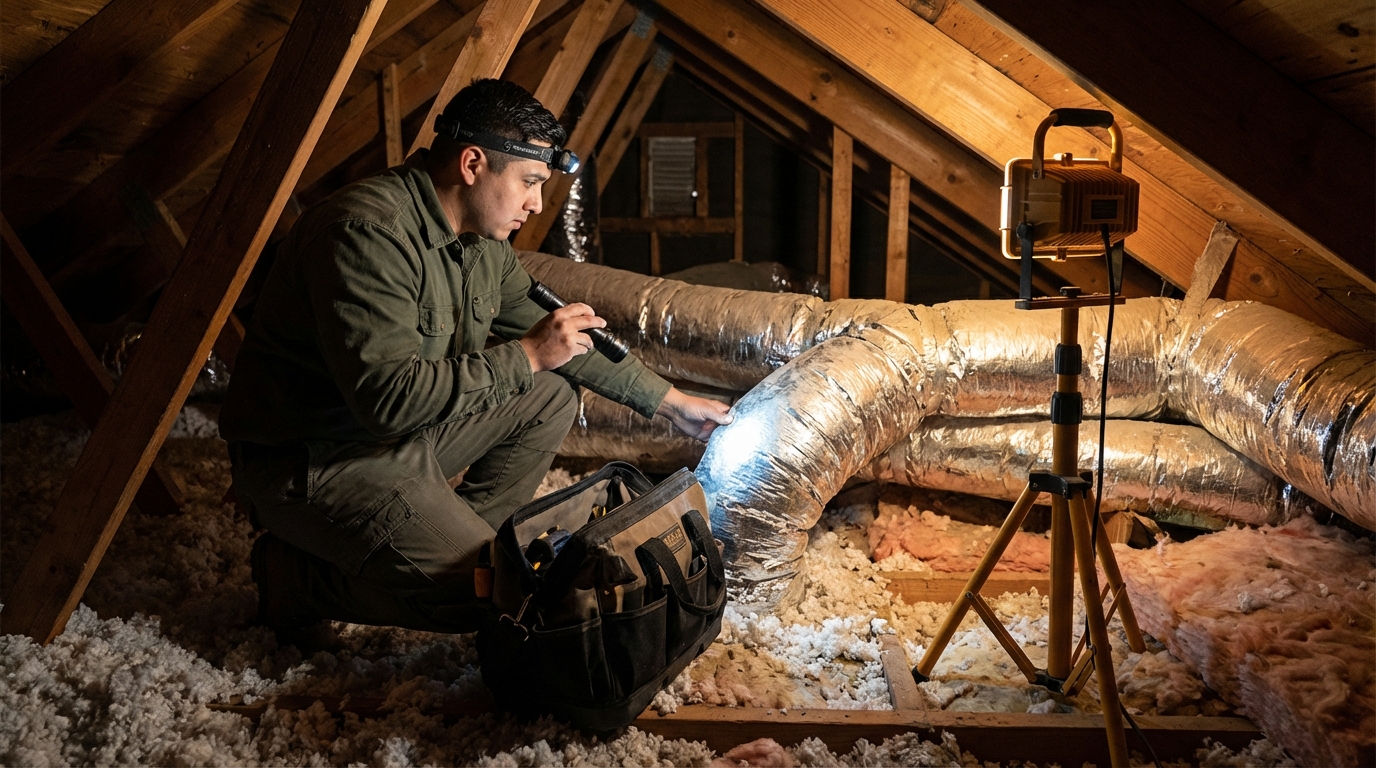
A 3,000 sq ft home sits at the upper end of the residential range, where equipment sizing decisions carry real consequences and a poorly matched system will underperform for years. This guide covers what size system you actually need, what replacement costs look like in 2026, and what makes a $9,000 job different from a $20,000 one at this square footage. For overall HVAC replacement cost context, that guide covers all system types and sizes.
What Size HVAC System Does a 3,000 Square Foot Home Need?
The general rule is 1 ton of cooling capacity per 400 to 600 sq ft. At 3,000 sq ft, that puts most homes in the 4 to 5 ton range. But the rule of thumb is a starting point, not a final answer.
Several factors determine where in that range your home falls:
- Climate zone: Homes in hot humid climates (Florida, Georgia, the Gulf Coast) need more capacity to handle high latent (moisture) loads. A 3,000 sq ft home in Tampa will typically need 5 ton. The same home in Raleigh, NC may work at 4 to 4.5 ton.
- Construction age and insulation: Homes built after 2010 with spray foam or dense-pack insulation often need less tonnage than older homes with fiberglass batts and air leaks. A well-sealed 3,000 sq ft home in a mixed climate may work at 4 ton. A 1980s home with single-pane windows in Atlanta likely needs 5 ton.
- Ceiling height: Standard 8-foot ceilings mean less conditioned volume. Open floor plans with 10 to 12 foot ceilings, cathedral ceilings, or two-story foyers add cubic footage that requires more capacity.
- Number of stories: Two-story homes are significantly harder to condition evenly. Heat rises and makes upper floors much harder to cool. At 3,000 sq ft, a two-story layout is the single biggest factor pushing homeowners toward two separate systems.
- Window area and orientation: Large south- or west-facing windows increase solar heat gain. Homes with extensive glazing in sun-exposed orientations need more cooling capacity.
The only accurate way to size an HVAC system for a 3,000 sq ft home is a Manual J load calculation. This is a room-by-room heat gain and heat loss analysis that accounts for climate, insulation, windows, infiltration, and internal heat sources. Any reputable contractor can run one before quoting. See how to size your HVAC system for a deeper explanation of the Manual J process. For detailed pricing on the most common units at this size, see the 4-ton AC replacement cost guide and the 5-ton HVAC replacement cost guide.
How Much Does HVAC Replacement Cost for a 3,000 sq ft Home?
Costs vary by system type, efficiency tier, and local labor market. The table below shows installed cost ranges using a 4 to 5 ton system, which covers most 3,000 sq ft homes.
| System Type | Low | Mid | High |
|---|---|---|---|
| Central AC only (4 ton) | $5,200 | $8,000 | $12,500 |
| Central AC only (5 ton) | $5,800 | $9,500 | $14,500 |
| Air-source heat pump (4 ton) | $6,200 | $10,000 | $15,500 |
| Air-source heat pump (5 ton) | $7,000 | $11,500 | $17,500 |
| Gas furnace only (100,000–120,000 BTU) | $3,200 | $5,200 | $8,000 |
| Full system: AC + furnace (4 ton) | $8,500 | $13,500 | $19,000 |
| Full system: heat pump + air handler (5 ton) | $10,000 | $16,000 | $22,000 |
| Two-system installation (full home) | $14,000 | $22,000 | $32,000 |
These are national installed cost ranges for 2026, based on contractor quote data across U.S. markets. Regional labor rates, permit costs, and equipment availability all affect your actual quotes. The South and Southeast tend to run near or slightly below national midpoints. The Northeast, California, and Pacific Northwest frequently run higher. Equipment efficiency ratings reference ENERGY STAR central air conditioner efficiency requirements. Use the HVAC cost estimator to get a personalized range based on your specific home details and location.
The heating half of the job scales differently from the cooling half. A 3,000 sq ft home needs 90,000 to 105,000 BTU of furnace output in a warm climate but 150,000 to 180,000 BTU in a cold one, which is past what a single residential furnace can deliver. See furnace cost by home size for the BTU-by-climate-zone chart and furnace-only pricing.
What Drives HVAC Costs Higher at 3,000 Square Feet?
At 3,000 sq ft, several factors push costs well above what you would see for a 1,500 or 2,000 sq ft home:
Why Does 5-Ton Equipment Cost Noticeably More?
A 5 ton unit costs $1,500 to $3,000 more than a 4 ton unit of the same brand and efficiency tier. The compressor, evaporator coil, condenser coil, and refrigerant charge all scale with tonnage. At this size tier, you are often at the upper end of residential equipment lines, where per-unit costs increase more steeply than in the 2 to 3 ton range.
When Does a Two-Story Home Require a Second System?
Many 3,000 sq ft homes are two stories. If the upper floor runs consistently 5 or more degrees warmer than the lower floor, a single system is not adequately controlling comfort. The options are: a zoning system with motorized dampers ($2,500 to $5,500 added to a single-system replacement), or a dedicated second unit for the upper level ($6,000 to $14,000 installed). Most two-story 3,000 sq ft homes that want genuine comfort throughout end up with two systems.
When Does Existing Ductwork Need Upgrading at This Size?
If your home previously had a 3.5 or 4 ton system and you are stepping up to 5 ton, the existing ductwork may be undersized. Ducts sized for lower airflow will create high static pressure with a larger unit, reducing efficiency and shortening equipment life. A full ductwork replacement adds $6,000 to $18,000 to the project at this home size. Partial resizing or sealing is less expensive but not always sufficient.
Does Replacing Both Units at Once Save Money at 3,000 sq ft?
If both your air conditioner and furnace (or air handler) are aging, replacing both at the same time saves on labor, refrigerant line work, and future service calls. Contractors typically discount the combined job by $800 to $2,000 compared to two separate replacements. At 3,000 sq ft, the combined job also ensures the new air handler is matched to the new outdoor unit for maximum efficiency.
How Do Costs Scale Compared to Smaller and Larger Homes?
Here is how replacement costs scale across common residential size brackets. These are midpoint estimates for a standard efficiency AC or heat pump replacement including installation.
| Home Size | Typical Tonnage | AC-Only Midpoint | Full System Midpoint |
|---|---|---|---|
| 1,500 sq ft | 2–2.5 ton | $4,500 | $8,000 |
| 2,000 sq ft | 2.5–3 ton | $5,800 | $9,500 |
| 2,500 sq ft | 3.5–4 ton | $6,800 | $11,500 |
| 3,000 sq ft (this guide) | 4–5 ton | $8,500 | $14,000 |
| 3,500 sq ft | 5–5.5 ton | $10,500 | $17,000 |
The full home size cost guide covers every bracket from under 1,000 sq ft to over 3,500 sq ft. For a closer look at the step up from 2,500 to 3,000 sq ft, the 2,500 sq ft HVAC cost guide provides the full cost breakdown for that size.
Should a 3,000 sq ft Home Use One System or Two?
The 3,000 sq ft page should answer the layout question more than the basic tonnage question. At this size, the best replacement is often not a single bigger unit. A two-story home with bedrooms upstairs may need two smaller systems or a zoning system so the upper floor does not run hot while the lower floor overcools.
Ask contractors to price both designs when comfort problems are already visible: one 5-ton system with zoning versus two smaller systems split by floor or wing. A one-system quote may look cheaper, but if the duct layout cannot balance the home, the cheaper bid can lock in uneven temperatures for another 12 to 15 years. This is the main reason the 3,000 sq ft guide exists separately from the parent size page.
Which Efficiency Tier Makes Sense for a 3,000 sq ft Home?
At 3,000 sq ft, you are running a larger system for more hours per year than a smaller home. That makes efficiency tier selection more consequential. A 5 ton SEER2 18 system running 2,200 hours annually in Atlanta will save meaningfully more on energy bills than a SEER2 14.3 unit compared to the same calculation at 1,500 sq ft or in a 1,200 sq ft home, where the annual cooling load is small enough that a premium efficiency tier often outlives its own payback window.
| Tier | SEER2 Rating | Cost Premium vs. Entry | Best For |
|---|---|---|---|
| Entry | 14.3–15 SEER2 | Baseline | Short-term budget, horizon under 5 years |
| Mid | 16–18 SEER2 | +$1,500–$2,500 | Most homeowners, 7–15 year payback |
| High | 19–22 SEER2 | +$3,000–$5,000 | Long-term owners, hot climates, high runtime |
| Premium | 23+ SEER2 | +$6,000+ | Extreme climate, 15+ year ownership horizon |
For most homeowners planning to stay in a 3,000 sq ft home in the South or Southeast for 7 or more years, a mid-tier (SEER2 16 to 18) system provides a reasonable payback window. The federal Section 25C tax credit ended for equipment placed in service after December 31, 2025, so 2026 ROI calculations should rely on utility rebates, state programs, operating-cost savings, and contractor pricing instead of federal credits. The HVAC cost by efficiency tier guide breaks down payback periods with regional energy cost data.
Frequently Asked Questions
What size HVAC do I need for a 3,000 sq ft house?
Most 3,000 sq ft homes need a 4 to 5 ton HVAC system. The standard rule is 1 ton per 400 to 600 sq ft, but climate zone, insulation quality, ceiling height, and window area all shift the number significantly. Homes in hot humid climates like Florida or the Gulf Coast lean toward 5 ton. A well-insulated home in a milder climate may work at 4 ton. A Manual J load calculation from a licensed HVAC contractor gives you the accurate size for your specific home. See the full HVAC sizing guide for details on the calculation process.
How much does it cost to replace HVAC in a 3,000 sq ft home?
Replacing a central AC system in a 3,000 sq ft home typically costs $8,000 to $14,500 installed. A full system replacement (AC plus furnace, or heat pump plus air handler) runs $13,500 to $22,000. Two-system installations for a two-story home range from $14,000 to $32,000. Prices vary by region, contractor, equipment brand, and efficiency tier selected.
Do I need two HVAC systems for a 3,000 sq ft home?
It depends on your floor plan. Single-story 3,000 sq ft homes can usually be served by one properly sized system with well-designed ductwork. Two-story homes at this size frequently benefit from separate systems per floor because heat rises and makes upper floors significantly harder to cool with a single unit. A zoning system with motorized dampers is a middle-ground option. If your upper floor is consistently 5 or more degrees warmer than the lower floor in summer, a second system is worth serious consideration.
Is a 4-ton or 5-ton unit right for a 3,000 sq ft house?
For most 3,000 sq ft homes, the right size falls between 4 and 5 ton. A 4 ton unit works well in newer, well-insulated single-story homes in moderate climates. A 5 ton unit is typically needed for two-story homes, older construction with less insulation, or homes in hot humid climates. Never go by square footage alone: an oversized unit will short-cycle, creating humidity problems and reducing equipment life by years. Only a Manual J load calculation confirms the right answer for your specific home.
Does a 3,000 sq ft home qualify for HVAC tax credits in 2026?
For 2026 installations, the federal Section 25C credit is not available. The IRS says the Energy Efficient Home Improvement Credit applied to qualifying property placed in service before December 31, 2025. If your 3,000 sq ft home completed a qualifying HVAC upgrade in 2025, review IRS Form 5695 and consult a tax professional. For 2026 projects, use the HVAC tax credits and rebates guide to check state, utility, and manufacturer programs.
How long will HVAC replacement take for a 3,000 sq ft home?
A standard single-system replacement at 3,000 sq ft typically takes one full day. If ductwork needs modifications or the air handler is in a difficult attic location, the job can extend into a second day. A two-system installation typically takes two to three days. Permit inspection, where required by local code, adds one to two days to the overall timeline.
How do I get an accurate HVAC quote for a 3,000 sq ft home?
Get at least three written quotes from licensed HVAC contractors. Each quote should specify the model number, SEER2 rating, tonnage, warranty terms, and confirmation that a Manual J load calculation was performed. At 3,000 sq ft, any contractor quoting a system size without assessing your home in person is skipping a critical step. Ask each contractor directly whether one system or two is the right choice for your specific layout and why. The HVAC replacement planning guide covers what every quote should include and how to compare bids. For large adobe and territorial-style homes common in the Southwest, high desert heat loads and altitude de-rating add complexity to sizing: see the New Mexico HVAC replacement cost guide for region-specific details.
Put the numbers in context
What would it cost for your home?
Get a planning range based on your home, system and region. Free, with no email required.
Get my cost estimate