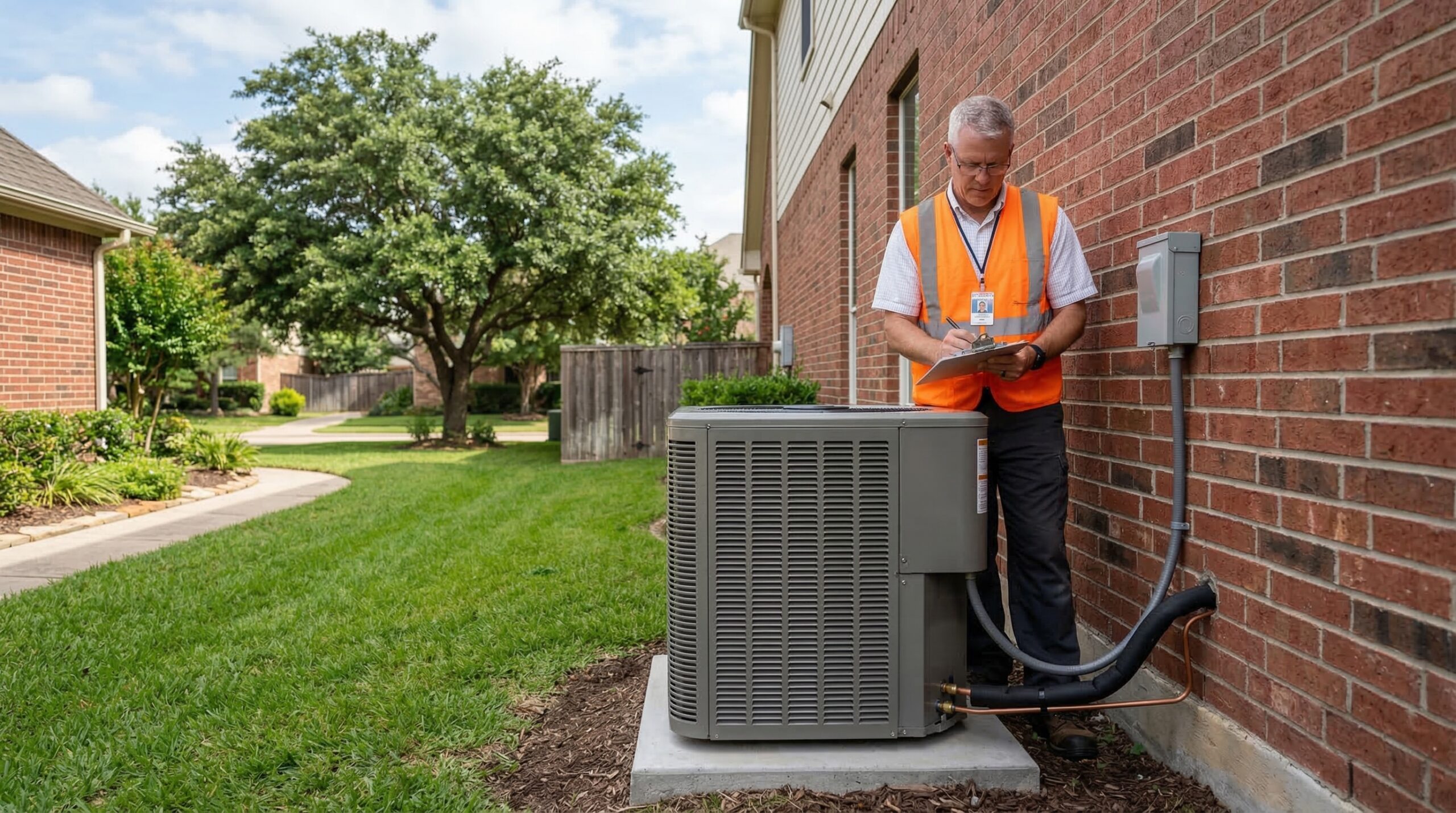
In almost every US jurisdiction, replacing your HVAC system requires a mechanical permit (see Missouri permit requirements for state-specific details). That permit isn’t just paperwork: it triggers a licensed inspector to verify the installation is safe before you button everything up. Skipping it can cost you far more than the $50–$450 permit fee when you sell your home, file an insurance claim, or apply for energy rebates.
Does HVAC Replacement Always Require a Permit?
Yes, in almost all US jurisdictions a full HVAC replacement requires a mechanical permit (see Missouri permit requirements for state-specific details). The rule exists because replacing a heating or cooling system involves electrical connections, refrigerant lines, and often a gas line (all of which carry safety risks the inspector is trained to catch).
Work that triggers a permit requirement in most jurisdictions:
- Full system replacement (central AC plus air handler, or gas furnace)
- Heat pump installation (air-source or ground-source)
- Adding or extending refrigerant line sets
- New or modified gas line connection
- Changing equipment capacity (for example, upgrading from a 2-ton to 3-ton system)
- Replacing or upgrading the electrical disconnect
Work that may not require a permit (varies by jurisdiction):
- Like-for-like refrigerant coil swap with no new line work, same specs
- Thermostat replacement only
- Routine maintenance: filter change, coil cleaning, seasonal tune-up
- Minor repairs under a cost threshold (often $500–$1,000, varies by jurisdiction)
The “like-for-like” exemption is narrower than most homeowners assume. Even a same-brand, same-capacity condenser swap usually requires a permit because the inspector verifies electrical and refrigerant connections, not just equipment specs. When in doubt, call your local building department before authorizing work without a permit.
What Does an HVAC Permit Cost?
Most HVAC permits cost $50–$450 for a standard residential replacement. For example, Tulsa, OK homeowners pay $50–$300 for a standard mechanical permit. The fee structure varies by jurisdiction: some charge a flat fee, others use a value-based formula (a percentage of the project cost), and a few charge per type of equipment.
| State / Region | Typical Permit Cost | Fee Structure |
|---|---|---|
| Florida, Miami-Dade County | $150–$350 | Value-based; HVHZ codes add complexity |
| Florida, Broward County | $150–$250 | Value-based fee schedule |
| Florida, Orange County (Orlando) | $150–$275 | FY2025–2026 fee directory |
| Florida, Hillsborough County (Brandon, Tampa) | $100–$200 | Value-based; NOC required if project exceeds $15,000; HillsGovHub portal |
| North Carolina, Mecklenburg (Charlotte) | $120–$170 | Mecklenburg County LUESA mechanical permit |
| North Carolina, Wake County (Raleigh) | $60–$100 | Flat mechanical permit |
| South Carolina, Columbia | $32–$48 | $20 base + $4 per $1,000 over $5,000 |
| Georgia, Savannah | $60 | Flat fee for new stand-alone AC unit |
| Georgia, Fulton County (Atlanta) | $75–$150 | Value-based residential mechanical |
| Tennessee, Shelby County (Memphis) | $75–$150 | Develop901 portal, value-based |
| Texas, City of Austin | $50 | Flat fee |
| Texas, Fort Worth | $75–$150 | City of Fort Worth / Tarrant County |
| Texas, El Paso | $75–$150 | El Paso Building and Development Services |
| National range (most US metros) | $50–$450 | Flat or value-based |
Permit fees are typically a small fraction of the total project cost. On a $7,000–$12,000 replacement, even a $300 permit adds less than 4% to the total. Factor it into your budget as a fixed line item and verify the exact fee with your local building department or ask your contractor before signing.
City-level permit processes can differ substantially. The Providence, RI HVAC replacement cost guide walks through the city’s value-based permit fee calculator and the separate gas permit requirement through the Department of Inspection and Standards as one concrete example.
Who Pulls the HVAC Permit: Contractor or Homeowner?
In most states, the licensed HVAC contractor pulls the permit as the permit holder. This is the standard practice for good reason: the contractor is legally accountable for the work meeting code, and their license is on the line if it doesn’t. Verifying that a contractor holds an active license before you request a quote is one of the most important vetting steps; our guide to choosing an HVAC contractor covers exactly how to check.
Homeowners can pull owner-builder permits in most states, but doing so creates three problems:
- Most equipment manufacturers require professional installation for the warranty to be valid. An owner-builder permit signals DIY work, which voids most warranties.
- When you sell your home, you’ll need to disclose owner-builder work. Buyers and their agents treat this as a risk flag, and you may need to provide proof of inspection before closing.
- Insurance companies may raise questions about coverage if an owner-built system causes a claim.
If a contractor tells you “we don’t pull permits,” that is a significant red flag. Either they lack the required license, or they are trying to skip inspections that protect you. Reputable contractors include permit pulling as part of the project. The permit admin fee ($50–$150) is typically included in the quote or listed as a separate line item.
Before hiring any contractor, ask directly: “Does your quote include pulling the mechanical permit and scheduling the inspection?” For a complete list of what every quote must cover, see our HVAC quote checklist. The answer should be yes.
What Happens If You Skip the HVAC Permit?
Skipping the permit creates financial and legal exposure that far outweighs the cost of getting one. Here are the four most common consequences homeowners face:
Home Sale Complications
Buyers’ home inspectors flag unpermitted HVAC work. If your county records show no permit for a system installed in 2022, that shows up. Sellers routinely must either disclose the unpermitted work or pull a retroactive permit before closing. Retroactive (after-the-fact) permits typically cost 2x–3x the standard fee, may require opening walls for inspection access, and can delay a closing.
Insurance Claim Denial
If unpermitted HVAC work contributes to a fire, carbon monoxide incident, or water damage, your homeowner’s insurance company may deny the claim citing unpermitted work. The policy language typically includes a clause voiding coverage for losses caused by work not performed to code.
Manufacturer Warranty Void
Most HVAC equipment warranties (Carrier, Trane, Lennox, Rheem, Goodman) require installation by a licensed contractor. Some go further and require a permitted installation. Without a permit, you may be on the hook for parts and labor on a system that’s only two years old.
Safety Risk
Inspections catch real problems: faulty gas connections, improperly sized refrigerant lines, undersized electrical disconnects. These aren’t theoretical risks. They’re the reason mechanical permits exist. A missed gas connection can cause a carbon monoxide leak. Improper refrigerant charging can damage a system within months of installation.
What Does the HVAC Permit Inspection Process Look Like?
Most residential HVAC replacements require one or two inspections: a rough-in inspection (before any walls are closed) and a final inspection. Here’s the typical sequence:
- Contractor pulls permit before work starts (usually online, same-day to 2 business days)
- Equipment is installed, lines connected, electrical work completed
- Contractor calls for inspection (1–3 business days to schedule in most metro areas)
- Inspector verifies: equipment sizing, refrigerant line routing, gas connection (if applicable), electrical disconnect, condensate drainage
- Inspector signs off or issues a correction notice (deficiencies must be corrected and re-inspected)
- Final permit closed, documented in county records
The total timeline adds 3–7 business days above “same-day” installation. In practice, most reputable contractors build this into their scheduling and it doesn’t feel like a delay. Budget for it when planning a replacement before a heat wave or cold snap.
Do Energy Rebates and Tax Credits Require a Permit?
Many utility and state rebate programs require a permit or final inspection, but requirements vary. The federal Section 25C credit is not available for equipment placed in service in 2026.
If qualifying equipment was placed in service in 2025, review IRS Form 5695 and the applicable records guidance for the 2025 claim. A permit documents code compliance, but current utility and state programs set their own documentation rules. Confirm whether the application requires a permit number or inspection approval before work begins.
A non-permitted installation can disqualify a project from programs that require code-compliance documentation. Permit cost and rebate amounts vary, so confirm both with the local authority and program administrator rather than assuming the permit will pay for itself.
For the federal Section 25C cutoff and current state or utility programs, see our HVAC tax credits and rebates guide.
What Are the HVAC Permit Requirements in My State?
Every state covered on this site requires permits for residential HVAC replacement. Permit requirements are set at the city and county level, so fees vary, but the requirement itself is statewide. The DSIRE database (maintained by NC State University) tracks state energy incentive programs and their permit requirements. This table covers the states most commonly asked about based on our city pages:
| State | Permit Required? | Who Pulls It? | Notable Rules |
|---|---|---|---|
| Florida | Yes, always | Licensed contractor | Miami-Dade/Broward in HVHZ zone; extra code requirements apply |
| Georgia | Yes | Licensed contractor | Owner-builder allowed but voids most warranties |
| North Carolina | Yes | Licensed contractor (G2 license) | Some jurisdictions have like-for-like minor repair exemptions |
| South Carolina | Yes | Licensed contractor | $20 base plus value-based fee; statewide uniform code |
| Tennessee | Yes | Licensed contractor | HVAC contractor license required statewide; city inspections standard |
| Texas | Yes (city-level) | Licensed contractor | Requirements and fees vary by city; rural unincorporated areas sometimes exempt |
| Virginia | Yes | Licensed contractor | Statewide uniform building code; inspections required in all jurisdictions |
| Alabama | Yes | Licensed contractor | Homeowner-builder exemption applies to primary residence only |
| Louisiana | Yes | Licensed contractor | State fire marshal jurisdiction in some jurisdictions |
For city-specific permit costs, see our local guides: Raleigh, NC, Charlotte, NC, Nashville, TN, Miami, FL, and Columbia, SC.
Frequently Asked Questions About HVAC Permits
Can I replace my HVAC without a permit if it is the same size?
Not in most jurisdictions. Even a same-brand, same-capacity replacement typically requires a permit because the inspector is verifying electrical and refrigerant connections, not just equipment specs. A few jurisdictions have a “minor repair” exemption below a cost threshold, but a full system replacement usually falls outside it. Call your local building department before authorizing any work without a permit.
How long does an HVAC permit take to get?
Most residential mechanical permits are issued same-day to within 2 business days through online portals. Inspections are typically scheduled within 1–3 business days after the work is complete. Budget 3–7 business days total above immediate installation scheduling.
Is the permit cost included in my HVAC quote?
It depends on the contractor. Some include the permit as a line item. Others list a separate admin fee ($50–$150) on top of the permit fee itself. Always ask before signing: “Does your quote include pulling the permit and scheduling the inspection?” If the answer is no, ask why.
What is an after-the-fact HVAC permit?
An after-the-fact permit (also called a retroactive permit) is pulled after work is already complete. Most jurisdictions allow it, but charge 2x–3x the standard permit fee, and you may need to open walls so the inspector can verify connections. This situation is most common when selling a home with unpermitted HVAC work that surfaces in the buyer’s inspection report.
Do I need a permit to replace just the outdoor AC unit?
In most jurisdictions, yes. Replacing the condenser (outdoor unit) involves refrigerant lines and electrical connections, both of which trigger permit requirements. A few jurisdictions have exemptions for like-for-like condenser swaps under a cost threshold, but these are the exception. Verify with your local building department before proceeding without a permit.
Can skipping a permit void my HVAC warranty?
Yes. Most major HVAC manufacturers (Carrier, Trane, Lennox, Rheem, Goodman) require installation by a licensed contractor, and some require a permitted installation, as conditions of the equipment warranty. Without a permit documenting professional installation, you may lose warranty coverage on a system that cost $5,000–$15,000.
Put the numbers in context
What would it cost for your home?
Get a planning range based on your home, system and region. Free, with no email required.
Get my cost estimate