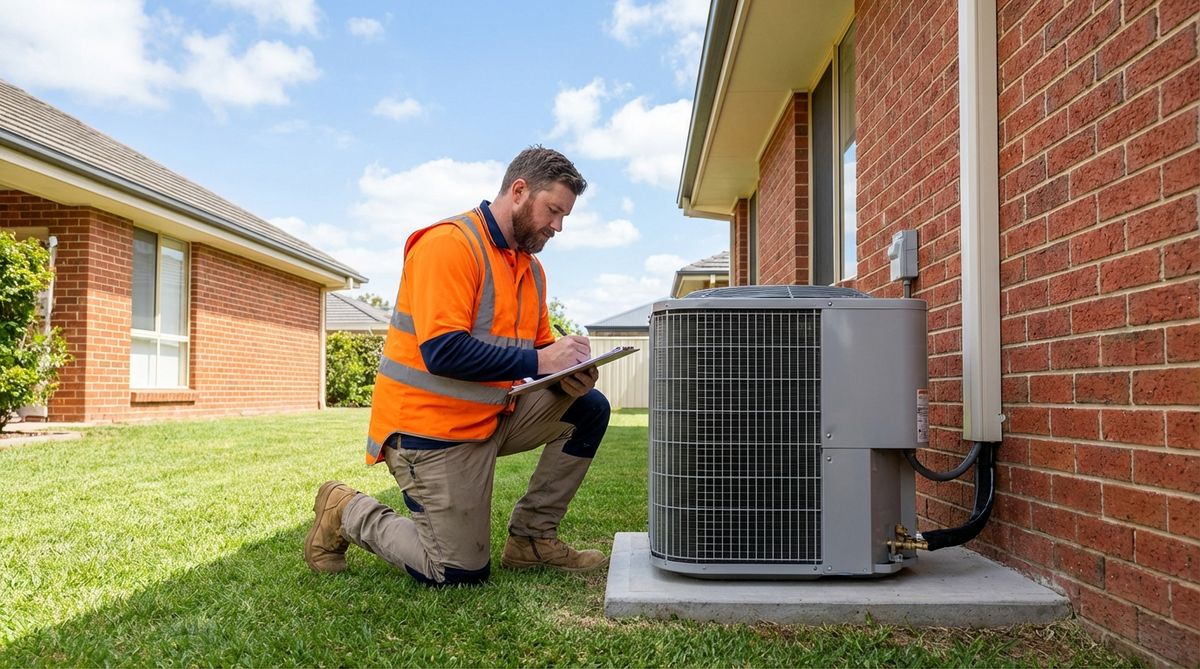
Replacing both the air conditioner and furnace at the same time costs $7,000 to $18,000 for most homes in 2026. That range covers equipment, labor, permits, and startup for a matched system. The exact number depends on your home size, the efficiency tier you choose, and your local labor market. Bundling the two replacements into one project typically saves $500 to $2,500 compared to replacing each unit on its own timeline. Use our free HVAC cost estimator to get a personalized range for your home.
How Much Does It Cost to Replace Both the AC and Furnace in 2026?
The installed cost for a combined AC and furnace replacement depends on the efficiency tier, home size, and brand. Here is what homeowners are paying in 2026 across three system tiers.
| System Tier | AC Specs | Furnace Specs | Installed Cost (Both) |
|---|---|---|---|
| Builder grade | SEER2 14.3, single-stage | 80% AFUE, single-stage | $7,000–$10,500 |
| Mid-range | SEER2 16–17, two-stage | 95%+ AFUE, two-stage | $10,000–$14,000 |
| Premium | SEER2 19+, variable-speed | 97%+ AFUE, modulating | $14,000–$18,000+ |
The national average for a mid-range bundled replacement falls between $10,500 and $13,500 installed. That includes the outdoor condenser, indoor furnace with evaporator coil, thermostat, refrigerant charging, electrical and gas connections, and permit fees. Equipment alone (both units) typically accounts for 50–60% of the total, with labor making up the rest.
These numbers assume existing ductwork in serviceable condition. If your duct system needs repair or replacement, add $1,500 to $8,000 depending on the extent of the work. See our HVAC replacement with ductwork cost guide for those scenarios.
Why Does Replacing the AC and Furnace Together Save Money?
Replacing one unit at a time seems like a way to spread out the cost, but it usually ends up costing more in total. Here is where the savings come from when you bundle both replacements into a single project.
Shared Labor Costs
A crew is already on site, the electrical panel is exposed, and the gas line is accessible. Adding the second unit to the same job costs less in labor than scheduling a completely separate installation later. Most contractors charge $500 to $1,500 less for the combined job than they would for two separate visits.
One Permit Instead of Two
A mechanical permit for HVAC work typically costs $75 to $400 depending on your municipality. Replacing both units under a single permit saves you the cost and hassle of a second filing. Some jurisdictions charge a flat fee for the entire HVAC system regardless of how many components you replace.
Matched System Efficiency
An air conditioner and furnace share the air handler blower. When both units are designed to work together (same manufacturer, same product line), the system operates at its rated efficiency. Pairing a new high-SEER2 condenser with an old furnace blower can reduce the AC’s effective efficiency by 10–15%. The condenser is rated at SEER2 17 on paper, but the older blower cannot deliver the airflow needed to reach that number.
Warranty Alignment
Manufacturer warranties on matched systems are typically 10 years for parts. If you replace only the AC now and the furnace in 3 years, you will have staggered warranty expiration dates. One system ends coverage while the other still has years left, which complicates future replacement planning.
What Does a Bundled AC and Furnace Cost by Home Size?
Your home’s square footage determines the system capacity you need, which directly affects the equipment cost. Here is the mid-range pricing for bundled replacements by home size.
| Home Size | AC Size | Furnace Output | Bundled Cost (Mid-Range) |
|---|---|---|---|
| 1,000–1,500 sq ft | 2 ton | 60,000 BTU | $7,000–$11,000 |
| 1,500–2,000 sq ft | 2.5–3 ton | 80,000 BTU | $9,000–$13,500 |
| 2,000–2,500 sq ft | 3–3.5 ton | 100,000 BTU | $10,500–$15,000 |
| 2,500–3,000 sq ft | 3.5–4 ton | 100,000 BTU | $12,000–$16,500 |
| 3,000+ sq ft | 4–5 ton | 120,000 BTU | $14,000–$18,000+ |
These ranges assume existing ductwork in good condition, a standard installation (no major electrical or structural work), and mid-range equipment (SEER2 16–17 AC paired with a 95%+ AFUE furnace). Proper sizing requires a Manual J load calculation, not just a square footage estimate. Oversizing leads to short-cycling, higher bills, and reduced equipment life.
How Do SEER2 and AFUE Ratings Affect Combo Replacement Cost?
Two efficiency ratings determine how much you pay up front and how much you spend on energy over the system’s 15–25 year lifespan.
SEER2 (Seasonal Energy Efficiency Ratio 2) measures air conditioning efficiency. The federal minimum is 13.4 in the North and 14.3 in the Southeast. Higher SEER2 ratings cost more to purchase but reduce cooling bills.
AFUE (Annual Fuel Utilization Efficiency) measures furnace efficiency. An 80% AFUE furnace sends 20 cents of every heating dollar up the flue. A 96% AFUE furnace loses only 4 cents. The minimum AFUE for new gas furnaces is 80% (non-condensing) or 90% in some jurisdictions, with most mid-range models now at 95–96%.
| Combo Tier | SEER2 / AFUE | Equipment Premium | Annual Energy Savings |
|---|---|---|---|
| Minimum | 14.3 / 80% | Baseline | N/A |
| Mid-range | 16–17 / 95% | +$1,500–$3,000 | $300–$600/yr |
| Premium | 19+ / 97%+ | +$3,500–$7,000 | $500–$900/yr |
A mid-range combo (SEER2 16, 95% AFUE) typically pays back its efficiency premium in 4–7 years through lower utility bills. The premium tier (SEER2 19+, 97%+ AFUE with variable-speed operation) takes 6–10 years to pay back but offers the quietest operation and best humidity control. For a full breakdown of how efficiency ratings translate to real costs, see our HVAC efficiency ratings and cost guide.
Should You Get a Heat Pump Instead of an AC and Furnace?
A heat pump handles both heating and cooling in a single outdoor unit, eliminating the need for a separate gas furnace. In mild and moderate climates (IECC zones 1 through 3, covering most of the South and mid-Atlantic), a heat pump can fully replace the AC and furnace combo at a comparable or lower installed cost.
| Option | Installed Cost | Best Climate Fit |
|---|---|---|
| AC + gas furnace (mid-range) | $10,000–$14,000 | All climates (needs gas line) |
| Standard heat pump | $5,500–$12,500 | Mild winters (zones 1–3) |
| Cold-climate heat pump | $8,000–$16,000 | Cold winters (zones 4–6) |
| Dual-fuel (heat pump + gas furnace) | $10,000–$18,000 | Extreme cold (zones 5–7) |
The federal Section 25C credit expired for equipment placed in service after December 31, 2025. For a 2026 heat pump, AC, or furnace installation, compare current utility and state incentives instead of subtracting a federal credit from the quote. Check the HVAC tax credits and rebates guide for current program details, and verify your state’s incentives at DSIRE.
For a detailed cost comparison between a heat pump and a central AC plus furnace system, see our heat pump vs. central air cost guide.
How Much Do Major Brands Charge for AC and Furnace Bundles?
Brand choice affects the installed price by $1,500 to $5,000 or more. Here is how the major residential brands compare for a complete AC and furnace bundle (mid-range efficiency, 3-ton AC with 80,000 BTU furnace, installed).
| Brand | Builder Grade | Mid-Range | Premium |
|---|---|---|---|
| Goodman / Amana | $7,000–$9,500 | $9,000–$12,000 | N/A |
| Rheem / Ruud | $7,500–$10,000 | $9,500–$13,000 | $13,000–$15,500 |
| Carrier / Bryant | $8,500–$11,000 | $11,000–$14,500 | $14,500–$18,000 |
| Trane / American Standard | $8,500–$11,500 | $11,000–$15,000 | $15,000–$18,500 |
| Lennox | $9,000–$12,000 | $12,000–$15,500 | $15,500–$19,000+ |
Goodman and Amana (owned by Daikin) offer the lowest installed prices and are widely available through independent contractors. Their warranties are competitive at 10 years parts, though they do not offer a premium variable-speed product line comparable to Carrier’s Infinity or Trane’s XV series.
Carrier, Trane, and Lennox command higher prices but include features like variable-speed compressors, modulating gas valves, and smart thermostat integration. Lennox tends to be the most expensive because it sells exclusively through Lennox dealer networks with fewer price-competitive installers.
For brand-specific furnace pricing, see our furnace replacement cost by brand guide. For AC-specific brand comparisons, see the AC replacement cost by brand breakdown.
When Should You Replace Both Units vs. Just One?
Replacing both units is not always the right call. The decision depends on the age and condition of each unit. Here is a practical framework.
Replace Both When:
- Both units are over 12 years old
- The failing unit is under warranty and the other is past warranty
- You want matched system efficiency (new AC with old furnace blower loses 10–15% efficiency)
- You plan to stay in the home more than 5 years
- The existing furnace uses R-22 refrigerant connections or has a cracked heat exchanger
Replace Just One When:
- The other unit is under 8 years old and running efficiently
- You are selling the home within 2 years (ROI on a full system replacement is limited)
- Budget constraints make the combined cost prohibitive, and financing is not an option
- The remaining unit was recently serviced and has no performance issues
If your AC is failing and the furnace is 10–15 years old, replacing both is almost always the better financial decision. The labor savings alone cover much of the furnace cost difference, and you avoid a second disruption in 3–5 years. For help deciding whether to repair or replace an individual unit, see our repair vs. replace HVAC guide. If you are noticing warning signs but are not sure if it is time, review our signs your HVAC needs replacement checklist.
How Can You Finance an AC and Furnace Replacement?
A combined replacement is a significant expense, typically $10,000 to $15,000 for a mid-range system. Several financing options can make the project manageable.
Contractor Financing
Most major HVAC contractors offer in-house financing through partners like GreenSky, Synchrony, or Service Finance. Common terms include 0% APR for 12–18 months on approved credit, or low-rate loans (4.99–9.99% APR) over 5–12 years. Read the fine print: deferred interest plans charge full retroactive interest if you do not pay the balance before the promotional period ends.
Home Equity Options
A home equity line of credit (HELOC) or home equity loan typically offers lower interest rates (6–9% as of early 2026) than contractor financing on longer terms. The interest may be tax-deductible if the loan is used for home improvements. The trade-off: your home secures the loan, and the application process takes 2–4 weeks.
Utility and Government Programs
Some utility companies and state energy offices offer low-interest or no-interest loans for high-efficiency HVAC installations. These programs often require purchasing equipment that meets specific SEER2 and AFUE thresholds. Check your utility’s website or the DSIRE database for programs in your area.
For a complete comparison of all financing paths, including PACE loans and personal loans, see our HVAC financing options guide.
Frequently Asked Questions
How much does it cost to replace both the AC and furnace together?
Most homeowners pay $7,000 to $18,000 to replace both the AC and furnace together in 2026. A builder-grade system runs $7,000 to $10,500, a mid-range system costs $10,000 to $14,000, and a premium variable-speed system costs $14,000 to $18,000 or more. The national average for a mid-range bundled replacement is $10,500 to $13,500.
Is it cheaper to replace the AC and furnace at the same time?
Yes. Replacing both units at the same time typically saves $500 to $2,500 compared to replacing each one separately. The savings come from:
- Shared labor costs (one crew, one visit)
- A single permit fee instead of two
- Matched system efficiency that lowers operating costs
- Avoiding a second mobilization charge when the other unit fails later
Should I replace my furnace if I am already replacing the AC?
If your furnace is over 15 years old, replacing it alongside the AC is usually the better financial decision. You save on shared labor, get a matched system with better efficiency, and avoid paying full installation costs again in 2 to 5 years when the furnace reaches end of life. If the furnace is under 8 years old and running well, keeping it is reasonable.
Can I get a heat pump instead of replacing both the AC and furnace?
Yes. A heat pump handles both heating and cooling in one unit, eliminating the need for a separate furnace in moderate climates. A standard heat pump costs $5,500 to $12,500 installed, while a cold-climate heat pump runs $8,000 to $16,000. In climate zones with mild winters (zones 1 through 3), a heat pump can replace both units at a similar or lower cost. In colder climates, a dual-fuel system (heat pump plus gas furnace backup) costs $10,000 to $18,000.
What brands offer the best value for AC and furnace bundles?
Goodman and Amana offer the lowest installed prices at $7,000 to $12,000 for a bundled system. Rheem and Ruud fall in the mid-value range at $7,500 to $15,500. Carrier, Trane, and Lennox are premium brands ranging from $8,500 to $19,000 installed, with longer warranties and more advanced features like variable-speed compressors and smart thermostat integration.
How long does it take to replace both the AC and furnace?
A standard AC and furnace replacement takes 1 to 2 days when the existing ductwork is in good condition. If ductwork modifications, electrical panel upgrades, or gas line changes are needed, the job can take 2 to 3 days. Most contractors complete the full installation and commissioning within a single day for straightforward swaps.
Put the numbers in context
What would it cost for your home?
Get a planning range based on your home, system and region. Free, with no email required.
Get my cost estimate