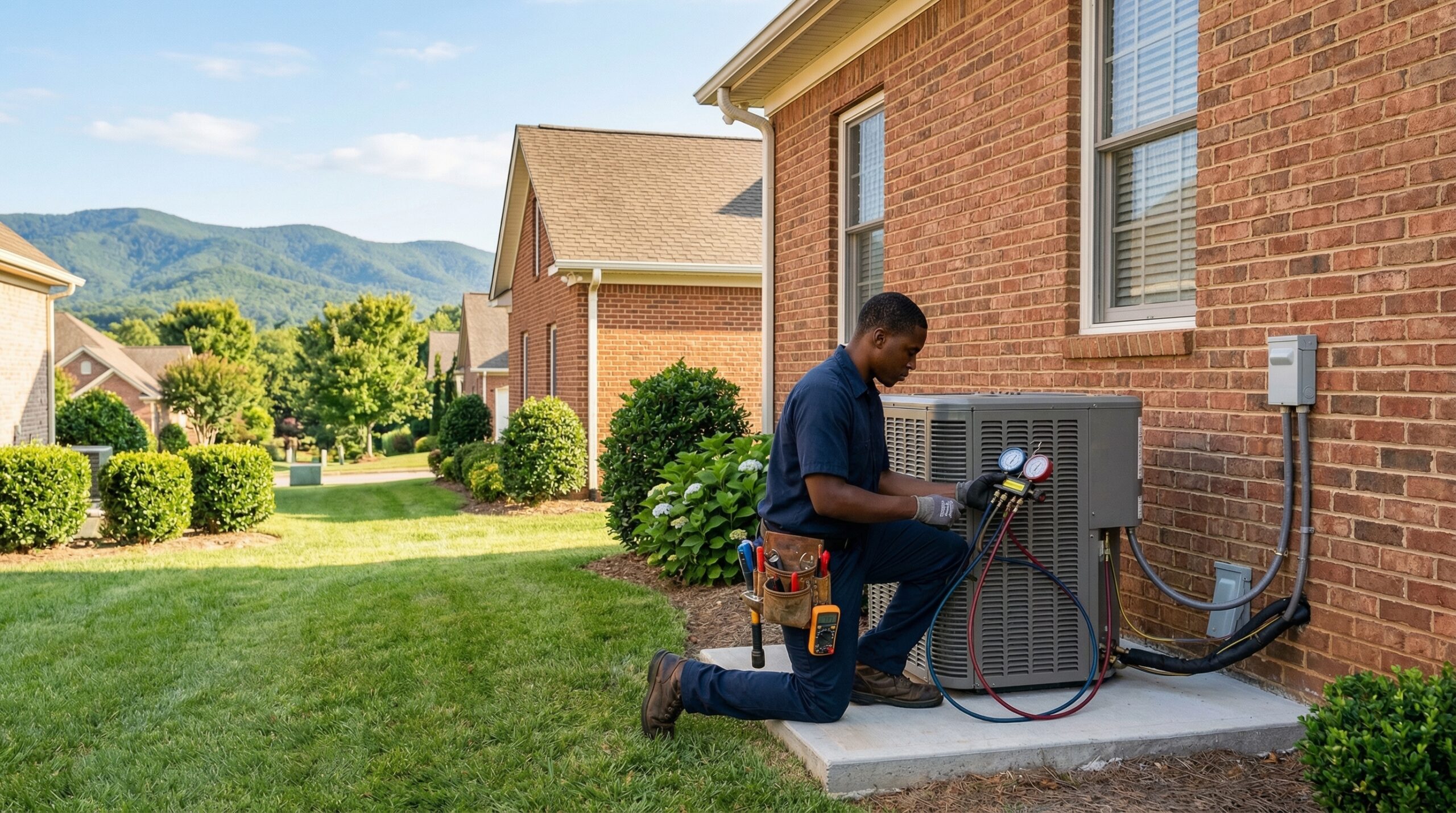
Greenville sits in South Carolina’s Upstate region, near the Blue Ridge foothills, with a climate that runs hotter than you’d expect and colder than the coast. As the city’s population grows fast, fueled by BMW Manufacturing in nearby Spartanburg and Michelin’s North American headquarters, HVAC contractors are busy year-round. This guide breaks down what replacement costs in this market, what Duke Energy rebates you can claim, and what system makes sense for Upstate SC.
TL;DR: HVAC replacement in Greenville, SC runs $5,200–$14,500 installed depending on system type. Climate Zone 3A means real heating and cooling seasons: 1,473 cooling degree days and 3,272 heating degree days annually. Duke Energy Smart $aver offers up to $1,000 back on a qualifying heat pump or AC. The federal Section 25C credit expired December 31, 2025 and is not available for equipment placed in service in 2026. A mechanical permit is required for Greenville County: $84 for a heat pump or package unit, $48 for a condenser replacement. Get your personalized estimate.
What Does HVAC Replacement Cost in Greenville, SC?
Greenville’s labor costs run 5–8% below Charlotte, Raleigh, and Concord for the same system, which helps keep total project costs in a reasonable range. The biggest variables are system type, efficiency tier, and whether ductwork needs updates.
| System Type | Low | High | Notes |
|---|---|---|---|
| Central AC only | $4,800 | $10,200 | 3-ton, 16 SEER2 standard |
| Heat pump (split system) | $5,800 | $13,500 | Includes air handler; qualifies for Duke rebate |
| Full system (AC + gas furnace) | $8,200 | $17,500 | Common in older Upstate SC homes with gas lines |
| Ductless mini-split (1–2 zones) | $3,500 | $8,500 | Good for additions or converted spaces |
A heat pump system in the $8,000–$10,000 range often lands under $7,000 after incentives.
What Duke Energy Smart $aver Rebates Can Greenville Homeowners Claim?
Duke Energy Carolinas serves Greenville and the Upstate, and their Smart $aver program is worth knowing before you sign any contract. As of the May 2025 program update, the rebate structure for South Carolina customers includes:
- Up to $1,000 back on a qualifying heat pump or central AC replacement
- Up to $800 on a heat pump water heater
- Up to $800 on attic insulation upgrades
- Up to $450 on duct testing and repair
- Income-qualified households: up to $8,000 for HVAC replacement (contact Duke directly)
There is a catch: you must complete a free Home Energy Check through Duke’s program before the work is done, and you must use a Duke-approved Smart $aver contractor. Your contractor can handle the rebate paperwork, but you need to confirm their approval status before signing the estimate. The rebate is paid after project completion, not upfront.
The federal Section 25C credit expired December 31, 2025 and is not available for equipment placed in service in 2026.
South Carolina’s state-level HEAR and HOMES rebate programs, funded by the federal Inflation Reduction Act, are still under development as of early 2026 and not yet available. The SC Energy Office expects these to roll out in 2026. When they do, Greenville homeowners could stack them on top of the Duke rebate.
What HVAC System Works Best in Greenville’s Upstate SC Climate?
Greenville sits at around 1,000 feet elevation in ASHRAE Climate Zone 3A, which means humid subtropical conditions with hot summers and genuine winters. The area sees about 36 days per year above 90°F and 64 days per year with overnight lows below freezing. That’s a real heating season, unlike the SC coast.
For most Greenville homes, here is how the main system types stack up:
Heat Pump — Best Value for Most Homes
A cold-climate heat pump (minimum 17 HSPF2 rating) handles Greenville’s winters well down to about 15–20°F. At those temperatures, the heat pump operates efficiently without backup. For the rare night below 15°F, most systems activate a backup electric strip or gas furnace. Heat pumps qualify for the Duke Smart $aver rebate.
Dual-Fuel System — Best for Older Homes with Gas Lines
A dual-fuel system pairs a heat pump with a gas furnace backup. In Greenville, where Piedmont Natural Gas serves much of the Upstate, this is a common choice for older homes that already have gas infrastructure. The heat pump handles 80–90% of the heating load efficiently; the furnace kicks in only on the coldest nights. Installation cost is higher ($9,000–$17,500), but operating costs can be lower than straight electric systems during cold snaps.
In Greenville’s Climate Zone 3A, a dual-fuel setup typically runs 15–20% cheaper to operate annually than a straight electric heat pump with strip backup, because natural gas costs less per BTU during the extended cold periods (roughly 64 freeze nights per year). For homes with existing gas lines already in place, the incremental installation cost of adding a furnace is often $1,500–$2,500, making dual-fuel the better long-term value for those properties.
Central AC + Gas Furnace — Standard for Older Stock
The most common setup in Greenville’s 1980s–2000s housing stock. If your home already has a functioning gas furnace and you only need to replace the AC or air handler, a central AC swap ($4,800–$10,200 installed) is the lowest-disruption option. This does not qualify for the heat pump rebate, but may still qualify for the standard Smart $aver AC rebate tier.
Do You Need a Permit for HVAC Replacement in Greenville County?
Greenville County Building Safety requires a mechanical permit for HVAC replacement in residential properties. The Greenville County residential permit fee schedule lists the following for HVAC work:
- Heat pump replacement: $84 permit fee
- Package unit: $84 permit fee
- Condenser replacement only: $48 permit fee
- Furnace: $36 permit fee
- Cooling only: $48 permit fee
These are base permit fees. Licensed contractors in South Carolina are required to pull permits for HVAC replacement work. If a contractor tells you no permit is needed, or asks you to pull it yourself, treat that as a red flag. Always confirm your contractor holds a valid SC mechanical contractor license before signing anything.
For properties within the City of Greenville limits, permit requirements may differ slightly from Greenville County. Your contractor should confirm jurisdiction before starting the project.
What Affects HVAC Pricing in the Greenville Market?
A few local factors push costs up or down in the Greenville area:
Contractor demand: BMW Manufacturing in Spartanburg and Michelin’s Upstate presence have driven population growth and new residential construction, keeping HVAC contractors busy. In summer, wait times for installation can run 2–4 weeks. Fall and early spring offer the best availability and sometimes better pricing.
Home age and ductwork: Much of Greenville’s residential stock dates to the 1980s–2000s. Older ductwork may require sealing or partial replacement, adding $500–$2,500 to a project. If you’re replacing a system that’s 20+ years old, budget for a duct inspection.
Efficiency tier: Minimum efficiency in Climate Zone 3A is 14 SEER2 for AC. Moving to 16 or 18 SEER2 adds $600–$1,800 to equipment cost but reduces monthly bills, especially during Greenville’s long cooling season (May through September).
Home size: Greenville’s housing mix includes compact Craftsman bungalows in older neighborhoods and larger suburban homes in areas like Simpsonville, Mauldin, and Taylors. A 1,200 sq ft home typically needs a 2.5-ton system; a 2,500+ sq ft home may need 4 or 5 tons, significantly changing equipment cost.
When Should You Replace Your HVAC in Greenville?
Greenville’s shoulder seasons, specifically March through May and September through October, are the best windows for HVAC replacement. Contractors are less busy, lead times are shorter, and you avoid the urgency pricing that comes with a summer breakdown.
If your system is 15 years or older, plan a replacement before the summer season rather than waiting for a failure. An emergency replacement in July, when Greenville hits peak demand, can add $500–$1,500 in premium labor to the project cost and may mean days without AC while waiting for equipment.
Signs it’s time to replace rather than repair in the Greenville climate: repair costs exceeding 50% of replacement cost, refrigerant leaks on R-22 systems (phased out), uneven cooling in humidity-sensitive rooms, or a system that runs constantly during Greenville’s humid July heat without reaching set temperature.
For more on timing, see our full guide: best time to replace HVAC. For SC market comparisons, see Columbia, SC and Charleston, SC.
Frequently Asked Questions
How much does HVAC replacement cost in Greenville, SC?
Full HVAC replacement in Greenville runs $5,200–$14,500 for most residential systems, depending on type and efficiency. A basic central AC replacement lands in the $4,800–$10,200 range; a heat pump with air handler is $5,800–$13,500. The federal Section 25C credit expired December 31, 2025 and is not available for equipment placed in service in 2026. Use the HVAC cost estimator to get a Greenville-specific range based on your home’s size and system type.
Does Duke Energy offer HVAC rebates for Greenville SC homeowners?
Yes. Duke Energy Carolinas serves Greenville and offers the Smart $aver program with up to $1,000 back on a qualifying heat pump or AC replacement (effective May 2025). To qualify, you need to complete a free Home Energy Check before the project and use a Duke-approved contractor. Income-qualified households may receive up to $8,000. The rebate is paid after project completion, typically by check or prepaid card. Visit Duke Energy Smart $aver to confirm current program details and find approved contractors.
Which HVAC system is usually the best fit for Greenville homes?
For most Greenville homes built after 2000, a cold-climate heat pump is the best combination of efficiency, comfort, and incentive eligibility. The Upstate’s winters are real but moderate; a heat pump handles temperatures down to 15–20°F efficiently. Older homes with existing Piedmont Natural Gas lines often do well with a dual-fuel system, pairing a heat pump for most of the year with a gas furnace backup for the coldest nights. Homes with only electric service and aging ductwork may opt for a central AC and electric air handler if budget is the primary concern.
Do I need a permit for HVAC replacement in Greenville County?
Yes. Greenville County requires a mechanical permit for HVAC replacement. Current permit fees are:
- Heat pump or package unit: $84
- Condenser-only replacement: $48
- Gas furnace: $36
A licensed South Carolina mechanical contractor is required to pull the permit. Always verify your contractor holds a valid SC license and has confirmed the permit is included in their proposal. Unpermitted HVAC work can complicate home sales and void manufacturer warranties.
When is the best time to replace HVAC in Greenville, SC?
March through May and September through October are the best windows in Greenville. Contractors are less busy, equipment is in stock, and you avoid the summer crunch when BMW and Michelin workforce neighborhoods compete for the same technicians. If your system is 15 years or older, schedule a replacement in spring before the first 90-degree week. Emergency summer replacements in Greenville can add $500–$1,500 in premium labor and come with 2–4 week wait times for installation.
Get Your Greenville HVAC Replacement Estimate
Follow the estimator link below to get a cost range based on your Greenville home’s size, system type, and efficiency needs. Enter your details and see a transparent estimate with the methodology behind the numbers. No contractor contact required.
Get a personalized HVAC cost estimate
For broader SC pricing context, compare with HVAC costs in Columbia, SC or Charleston, SC. For national pricing data, see the full HVAC replacement cost guide.
See also: Tennessee HVAC replacement cost guide for neighboring Southeast regional pricing. For South Carolina statewide pricing and rebates, see the South Carolina HVAC replacement cost hub.
Put the numbers in context
What would it cost for your home?
Get a planning range based on your home, system and region. Free, with no email required.
Get my cost estimate