
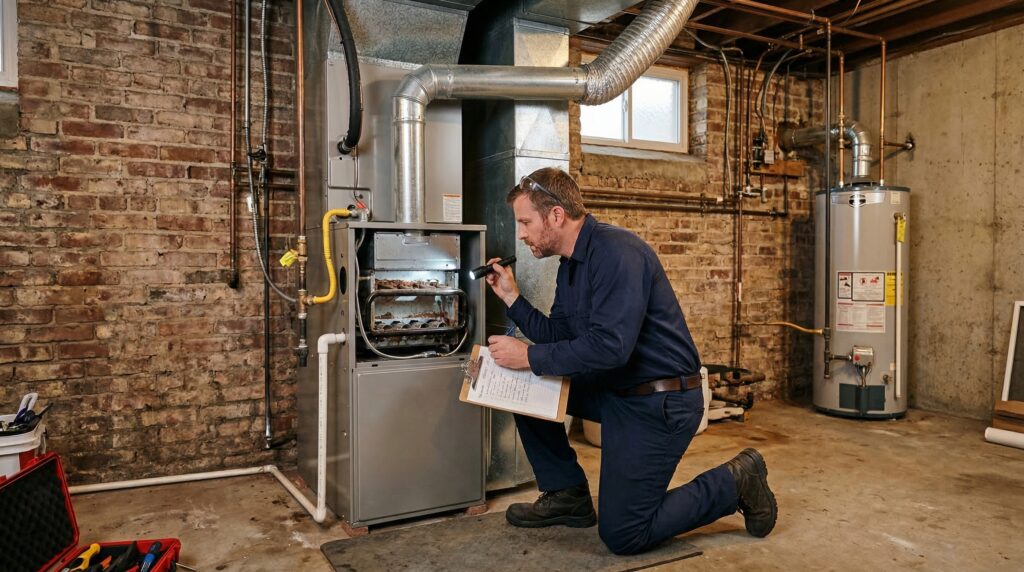
Louisville homeowners face a unique HVAC challenge: the city sits at the junction of the Midwest and the humid South, meaning your system has to handle steamy 90-degree summers and genuinely cold winters that push below freezing for weeks at a time. In 2026, a full HVAC replacement in Louisville typically costs between $5,200 and $13,500, depending on system type, home size, and whether you take advantage of the LG&E rebates available to local customers.
TL;DR: Louisville homeowners pay $5,200 to $13,500 for full HVAC replacement in 2026. The city’s Cfa climate (hot, humid summers; cold winters) demands a system that handles both extremes. LG&E offers up to $400 back on qualifying ENERGY STAR heat pumps and $300 on central AC units through its Residential Rebates program. A mechanical permit is required for all replacements ($105 for the first system). Use the HVAC cost estimator for a personalized range based on your home.
How Much Does HVAC Replacement Cost in Louisville in 2026?
Louisville’s labor market sits close to the national average for HVAC installation and repair work, with installation, maintenance, and repair workers earning a mean hourly wage of $29.22 in the Louisville MSA as of May 2024 (BLS OEWS data). That puts Louisville in a comfortable middle range nationally: not as expensive as coastal markets, but not the lowest-cost market in the region either.
Expect to pay more during peak demand seasons (late spring through summer for AC work, early fall for furnace replacements). Scheduling in February or early March, before cooling season picks up, often yields better availability and sometimes lower pricing.
What Does HVAC Replacement Cost by System Type in Louisville?
Costs below reflect installed prices in Louisville for 2026, including equipment and labor. Our full HVAC replacement cost guide covers national ranges and equipment variables in more detail.
| System Type | Louisville Cost Range (2026) | Notes |
|---|---|---|
| Central AC only (split system) | $3,800 to $7,500 | Most common repair-vs-replace scenario |
| Gas furnace only | $2,400 to $5,800 | Higher end for 96% AFUE units |
| Central AC + gas furnace (full split system) | $6,000 to $13,500 | Most homes in Louisville use this setup |
| Air source heat pump (full replacement) | $5,500 to $12,000 | $400 LG&E rebate; federal Section 25C expired December 31, 2025 |
| Ductless mini-split (single zone) | $3,200 to $7,000 | Good for room additions or older homes without ducts |
How Louisville’s Climate Affects Your HVAC Costs
Louisville’s Cfa (humid subtropical) climate creates a demanding environment for HVAC equipment. The city logs approximately 4,600 heating degree days and 1,500 to 1,800 cooling degree days annually. That means your system runs hard on both ends of the calendar.
On the cooling side, July highs average near 88°F and multi-day heat events above 90°F are common. Humidity levels are high throughout summer, which makes undersized or low-efficiency AC units work harder and wear out faster. Contractors in Louisville consistently recommend 15+ SEER2 systems to manage humidity effectively and keep energy bills manageable during the long cooling season.
On the heating side, Louisville winters are genuinely cold. Average January lows hover around 24°F, and the city periodically experiences extended cold snaps. That rules out heat pumps as a standalone solution without supplemental heat unless you choose a modern cold-climate model rated for low-temperature performance. Most Louisville homes run a gas furnace paired with central AC for reliable year-round comfort.
Does LG&E Offer Rebates for Louisville HVAC Replacement?
Louisville Gas and Electric (LG&E) launched its Residential Rebates program in April 2025, offering cash back on qualifying ENERGY STAR-certified equipment. The rebate amounts as of early 2026:
- Air source heat pump: $400
- Ductless/mini-split heat pump: $400
- Central air conditioner: $300
- Natural gas furnace: $250
- Heat pump water heater: $300
To claim the rebate, log into your LG&E My Account at lge-ku.com/residential-rebates and apply after installation. Guest users can apply using their contract account number and zip code. The program applies to LG&E and KU residential customers across Kentucky. For statewide pricing context, see our Kentucky HVAC replacement cost guide.
The federal Section 25C credit expired December 31, 2025 and is not available for equipment placed in service in 2026. See the heat pump replacement cost guide for a full breakdown of heat pump incentive stacking.
Do You Need a Permit for HVAC Replacement in Louisville?
Louisville Metro Government requires a mechanical permit for all HVAC replacements, including direct like-for-like swaps. You cannot simply pull out an old furnace and install a new one without a permit in Louisville.
Key permit details for residential HVAC in Louisville:
- Permit type: Mechanical permit (Louisville Metro Codes and Regulations)
- Fee: $105 for the first system in a 1-2 family home; $50 for each additional system
- Approval time: Approximately one week for standard projects
- Contact: Louisville Metro Department of Codes and Regulations, (502) 574-3321
- Mini-split or new install: Mechanical permit plus possible electrical permit required
Your contractor should pull the permit as part of the installation process. Skipping the permit can create problems when selling your home and may void manufacturer warranties. Reputable Louisville contractors always include permit pulling in their standard service.
What Drives HVAC Pricing in Louisville?
Several factors push Louisville HVAC quotes toward the higher or lower end of the range:
- Home size: A 1,200 sq ft ranch needs a 2-ton system; a 2,800 sq ft two-story may need 4 tons or more. Bigger systems cost proportionally more.
- Duct condition: Older Louisville homes (many built in the 1960s-1980s) often have aging ductwork. If duct sealing or partial replacement is needed, add $800 to $2,500 or more.
- System type: Gas furnace paired with central AC remains the dominant setup, but transitioning to a heat pump requires different electrical service in some older homes.
- Efficiency rating: A 96% AFUE furnace costs roughly $600 to $1,200 more than an 80% AFUE model. The payback depends on how long you plan to stay in the home.
- Brand and contractor: Premium brands (Trane, Carrier, Lennox) run 15-25% higher than value brands (Goodman, Ruud) for similar capacity. Labor rates vary by contractor, so get at least three quotes.
- Timing: Demand peaks in July and August for AC work. Booking a furnace replacement in September or October, before peak heating season, often reduces wait times and may improve negotiating leverage.
Should Louisville Homeowners Choose a Heat Pump or Traditional Split System?
This is the most common question Louisville homeowners face when replacing an aging system. Here is a practical breakdown:
Traditional split system (gas furnace + central AC): Works reliably in Louisville’s cold winters. If your home already has gas lines and you are replacing a system that failed, this is the straightforward path. Lower upfront equipment cost for the furnace component in many cases. Natural gas prices in Louisville have historically been stable.
Modern cold-climate heat pump: Qualifies for the LG&E $400 rebate. The federal Section 25C credit expired December 31, 2025 and is not available for equipment placed in service in 2026. Modern heat pumps (rated for operation down to 5°F) handle Louisville winters reliably. Your long-term energy cost depends on the electricity-to-gas price ratio at the time of purchase. Worth getting a quote for comparison.
The split system dominates Louisville’s installed base, but heat pump adoption is growing as equipment improves and incentives make the economics work. Either way, make sure your installer performs a proper Manual J load calculation for your home before recommending equipment size.
How Do Louisville Homeowners Get the Best HVAC Price?
- Get three quotes minimum. Louisville has a competitive HVAC market with established local contractors (Jarboe’s, A+ Derr, Elder Heating and Air) and national retailers (Home Depot installation services). Prices vary significantly between providers.
- Ask specifically about LG&E rebate eligibility. Not every contractor registers for utility rebate programs. Confirm that your installer will help you complete the LG&E rebate application after installation.
- Request a Manual J calculation. Proper load calculation ensures your new system is correctly sized for your home. Oversized systems short-cycle; undersized systems run constantly. Both problems reduce equipment life.
- Time your purchase strategically. February through early March for AC replacement, September for furnace work. Shoulder-season scheduling often improves contractor availability.
- Federal Section 25C: Expired December 31, 2025; unavailable for 2026 installations.
Frequently Asked Questions: HVAC Replacement in Louisville, KY
How much does HVAC replacement cost in Louisville, KY?
Louisville homeowners typically pay $5,200 to $13,500 for a full HVAC replacement in 2026. A central AC-only replacement runs $3,800 to $7,500. A heat pump system runs $5,500 to $12,000. A gas furnace plus central AC split system runs $6,000 to $13,500. Labor tracks close to the national average, making Louisville a mid-market city compared to coastal metros.
Does LG&E offer rebates for HVAC replacement in Louisville?
Yes. LG&E’s Residential Rebates program offers cash back on qualifying ENERGY STAR-certified equipment installed by Louisville customers. Current rebate amounts:
- Air source heat pump: $400
- Ductless/mini-split heat pump: $400
- Central air conditioner: $300
- Natural gas furnace: $250
Apply through your My Account at lge-ku.com after installation. The program launched in April 2025 and is active as of 2026.
Do I need a permit to replace HVAC in Louisville?
Yes. Louisville Metro requires a mechanical permit for all HVAC replacements, including like-for-like swaps. The fee is $105 for the first system in a 1-2 family home. Your licensed contractor should handle the permit as part of the installation. Contact Louisville Metro Codes and Regulations at (502) 574-3321 for project-specific questions.
Is a heat pump or traditional split system better for Louisville’s climate?
Both work well. Louisville’s climate requires reliable heating below freezing, so if you choose a heat pump, select a modern cold-climate model rated for operation at 5°F or below. For homes with existing gas service and no interest in electrification, a gas furnace plus central AC split system remains the most cost-effective path.
How does Louisville’s hot, humid summer affect HVAC costs?
Louisville’s humidity means your AC system has to work harder than in drier climates. The city logs 1,500 to 1,800 cooling degree days annually, with July highs near 88°F and humidity levels that make 90-degree days feel significantly hotter. Contractors recommend 15+ SEER2 systems for Louisville to handle moisture effectively and keep energy bills in check. Undersized or low-efficiency units struggle in Louisville summers, shortening equipment life and raising monthly costs.
Is the Federal Section 25C Credit Available in 2026?
No for a 2026 installation. The LG&E rebate remains a separate current utility incentive. The federal Section 25C credit expired December 31, 2025 and is not available for equipment placed in service in 2026.
Just across the Ohio River, see our Cincinnati HVAC replacement cost guide for pricing and Duke Energy Ohio rebates in the neighboring tri-state market.
Planning to compare regional costs? Louis.