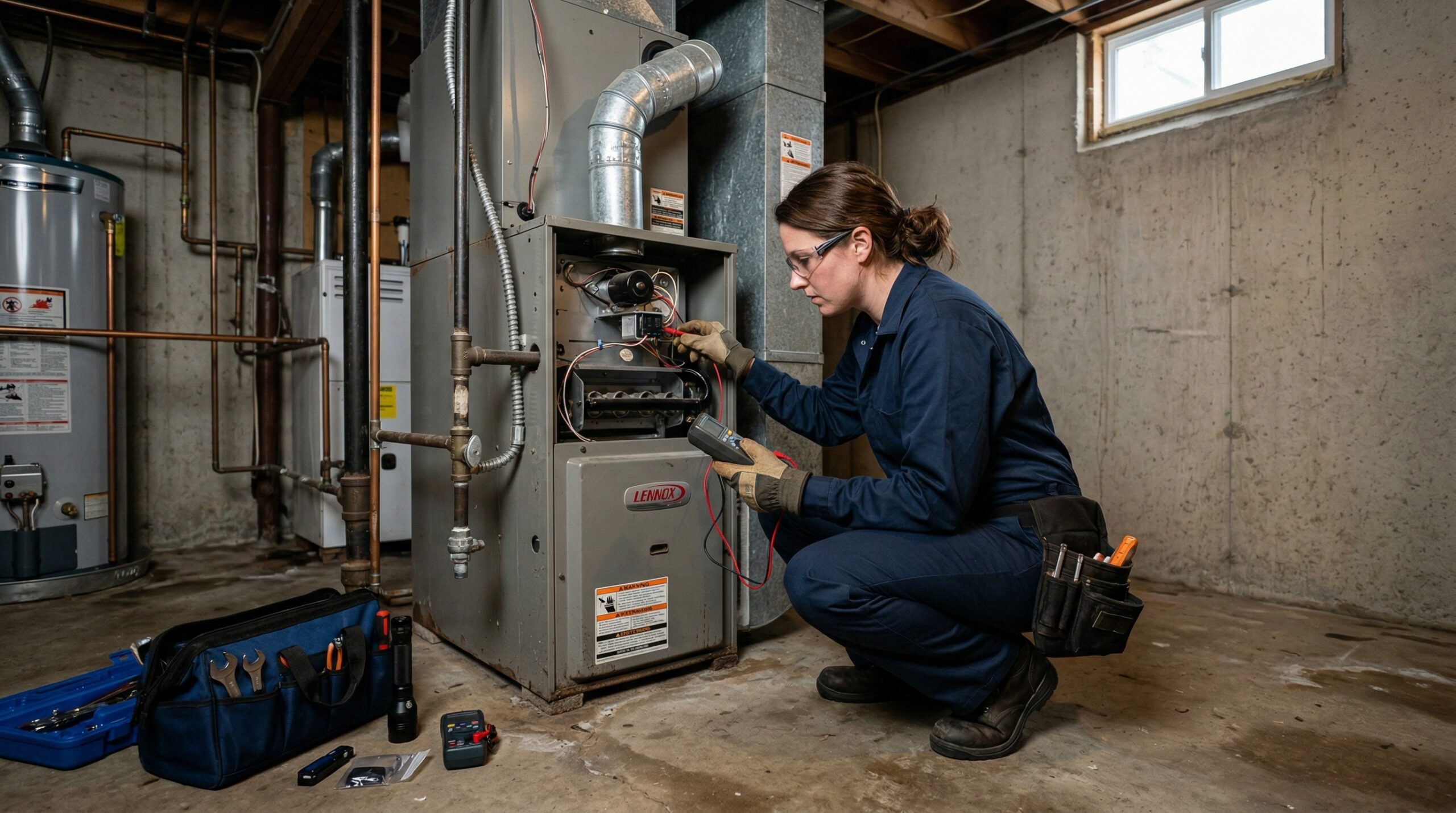
Detroit sits in ASHRAE Climate Zone 5A, where January averages 25°F and heating degree days top 6,200 annually. That cold-climate reality, combined with Detroit’s large inventory of pre-1960s bungalows and colonial-revival homes, makes HVAC replacement decisions more consequential here than in milder markets. This guide covers what Detroit homeowners pay for HVAC replacement in 2026, how to claim DTE Energy rebates, and what BSEED permit requirements mean for your project.
TL;DR: Full HVAC replacement in Detroit costs $5,800–$14,500. Climate Zone 5A cold winters demand high-efficiency equipment (95%+ AFUE furnaces). DTE Energy furnace rebates up to $400 for qualifying natural gas customers. BSEED mechanical permit required through the City of Detroit, typically processed in 5 business days. Get your Detroit estimate.
How Much Does HVAC Replacement Cost in Detroit?
Here’s what Detroit-area homeowners pay for HVAC replacement in 2026, based on regional contractor data and our estimator’s Midwest pricing model:
| System Type | Typical Detroit Cost Range |
|---|---|
| Central AC only | $4,000–$9,000 |
| Gas furnace only | $3,200–$9,500 |
| Heat pump system | $5,500–$12,000 |
| Full system (furnace + AC) | $5,800–$14,500 |
| Dual-fuel heat pump + gas backup | $8,500–$16,000 |
| Add: ductwork modification | +$1,500–$3,500 |
Detroit labor costs sit slightly below the national average, reflecting the metro’s automotive-industry labor market. That’s a meaningful difference versus high-cost metros like Chicago (where HVAC installers earn 24% above the national median). On a $10,000 furnace-plus-AC project, that gap can translate to $1,000–$2,000 in savings before rebates. For a complete breakdown of system pricing, see our furnace replacement cost guide and AC replacement cost guide.
One cost driver many Detroit homeowners don’t anticipate: ductwork modification. Detroit’s older bungalows and colonials were built for oversized gas furnaces with large-diameter supply runs. When you switch to a modern high-efficiency condensing furnace, the contractor often needs to add a condensate drain line, resize the flue connection, and check that duct dimensions match the new system’s airflow requirements. These modifications add $1,500–$3,500 to the base project cost.
Why Detroit’s Climate Drives Your System Choice
Detroit is ASHRAE Climate Zone 5A, Cold-Humid. That classification means serious heating demand (6,200+ heating degree days) and meaningful cooling demand (roughly 700 cooling degree days). January averages 25°F low and 34°F high, with sub-zero stretches occurring most winters. July averages 83°F high with humidity that pushes the heat index above 90°F on peak summer days.
The practical result is that your HVAC system works hard in both directions, and sizing it correctly for both loads matters. Oversizing a furnace for comfort is a common contractor mistake in cold climates: an oversized system short-cycles, which increases wear, reduces dehumidification in summer, and raises operating costs. Ask any contractor for a Manual J load calculation before accepting a quote. It takes 30–45 minutes and costs nothing with a qualified contractor.
Gas furnaces dominate Detroit because natural gas infrastructure is widespread and gas prices in Michigan have historically been favorable for heating. The core question for most homeowners replacing a 20-year-old furnace is efficiency level: a 95% AFUE furnace qualifies for a $100 DTE rebate, while a 98%+ AFUE model earns $400 and cuts annual gas consumption by 15–20% compared to an 80% unit. Over 15 years, that efficiency gap adds up to thousands in operating costs.
Cold-climate heat pumps are worth evaluating if you’re replacing both a furnace and an aging AC at the same time. Modern cold-climate models from Carrier, Lennox, and Trane are rated to -13°F to -22°F, which covers all but the most extreme Detroit cold events. A dual-fuel configuration pairs the heat pump (for most heating and all cooling) with a gas furnace backup that activates below about 10°F–20°F. The heat pump qualifies for DTE electric rebates up to $1,250, while the gas furnace component qualifies for DTE gas rebates up to $400, making dual-fuel the most rebate-efficient path for a full system upgrade. Learn more in our heat pump replacement cost guide.
DTE Energy Rebates for Detroit Homeowners
DTE Energy runs a residential HVAC rebate program for both natural gas and electric customers in the Detroit metro. The 2026 program went into effect January 1, 2026, with funds available on a first-come, first-served basis.
| Program | Equipment | Rebate Amount | Who Qualifies |
|---|---|---|---|
| DTE Gas HVAC Program | Furnace 98%+ AFUE | $400 | DTE residential natural gas customers |
| DTE Gas HVAC Program | Furnace 96–97% AFUE | $200 | DTE residential natural gas customers |
| DTE Gas HVAC Program | Furnace 95% AFUE | $100 | DTE residential natural gas customers |
| DTE Gas HVAC Program | Furnace/boiler diagnostic tune-up | $75 | DTE residential natural gas customers |
| DTE Electric HVAC Program | Air-source or geothermal heat pump | Up to $1,250 | DTE residential electric customers replacing electric heating |
| Federal Section 25C | HVAC equipment placed in service in 2026 | Not available | No 2026 installation qualifies |
How the DTE rebate process works: You must use a DTE participating contractor. That contractor selects qualifying equipment, installs it, and submits the rebate application on your behalf. You sign the application at time of installation. DTE mails a rebate check to you in 6–8 weeks. Homeowners cannot self-submit without a participating contractor. Visit dteenergy.com/hvac to find participating contractors and verify current equipment eligibility lists.
Stacking rebates on a dual-fuel project: If you’re installing a heat pump plus gas furnace backup, a DTE electric customer replacing electric heating can claim the heat pump rebate (up to $1,250) while a DTE gas customer can claim the furnace rebate (up to $400). Eligibility depends on your specific account type, so confirm with DTE before committing to equipment. The DTE program also allows multiple purchases with multiple rebates on the same project.
Rebate amounts verified January 2026 via DTE Energy program documentation. Funds are limited and available on a first-come, first-served basis. Verify current program details at dteenergy.com before installation.
Do You Need a Permit for HVAC Replacement in Detroit?
Yes. The City of Detroit requires a mechanical permit for all residential HVAC replacements through BSEED (Buildings, Safety Engineering and Environmental Department, 313-224-2733). This applies to:
- Furnace replacements (like-for-like and system type changes)
- Central AC and heat pump installations
- Ductwork modifications or additions
- First-time installation of any HVAC system
Permits are submitted online through Detroit’s Accela eLAPS portal (detroitmi.gov). Residential homeowners can apply for their own mechanical permit without a contractor license. Licensed contractors must hold a Michigan builder license and Detroit city registration. Typical processing time for residential mechanical permits is about 5 business days. Permit fees run $75–$250 for most residential HVAC projects based on project value.
Never skip the permit. Unpermitted HVAC work creates problems when you sell your home. Detroit’s home inspection process flags missing permits, and clearing them retroactively can stall a closing. If your system fails during the warranty period and the installation wasn’t inspected, your warranty claim may be voided.
Detroit’s Older Homes — What They Mean for Project Cost
Detroit has one of the highest concentrations of pre-1960s housing stock of any major US city. Craftsman bungalows, Dutch colonials, and two-story brick homes from the 1920s–1950s make up a large share of the residential inventory in neighborhoods like Rosedale Park, Palmer Woods, and the East Side. These homes were built around oversized gas furnaces and often have ductwork that hasn’t been touched in 20–30 years.
When you upgrade to a modern 95%+ AFUE condensing furnace in one of these homes, several modifications are common:
- Adding a PVC condensate drain line (high-efficiency furnaces produce condensate; older homes weren’t built for it)
- Modifying the flue connection (condensing furnaces use PVC venting, not the old metal flue)
- Resizing return air ducts (older systems often had undersized returns relative to modern airflow requirements)
- Adding supply runs if upgrading from a partial-duct system
These modifications typically add $1,500–$3,500 to the base installation. If your home has never had central AC, running new supply ducts through finished living space pushes total costs toward the upper end of the range. Request itemized quotes that separate equipment cost from labor and modification costs so you can compare contractors accurately.
Frequently Asked Questions About Detroit HVAC Replacement
How much does HVAC replacement cost in Detroit?
Detroit homeowners typically pay $5,800–$14,500 for a full HVAC system replacement (furnace plus central AC). Furnace-only replacement runs $3,200–$9,500. Central AC only runs $4,000–$9,000. Heat pump systems run $5,500–$12,000. Detroit labor costs sit slightly below the national average, which makes it more competitive than Chicago or coastal metros. Zone 5A climate demands mean high-efficiency equipment is essential to manage long-term operating costs.
What DTE Energy rebates are available for HVAC in Detroit?
DTE Energy offers furnace rebates of $400 (98%+ AFUE), $200 (96–97% AFUE), and $100 (95% AFUE) for natural gas customers. Electric customers replacing electric heating can receive up to $1,250 for qualifying air-source or geothermal heat pumps. A DTE participating contractor submits the rebate application on your behalf, and your rebate check arrives in 6–8 weeks. Funds are limited, so apply promptly after installation. Visit dteenergy.com/hvac for current details.
Do I need a permit for HVAC replacement in Detroit?
Yes. All HVAC replacements require a mechanical permit through BSEED (City of Detroit, 313-224-2733). This covers furnace swaps, AC installations, heat pump installations, and ductwork changes. Permit fees typically run $75–$250. Homeowners can pull their own permits for owner-occupied residences. Processing takes approximately 5 business days through the Accela eLAPS portal. Unpermitted work creates real complications at resale and may void equipment warranties.
Should I get a gas furnace or heat pump for a Detroit home?
For most Detroit homeowners, a high-efficiency gas furnace remains the practical choice for heating because Detroit’s Zone 5A winters (sub-zero events, 6,200+ heating degree days) push the limits of standard heat pumps. Cold-climate heat pumps (rated to -13°F or below) can handle Detroit winters but need a gas backup for extreme cold. If you’re replacing both furnace and aging AC simultaneously, a dual-fuel system is worth pricing. It qualifies for both DTE electric and gas rebates, and modern cold-climate models can dramatically cut operating costs compared to straight electric heat.
When is the best time to replace HVAC in Detroit?
April, May, and October offer the best combination of contractor availability and competitive pricing in Detroit. July and August are peak cooling-season demand months, and December through February see furnace emergency calls spike. During peak seasons, contractors are booked 2–3 weeks out and have less flexibility on price. Scheduling in the shoulder season lets you compare quotes, plan the project on your timeline, and avoid emergency-replacement pricing.
How does Detroit’s older housing stock affect HVAC replacement cost?
Detroit’s pre-1960s craftsman bungalows and colonial revivals often have older ductwork sized for the oversized furnaces they originally ran. Upgrading to a modern condensing furnace frequently requires adding a PVC condensate drain, modifying the flue connection, and possibly resizing return air ducts. These modifications typically add $1,500–$3,500 to the base project cost. Always request an itemized quote separating equipment from labor and modifications, and ask for a Manual J load calculation to ensure proper system sizing.
Put the numbers in context
What would it cost for your home?
Get a planning range based on your home, system and region. Free, with no email required.
Get my cost estimate