
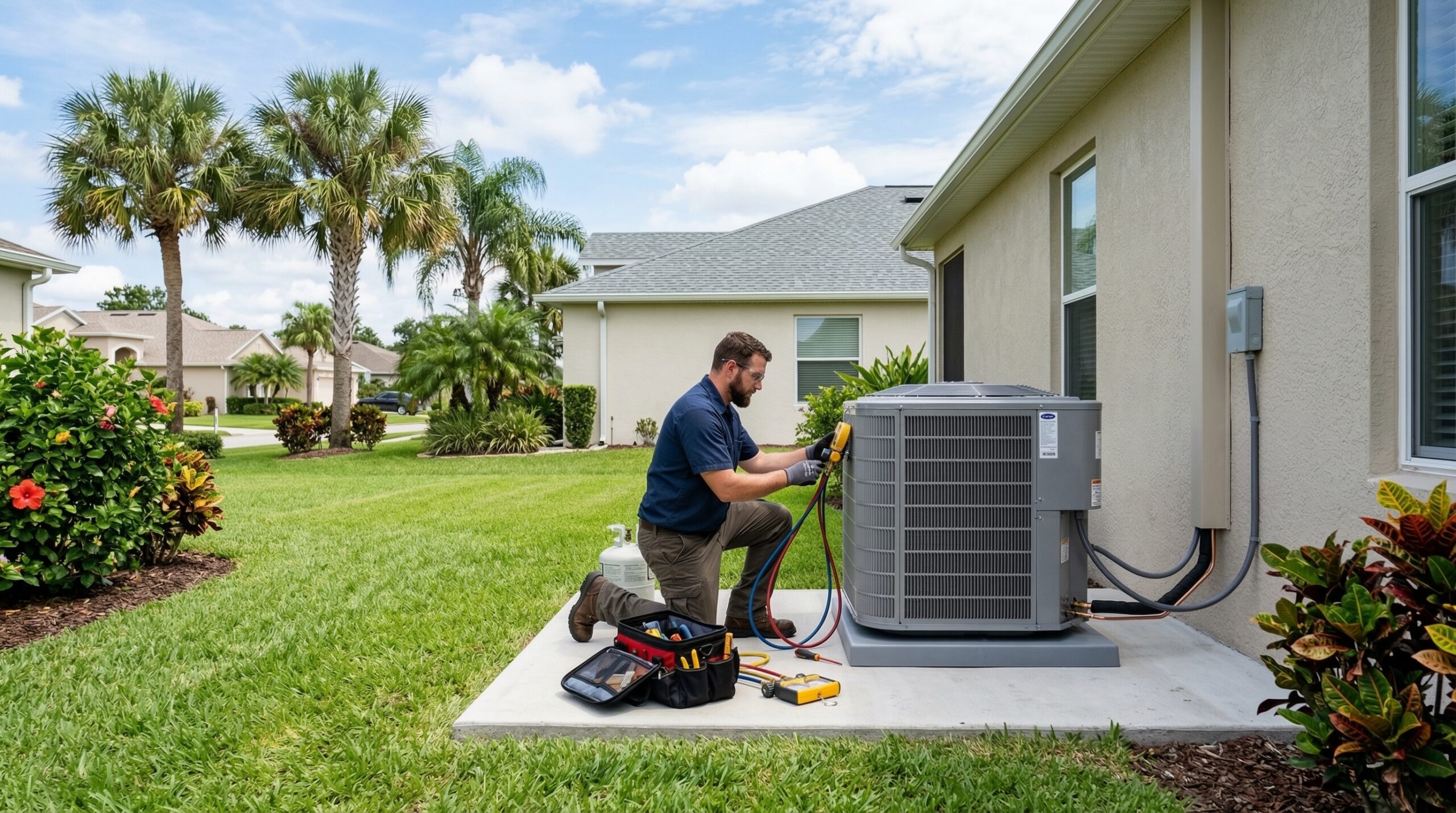
Dallas homeowners face one of the most demanding HVAC climates in the country. Zone 3A summers regularly push heat index readings above 105°F, systems run five to six months at full capacity, and homes here typically need oversized equipment compared to national norms. This guide covers what you’ll actually pay for HVAC replacement in 2026, how to claim Oncor’s rebates, and what size system your DFW home needs. For another major Texas market with similar Zone 2A summer demands, see our Austin HVAC replacement cost guide, where Austin Energy rebates run $600 to $950.
TL;DR: Dallas HVAC replacement costs $5,500-$13,800 in 2026 depending on system type. The city is in Climate Zone 3A with summers that regularly exceed 100°F. Oncor’s Home Energy Efficiency program offers $400-$600 back on qualifying high-efficiency equipment (program open January through November). A $50 minimum mechanical permit is required by the City of Dallas for all replacements. Most DFW homes need a 3-5 ton system. Get your personalized estimate.
What Does HVAC Replacement Cost in Dallas, TX?
Dallas HVAC prices run 5-15% higher than the national midpoint. The reasons are straightforward: homes here need larger systems (typically 3-5 ton vs. 2-3 ton nationally), AC runs five to six months at near-full capacity, and the labor market reflects the high demand for service in a fast-growing metro. Here are typical installed costs for 2026:
| System Type | Typical Range (Installed) | Notes |
|---|---|---|
| Central AC only (3 ton) | $5,500-$9,500 | Standard replacement, existing ductwork |
| Central AC only (4-5 ton) | $7,500-$11,500 | Larger DFW homes, proper cooling load |
| Full system: AC + gas furnace | $6,000-$13,800 | Most common full replacement |
| Heat pump system | $6,500-$14,500 | Qualifies for highest Oncor rebate tier |
| Dual-fuel (heat pump + gas furnace) | $8,500-$16,000 | Best for post-Winter Storm Uri preparedness |
| Mini-split (per zone) | $3,500-$7,500 | Additions, sunrooms, garage conversions |
These ranges assume existing ductwork in good condition. Ductwork replacement adds $3,500-$8,000 and is common in DFW homes from the 1990s and early 2000s where flex duct has degraded. Get separate quotes for equipment and ductwork whenever the duct condition is uncertain.
Why Do Dallas Homes Need Bigger, More Powerful Systems?
Dallas sits squarely in ASHRAE Climate Zone 3A (mixed-humid), but the “mixed” label understates the summer intensity. Engineering weather data for DFW International Airport shows 466 hours per year where outdoor temperatures exceed 93°F. The 1% design cooling temperature is 99°F dry bulb with a 75°F coincident wet bulb. Heat index readings above 105°F are common in July and August.
This means a Dallas home that might need a 2.5-ton system in Charlotte or Birmingham, AL or Raleigh typically requires 3.5-4 tons in DFW. Undersized equipment runs continuously without ever reaching setpoint on peak days, fails faster, and burns more energy. Oversized equipment short-cycles and leaves homes feeling clammy. A proper Manual J load calculation is worth requesting from any contractor you’re evaluating.
Winter Storm Uri in February 2021 added another dimension to Dallas HVAC planning. The storm brought sustained sub-freezing temperatures that overwhelmed systems not designed for extended cold, left millions without heat for days, and triggered a wave of HVAC upgrades. Many homeowners have since added dual-fuel systems or upgraded to heat pumps with electric backup to guard against the next similar event.
Oncor Rebates: How Much Can Dallas Homeowners Save?
Oncor Electric Delivery administers the largest utility rebate program in North Texas through its Home Energy Efficiency (HEE) program, branded as “Take a Load Off Texas.” The 2026 program opened January 14 and runs through November. Rebates are applied as a direct discount on your installer’s invoice. You do not mail in forms or wait for a check.
| Equipment | Rebate Amount | Minimum Efficiency |
|---|---|---|
| Central AC (SEER2 16.0-16.9) | $400 | SEER2 16.0, EER2 11.7 |
| Central AC (SEER2 17+) | $550 | SEER2 17.0+ |
| Heat Pump (SEER2 16.0-16.9) | $425 | SEER2 16.0, HSPF2 7.5 |
| Heat Pump (SEER2 17+) | $600 | SEER2 17.0+ |
| Smart Thermostat | $75 | ENERGY STAR certified |
| Duct Sealing (Aeroseal) | $250 | Licensed contractor required |
Oncor rebates require using an approved Service Provider. The contractor handles program enrollment and submits the paperwork. Rebates are funded annually and awarded first-come, first-served, so earlier in the program year is better. For homeowners in Denton or Collin County where CoServ is the wires company instead of Oncor, CoServ offers similar rebates: $400 for central AC (SEER2 16+) and $500 for heat pumps (SEER2 16+).
Note: The federal Section 25C tax credit for HVAC equipment expired on December 31, 2025. It is not available for 2026 purchases as of this writing. Check our HVAC tax credits page for the latest status.
What Size HVAC System Does a Dallas Home Need?
Zone 3A sizing rules for DFW run larger than most online calculators assume. The rough guideline below assumes a reasonably well-insulated home built after 1990. Older homes with poor insulation, high ceilings, or significant west-facing glass will need more capacity.
| Home Size (sq ft) | Typical System Size | Notes for DFW |
|---|---|---|
| Under 1,200 | 2.5-3 ton | Smaller homes still need oversized systems for TX heat |
| 1,200-1,800 | 3-3.5 ton | Common for older DFW ranch homes |
| 1,800-2,400 | 3.5-4 ton | Most common replacement size in DFW suburbs |
| 2,400-3,200 | 4-5 ton | Larger Plano/Frisco/McKinney homes |
| Over 3,200 | 5+ ton or zoned | Multi-zone or dual-system may be more efficient |
If a contractor quotes you a size significantly smaller than the table above, ask for their Manual J documentation. Undersizing to reduce equipment cost is a real problem in high-replacement-volume markets. An undersized system will run constantly in a Texas summer, fail earlier, and leave you uncomfortable on the hottest days.
Heat Pump vs. Gas Furnace and AC in Dallas
Both options work well in Dallas. Here is how they compare for DFW homeowners:
Gas furnace plus central AC: Still the most common combination in DFW. Natural gas is distributed by Atmos Energy throughout the metro and has historically been inexpensive. A gas furnace plus 16+ SEER2 AC qualifies for the $400-$550 Oncor rebate and handles both the extreme summers and the occasional cold snaps efficiently. Upfront cost is typically $6,000-$13,800 installed.
Air-source heat pump: Gains traction in DFW because Zone 3A winters are mild enough (design low 27°F) for an air-source heat pump to operate efficiently without supplemental heat in most conditions. Heat pumps also qualify for the higher Oncor rebate tier ($425-$600 vs. $400-$550 for AC). Annual energy cost is comparable to gas for most DFW homes.
Dual-fuel system (heat pump plus gas furnace): The option many Dallas homeowners chose after Winter Storm Uri. The heat pump handles mild winters efficiently (cheaper than gas resistance heat); the gas furnace kicks in when temperatures drop below the heat pump’s efficiency threshold (typically around 30-35°F). Higher upfront cost ($8,500-$16,000) but provides redundancy that proved valuable during the 2021 storm.
If you are replacing an aging system and have natural gas service, the gas AC combination remains the most affordable upfront choice. If you are open to a longer payback horizon and want the higher Oncor rebate plus freeze-protection redundancy, a dual-fuel system is worth pricing. Use our cost estimator to compare options side by side for your home size and region. For pricing in the Austin metro area, see our Round Rock HVAC replacement cost guide, or explore nearby Irving HVAC replacement costs or Plano HVAC replacement costs for nearby Collin County pricing.
Getting Bids and Pulling Permits in Dallas
DFW has one of the most competitive HVAC contractor markets in the country. The rapid suburban growth in cities like Frisco, McKinney, and Prosper has brought dozens of established and new contractors into the market. That is good news for homeowners: getting three bids is straightforward, and prices are genuinely competitive. North Texas homeowners looking to compare regional pricing can also see the Oklahoma City HVAC cost guide for a neighboring market perspective.
What to verify when comparing bids in Dallas:
- Confirm the contractor is an Oncor-approved Service Provider if you want the HEE rebate (ask for their provider ID)
- Confirm the permit is included in the quote (City of Dallas minimum $50 for residential mechanical work)
- Ask for the Manual J load calculation, not just a rule-of-thumb size estimate
- Get the equipment model numbers and SEER2 rating in writing before signing
- Confirm the warranty: manufacturer parts warranty plus the contractor’s labor warranty
The City of Dallas Building Inspection department at Oak Cliff Municipal Center (320 E. Jefferson Blvd., Dallas) handles permit applications. Licensed contractors typically pull permits as part of their service. If a contractor offers to skip the permit to save money, decline. A permit protects you: unpermitted work can affect homeowner’s insurance coverage and complicates home sales.
For more guidance on evaluating contractor quotes and knowing when to replace vs. repair, see our repair vs. replace HVAC guide.
Frequently Asked Questions
How much does HVAC replacement cost in Dallas, TX?
Dallas homeowners typically pay $5,500 to $13,800 for HVAC replacement in 2026. Central AC-only replacement runs $5,500 to $9,500 (3 ton, existing ductwork). A full system (AC plus gas furnace) runs $6,000 to $13,800. A heat pump system runs $6,500 to $14,500. Costs are higher than the national average because Dallas homes need larger systems to handle the extreme summer heat load in Zone 3A.
Does Oncor offer rebates for HVAC replacement in Dallas?
Yes. Oncor’s Home Energy Efficiency (HEE) program offers $400 to $600 back on qualifying equipment, available January through November. You must use an Oncor-approved contractor. The rebate is applied as a direct discount on your invoice. SEER2 17+ systems earn the highest tier: $550 for central AC, $600 for heat pumps. Add a qualifying smart thermostat for an additional $75.
Do I need a permit for HVAC replacement in Dallas?
Yes. The City of Dallas requires a mechanical permit for all HVAC replacements. The minimum fee is $50 for residential work. Most licensed contractors include this in their quote and pull the permit on your behalf. An inspection is required after installation. Do not skip the permit: unpermitted work can affect insurance coverage and create complications when you sell.
What size HVAC system does a Dallas home need?
DFW homes typically need more capacity than the national sizing guideline suggests due to the extreme summer heat load. A 1,800 square foot home in Dallas usually needs 3.5 to 4 tons of cooling capacity. The proper way to determine size is a Manual J load calculation performed by your contractor. Ask for this documentation before agreeing to any system size.
Should I get a heat pump or a gas furnace and AC in Dallas?
Both work well. Gas furnace plus AC is the most affordable upfront option and leverages Dallas’s natural gas infrastructure through Atmos Energy. Heat pumps earn the higher Oncor rebate tier ($600 vs. $550 for SEER2 17+ equipment) and handle most Zone 3A winters efficiently. A dual-fuel system adds a gas furnace backup to a heat pump, providing the best freeze protection after the lessons of Winter Storm Uri 2021.
When is the best time to replace HVAC in Dallas?
March through May and October through November are the best windows. Dallas contractors are fully booked during peak summer (June through August) when AC emergencies dominate their schedule. Shoulder-season replacements typically mean faster scheduling and more contractor attention. Avoid waiting until your system fails in July when you may face a 1-2 week wait during the peak heat season.
nnEl Paso offers a different market entirely. Desert climate and lower labor costs keep prices below the DFW average. See our El Paso HVAC pricing guide to compare West Texas costs.
For a full look at Texas HVAC pricing across all major cities, see our Texas HVAC replacement cost guide. For a desert Southwest comparison, see the Phoenix, AZ HVAC replacement cost guide, where extreme heat, SRP Cool Cash Rebates up to $1,125, and Southwest SEER2 minimums create a different cost picture than North Texas.
nFor a Midwest regional cost comparison, the Ohio HVAC Replacement Cost Guide covers how continental climate, Lake Erie winters, and a fragmented utility landscape (AEP Ohio, Duke Energy Ohio, FirstEnergy, AES Ohio) shape HVAC costs from Cincinnati to Cleveland differently than Texas markets.