
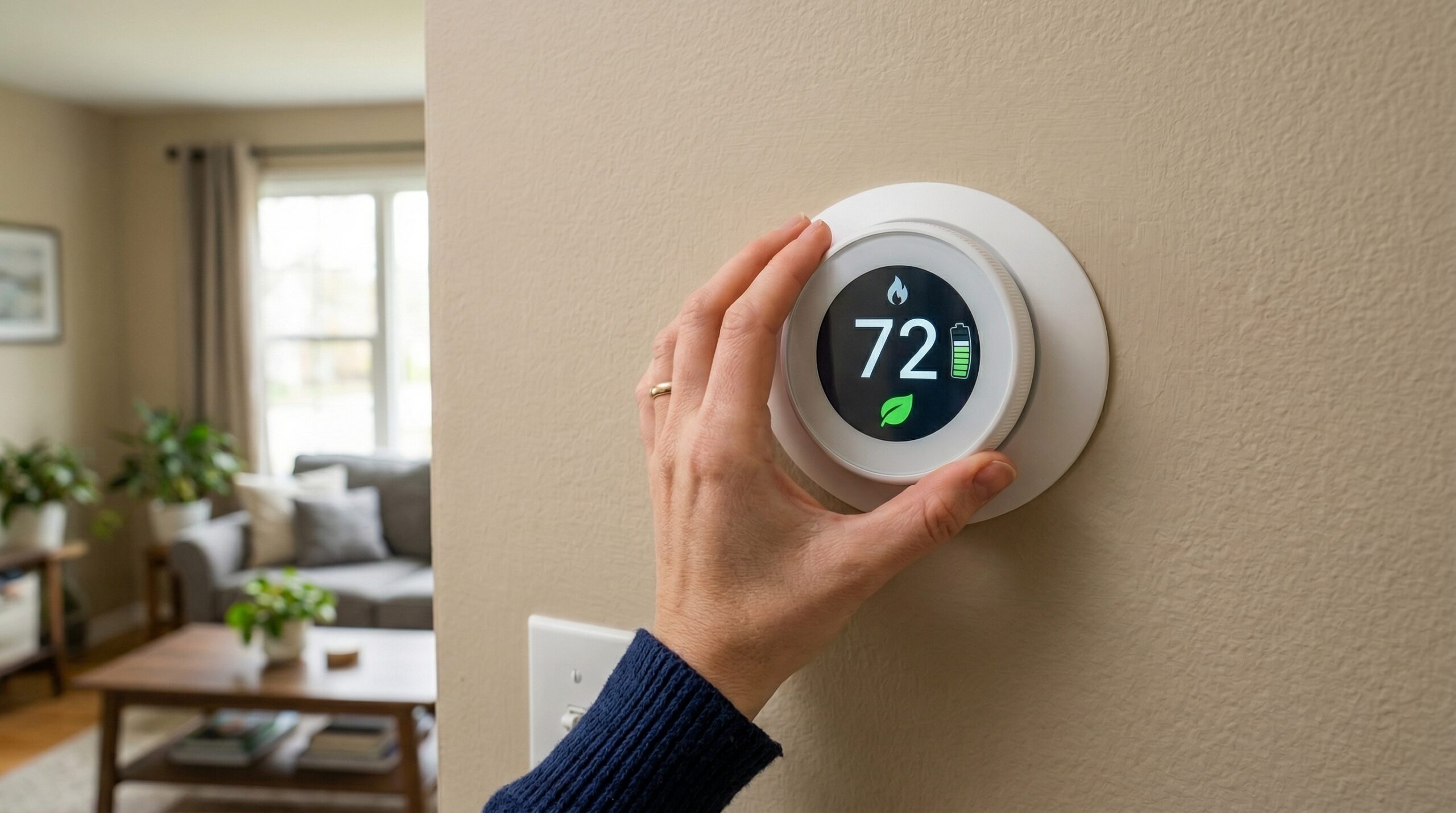
If you’ve heard that IRA HVAC rebates are gone in 2026, you’ve gotten half the story. The federal 25C tax credit did expire December 31, 2025. But the IRA’s two direct rebate programs, HEEHRA and HOMES, are still funded through state energy offices and remain active in more than a dozen states in 2026. For income-qualified households in those states, up to $14,000 in rebates is still available for heat pump replacements, electrical panel upgrades, and related work. This guide explains what’s still available, who qualifies, and how to claim it.
What Changed: The 25C Credit Expired in 2025
The Section 25C Energy Efficient Home Improvement Credit was expanded under the Inflation Reduction Act to offer homeowners 30% of qualifying HVAC costs, up to $2,000 per year for heat pumps. Congress accelerated its expiration through the One Big Beautiful Bill Act (signed July 4, 2025), and the IRS confirmed in official guidance that “the credit will not be allowed for any property placed in service after December 31, 2025.”
For homeowners who installed a qualifying heat pump before the deadline, the credit is still claimable on your 2025 federal tax return using IRS Form 5695. For anyone planning a new installation in 2026, the 25C credit is off the table. The savings opportunity has shifted to a different part of the IRA: the state-administered rebate programs.
Unlike the 25C credit, which was a tax mechanism handled through the IRS, HEEHRA and HOMES are direct rebate programs funded at the federal level and distributed through state energy offices. They have always been separate programs with different eligibility rules, different delivery methods, and different timelines. The fact that 25C expired does not affect their status.
How Much Can You Get from HEEHRA Rebates?
HEEHRA, the High-Efficiency Electric Home Rebate Act portion of the IRA, funds point-of-sale rebates for specific electrification upgrades. These are not tax credits. The rebate is applied directly as a discount on your installation invoice through a certified contractor. Here are the maximum rebate amounts per household:
| Equipment or Upgrade | Max Rebate Amount |
|---|---|
| Heat pump (space heating and cooling) | $8,000 (standard) / $4,000 (moderate income) |
| Cold-climate heat pump | $8,000 (standard) / $4,000 (moderate income) |
| Heat pump water heater | $1,750 |
| Electrical panel upgrade | $4,000 |
| Electrical wiring | $2,500 |
| Insulation, air sealing, ventilation | $1,600 |
| Electric stove, cooktop, range, or oven | $840 |
| Maximum combined per household | $14,000 |
The rebate amounts in the table above represent federal maximums. Some states may set lower caps or adjust amounts within their program design. Each state has flexibility in how it implements HEEHRA, so final amounts depend on your state’s program rules at the time you apply.
For context on total replacement costs before applying rebates, see our heat pump replacement cost guide. A qualifying cold-climate heat pump installed in 2026 typically runs $5,000 to $12,000 installed. With a $8,000 HEEHRA rebate for a low-income household, the net out-of-pocket cost could drop to $0 to $4,000 on the same project.
Who Qualifies for HEEHRA Rebates?
HEEHRA eligibility is income-based. Your household income must fall at or below 150% of the Area Median Income (AMI) for your county. There are two tiers:
- Below 80% AMI: Rebates cover up to 100% of eligible project costs, up to the maximum amount per equipment type
- 80% to 150% AMI: Rebates cover up to 50% of eligible project costs, up to the maximum amount per equipment type
For a household of four in a moderate-cost city, 80% AMI might be around $65,000 to $75,000 per year, and 150% AMI around $120,000 to $140,000. But AMI varies significantly by county. The best way to check is through your state energy office’s income verification tool, which uses official HUD AMI data for your specific county.
Additional eligibility requirements across most state programs:
- Existing homes only. New construction does not qualify. You must be replacing or upgrading equipment in an existing primary residence.
- Owner-occupied. You must own and occupy the home. Renters may qualify in some states with landlord participation, but owner-occupied is the standard baseline.
- Replacement projects only. You are replacing an existing heating or cooling system, not adding new equipment to a home that previously had none.
- ENERGY STAR certified equipment. The heat pump or other equipment must meet ENERGY STAR certification standards.
High-income households (above 150% AMI) do not qualify for HEEHRA. For households above the income threshold, utility rebates are the primary pathway. See our guide to HVAC rebates available in 2026 for a full overview including utility programs.
What Is the HOMES Whole-Home Efficiency Rebate Program?
HOMES (Home Efficiency Rebates) is the other IRA rebate program, and it works differently from HEEHRA. Where HEEHRA is appliance-specific and income-restricted, HOMES is performance-based and open to all income levels. The rebate amount depends on how much you reduce your whole-home energy use, measured before and after the project.
Rebate tiers under HOMES:
- 20%–35% reduction in whole-home energy use: Up to $2,000 (standard) / up to $4,000 (income-qualified)
- 35%+ reduction in whole-home energy use: Up to $4,000 (standard) / up to $8,000 (income-qualified)
HOMES requires a before-and-after energy model, which your state program contractor typically handles. The process is more involved than a standard HVAC replacement, but for homeowners doing comprehensive upgrades (insulation, air sealing, heat pump, and possibly windows), the rebates can be substantial. Income-qualified households can receive up to $16,000 total under HOMES if the project achieves 35%+ energy savings.
For most homeowners replacing only their HVAC system, HEEHRA is the more straightforward path. HOMES makes the most sense when you are undertaking a whole-home energy retrofit rather than a single-equipment replacement.
Which States Have Active Programs in 2026?
Program availability varies significantly by state. The IRA allocated rebate funding to all 50 states, but each state was responsible for designing its program, getting DOE approval, and launching. As of March 2026, the following states have active electrification rebate programs open to homeowners (per Rewiring America, confirmed December 2025):
- Arizona
- California (waitlist only as of Feb 24, 2026, fully reserved)
- Colorado (fully live since November 2025)
- Georgia
- Indiana
- Maine
- Michigan
- New Mexico
- New York
- North Carolina
- Rhode Island
- Washington, D.C.
- Wisconsin
Many additional states have received DOE approval and are in the process of launching. A number of states paused implementation in 2025 due to federal funding uncertainty but are expected to reopen. States including South Dakota and Idaho declined to participate or turned down awarded funding.
California’s situation is a useful case study: California’s HEEHRA program for single-family homes was fully reserved statewide as of February 24, 2026. No new income verification requests are being accepted. Homeowners who applied before the cutoff remain in queue, but new applicants in California effectively have no path to HEEHRA funding at this time. This illustrates that funding is finite and programs can close faster than expected.
The most reliable way to check your state’s current program status: go directly to your state energy office website or use the DSIRE database. Atlas Buildings Hub also maintains an updated Home Energy Rebates Tracker with state-by-state status.
How Do You Claim HEEHRA Rebates?
Claiming a HEEHRA rebate is different from claiming a federal tax credit. There is no IRS form. The process runs entirely through your state energy office and a certified program contractor. Here is the typical sequence:
- Confirm your state has an active program. Visit your state energy office website or check the DOE Home Energy Rebates page. Do not assume your state is live because the IRA passed.
- Complete income verification. Your state will have an income verification process, often an online portal. You will need to document household income. This step typically takes 2 to 4 weeks. Start here first, before contacting contractors.
- Find a certified program contractor. HEEHRA rebates are only available through contractors who are registered with your state’s program. Ask any contractor you get quotes from whether they are HEEHRA-registered. Do not assume all HVAC contractors qualify.
- Get pre-approval if required. Some state programs require the contractor to reserve funds before installation begins. Confirm this step with your contractor before installation day.
- Receive the rebate as a point-of-sale discount. The rebate is typically applied directly to your installation invoice, reducing the amount you owe the contractor. In some programs, homeowners receive reimbursement after installation rather than an upfront discount.
- Keep documentation. Retain your income verification approval, the installation invoice, the equipment model number, and any correspondence with the state program. You may need this for warranty, audit, or future sale of the home.
Use the ENERGY STAR Rebate Finder to search by ZIP code for programs available in your area, including utility rebates that may stack with HEEHRA.
Stacking HEEHRA with Utility Rebates
For homeowners in states with active HEEHRA programs, combining the state rebate with a utility company rebate is often possible and can significantly increase total savings.
The key rule: IRA rebates cannot be combined with other federal programs for the same project. Utility rebates are not federal grants, so they generally stack with HEEHRA. Most state program guidance explicitly permits this combination.
An example of stacked savings in a state with active HEEHRA:
- Heat pump installation cost: $9,000
- HEEHRA rebate (moderate income, 50% coverage): $4,000
- Utility rebate (varies by provider): $300 to $1,000
- Net out-of-pocket after both: $4,000 to $4,700
The HEEHRA rebate is calculated on the net cost after other non-federal incentives are applied. So if you receive a $500 utility rebate before HEEHRA, the HEEHRA calculation starts from the reduced cost. This means the order in which rebates are applied matters. Confirm the sequencing with your state program administrator.
For a full picture of available HVAC financing options including PACE loans, HELOCs, and contractor financing, see our financing guide. Many homeowners combine HEEHRA rebates with a low-interest financing product to cover the remaining out-of-pocket portion.
Before your contractor visit, run the numbers on your total project cost using our free HVAC replacement cost estimator. Knowing the baseline cost range helps you evaluate whether the HEEHRA rebate covers a meaningful portion of your specific project.
IRA Rebate FAQs: HEEHRA, HOMES, and Eligibility in 2026
Can I still get IRA HVAC rebates in 2026?
Yes, in select states. The federal 25C tax credit expired December 31, 2025. But IRA-funded HEEHRA and HOMES rebate programs are still active in more than a dozen states, with up to $8,000 for qualifying heat pump replacements. You need to be income-qualified (at or below 150% AMI) for HEEHRA, and your state must have an active program. Check your state energy office for current availability.
How much can I get from HEEHRA for a heat pump?
The maximum HEEHRA rebate for a heat pump is $8,000 for households earning below 80% of AMI, covering up to 100% of the project cost. Households earning 80–150% AMI receive up to $4,000, covering up to 50% of the project cost. The total combined HEEHRA rebate per household across all equipment is capped at $14,000. Additional amounts within that cap apply to water heaters, panel upgrades, and wiring.
What income qualifies for HEEHRA rebates?
Your household income must be at or below 150% of the Area Median Income for your county. The cutoffs vary significantly by location. Your state energy office handles income verification and will tell you which tier you fall in (below 80% or 80–150%). High-income households above 150% AMI do not qualify for HEEHRA.
Is HOMES rebate different from HEEHRA?
Yes. The key differences:
- HEEHRA: Appliance-specific rebates, income-restricted (max 150% AMI), delivered as point-of-sale discount, no whole-home savings measurement required
- HOMES: Performance-based, available to all income levels, requires 20%+ whole-home energy savings measured before and after, more complex process, higher potential rebate for comprehensive retrofits
Most homeowners replacing only their HVAC system will use HEEHRA. HOMES is better suited for whole-home energy retrofits.
Can I combine HEEHRA rebates with utility rebates?
Generally yes. Utility rebates are not federal grants, so the IRA’s restriction on combining federal funds does not block the combination. The HEEHRA rebate is calculated on your net cost after non-federal incentives are applied. Confirm stacking rules with your state program administrator before installation, since each state’s program terms may differ slightly.
For more detail on all rebates and incentives available in 2026, including utility programs by state, see our complete HVAC tax credits and rebates guide. For state-by-state breakdowns, see the HVAC rebates by state guide. For smart thermostat add-ons that pair with heat pump replacements, see our guide on smart thermostat cost under HEEHRA and Section 25C status.
Tennessee homeowners can combine IRA 25C credits with TVA EnergyRight rebates for additional savings. See full cost and rebate details in our Tennessee HVAC replacement cost guide.