
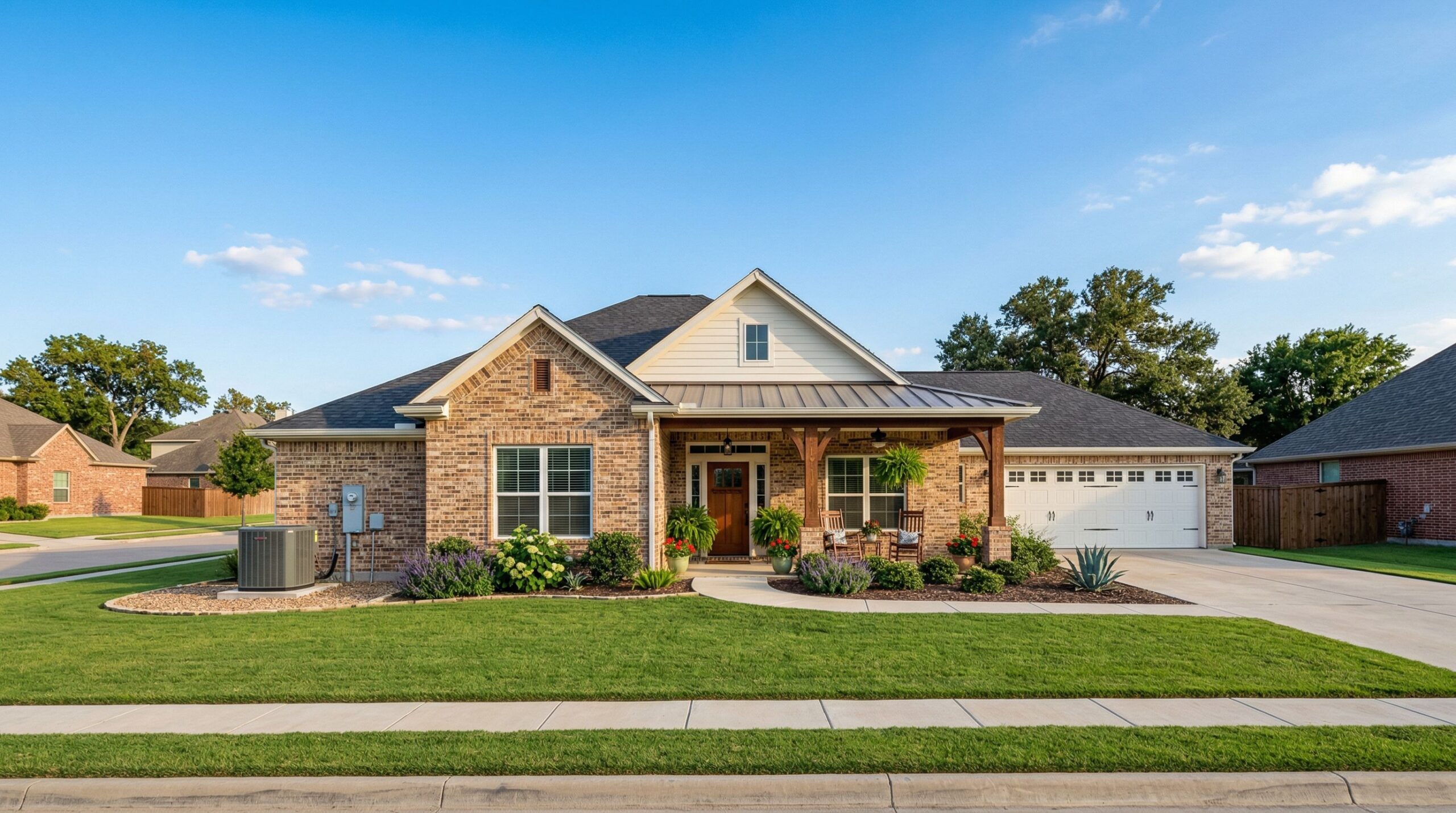
Texas homeowners pay $4,800 to $16,500 for HVAC replacement, with significant differences based on where you live, what system type you need, and which utility serves your home. The state’s extreme summer heat drives higher equipment capacity requirements than most of the country, and prices vary meaningfully from the humid coast to the dry western desert. Most Texas homes in the 1,500–2,100 sq ft range use a 3-ton system — see our 3-ton HVAC replacement cost guide for brand-by-brand pricing and what to expect for installed cost in Texas markets.
Texas HVAC Cost Summary (2026): Full system replacement runs $4,800–$16,500 across Texas, with Dallas and Houston typically on the higher end and El Paso on the lower end. Texas spans ASHRAE Climate Zones 2A, 3A, and 3B. Oncor (DFW) offers rebates up to $600; Austin Energy offers up to $1,500. Most Texas cities require a mechanical permit. The federal IRA 25C tax credit adds up to $2,000 for qualifying heat pumps. Get your free Texas HVAC estimate here.
How Much Does HVAC Replacement Cost in Texas?
Texas HVAC costs run slightly above the national average because the state’s hot climate demands larger, more powerful systems. Most Texas homes need 3 to 5 tons of cooling capacity, and the extreme summer heat means systems work harder and longer than in milder climates. Here is what homeowners across the state typically pay in 2026.
| System Type | Typical Cost Range | Notes |
|---|---|---|
| Central AC only (split system) | $4,800–$11,500 | Replacing condenser + air handler; no furnace |
| Full system (AC + gas furnace) | $5,500–$14,500 | Most common replacement in North/Central TX |
| Heat pump system | $5,800–$16,500 | Qualifies for IRA 25C credit up to $2,000 |
| Mini-split (ductless, 1 zone) | $3,500–$8,000 | Room additions, older homes without ducts |
All costs are installed totals including equipment and labor. Permit fees ($75–$250), ductwork repairs, and electrical upgrades are separate and can add $500–$3,000+ to total project cost. Use the HVAC cost estimator to get a personalized range based on your home size and location, or see the national HVAC replacement cost guide for comparison.
HVAC Replacement Costs by Texas City
Texas is a large state with meaningful price variation between markets. Here is how the major Texas cities compare, with links to detailed local pricing guides for each area.
| City | Cost Range | Climate Zone | Key Utility Rebate |
|---|---|---|---|
| Dallas | $5,500–$13,800 | Zone 3A | Oncor up to $600 |
| Houston | $5,200–$14,500 | Zone 2A | CenterPoint/retail varies |
| Austin | $5,000–$13,500 | Zone 2A | Austin Energy up to $1,500 |
| Plano | $5,500–$13,500 | Zone 3A | Oncor up to $600 |
| Irving | $5,400–$13,200 | Zone 3A | Oncor up to $600 |
| Round Rock | $5,200–$13,000 | Zone 2A | Oncor up to $600 |
| Sugar Land | $5,300–$14,000 | Zone 2A | CenterPoint/retail varies |
| El Paso | $4,800–$12,500 | Zone 3B | Xcel Energy up to $500 |
Dallas-Fort Worth Metro
The DFW metro sits in Climate Zone 3A (warm humid), with summer temperatures regularly exceeding 100°F. The large home sizes and high contractor demand in this market push costs toward the upper end of the state range. Oncor serves most of the DFW footprint as the regulated utility delivering electricity, though homeowners choose their retail electric provider separately.
- Dallas HVAC Replacement Cost — Zone 3A, Oncor up to $600, City of Dallas permit required, $5,500–$13,800
- Plano HVAC Replacement Cost — Zone 3A, Oncor territory, Collin County permits, $5,500–$13,500
- Irving HVAC Replacement Cost — Zone 3A, Oncor territory, DFW corridor pricing, $5,400–$13,200
Houston Metro
Houston sits in Climate Zone 2A (mixed humid), with high humidity that adds dehumidification demands to every HVAC system. The Gulf Coast climate and large housing stock make this one of the busiest HVAC markets in the country. CenterPoint Energy delivers electricity to most of the Houston metro, though retail electric providers handle billing and promotions.
- Houston HVAC Replacement Cost — Zone 2A, high humidity load, Harris County permits, $5,200–$14,500
- Sugar Land HVAC Replacement Cost — Zone 2A, CenterPoint territory, Fort Bend County, $5,300–$14,000
Austin and Central Texas
Austin sits in Climate Zone 2A and is one of the fastest-growing HVAC markets in the country. Austin Energy, the municipally owned utility, operates one of the most competitive residential rebate programs in Texas, offering up to $1,500 on qualifying high-efficiency heat pump systems. Round Rock, just north of Austin, is served by Oncor rather than Austin Energy.
- Austin HVAC Replacement Cost — Zone 2A, Austin Energy rebates up to $1,500, City of Austin permit, $5,000–$13,500
- Round Rock HVAC Replacement Cost — Zone 2A, Oncor territory, Williamson County permits, $5,200–$13,000
El Paso and West Texas
El Paso is Texas’s westernmost major city, sitting in Climate Zone 3B (warm dry). The desert climate means lower humidity but intense dry heat, and cooling demand is still high. El Paso is also Texas’s most affordable major HVAC market. Xcel Energy serves El Paso and offers rebates on qualifying equipment.
- El Paso HVAC Replacement Cost — Zone 3B, Xcel Energy up to $500, City of El Paso permit, $4,800–$12,500
What Do Texas Climate Zones Mean for HVAC Sizing?
Texas spans three distinct ASHRAE climate zones, each with different implications for system type, sizing, and equipment selection.
| Climate Zone | Texas Areas | Characteristics | Primary System Need |
|---|---|---|---|
| Zone 2A (Mixed Humid) | Houston, Austin, Round Rock, Sugar Land, East TX | Hot, humid summers; mild winters; 2,500–3,000+ CDD | High-efficiency AC or heat pump; dehumidification important |
| Zone 3A (Warm Humid) | Dallas-Fort Worth, Plano, Irving, North TX | Very hot summers; brief cold winters; 2,000–2,500+ CDD | Full system (AC + furnace) or heat pump with backup heat |
| Zone 3B (Warm Dry) | El Paso, Far West Texas | Hot, dry summers; cool winters; low humidity | AC or heat pump; dehumidification less critical |
Most Texas homes need 3 to 5 tons of cooling capacity. A proper Manual J load calculation from your contractor gives you the right size for your specific home. In Texas’s hot climate, oversizing is a common mistake: an oversized system short-cycles (turns on and off frequently), which fails to remove humidity and causes comfort problems even when the temperature is correct.
Texas HVAC Rebates and Tax Credits in 2026
Texas does not have a statewide HVAC rebate program. All rebates come from your electric utility, and because Texas has a deregulated electricity market in most of the state, the utility that delivers your electricity (the regulated “wires” company) is different from the one that sells you electricity (your retail electric provider). Rebates typically come from the regulated utility or the municipality, not the retail provider.
| Utility | Service Area | Rebate Range | Key Requirement |
|---|---|---|---|
| Oncor | DFW metro, North TX, parts of Central TX | Up to $600 | Qualifying heat pump or AC; SEER2 threshold applies |
| Austin Energy | City of Austin and Austin metro | Up to $1,500 | ENERGY STAR, high-efficiency heat pump; income-qualified tiers available |
| CPS Energy | San Antonio metro | Up to $1,100 | SEER2 qualifying equipment |
| Xcel Energy | El Paso area | Up to $500 | ENERGY STAR certified equipment |
| TXU Energy | ERCOT competitive market | Varies by promotion | Check current TXU offers; not a regulated rebate |
The federal IRA 25C tax credit stacks on top of any utility rebate and provides:
- Up to $2,000 for qualifying heat pump systems (30% of equipment cost, capped at $2,000 per tax year)
- Up to $600 for qualifying central air conditioning (30% of equipment cost, capped at $600)
- Claimed on your federal tax return via Form 5695; it is a credit against taxes owed, not a check
- Stacks with utility rebates; check eligibility at Energy Star’s rebate finder
For example: a qualifying heat pump in Dallas served by Oncor could receive the $600 Oncor rebate plus the $2,000 IRA 25C credit, reducing a $9,000 system’s net cost to under $6,500. Verify current rebate program details with your utility before purchasing, as programs can change.
When Is the Best Time to Replace HVAC in Texas?
Texas has a long, intense cooling season, but there are still better and worse times to schedule a replacement.
- October–November: The best window in most of Texas. Temperatures drop enough that contractors leave summer emergency mode. Availability improves and pricing is often 5–10% below summer peaks. Some utility rebate programs renew at calendar year end.
- February–March: Second-best window. Contractors are scheduling ahead of summer but demand has not yet spiked. Good for getting multiple quotes without pressure.
- April–May: Demand picks up quickly as heat arrives. Still manageable, but schedule early in the month rather than waiting.
- June–September: Peak demand season. Triple-digit heat across Texas drives emergency replacements. Contractor wait times can reach 1–2 weeks. Surge pricing of 10–20% above normal is common for emergency calls.
- December–January: Moderate availability. North Texas can have cold snaps, so furnace replacements see some winter demand. South Texas stays mild and is relatively good for scheduling.
If your system is aging (10+ years in Texas’s demanding climate), plan your replacement proactively in fall or early spring rather than waiting for a failure in July.
How to Find a Licensed HVAC Contractor in Texas
Texas requires all HVAC installation and replacement work to be performed by a licensed contractor. The licensing authority is the Texas Department of Licensing and Regulation (TDLR).
What to Look For in a Texas HVAC License
Texas HVAC licensing operates at two levels. A Technician license covers individual workers who install and service equipment. A Contractor license covers the business entity that pulls permits and takes responsibility for the work. When hiring, verify the company holds an active HVAC Contractor license through TDLR. You can search the TDLR license database at tdlr.texas.gov for free before signing any contract.
Red Flags to Avoid
- Contractor offers to skip the permit to save money — unlicensed work is illegal and voids warranties
- Quote is significantly lower than all others (often means used equipment or unlicensed work)
- No written quote before work begins
- Request for full payment upfront before work starts
- Unable to provide TDLR license number on request
For more guidance on getting quotes and comparing bids, see our HVAC replacement cost guide and use the HVAC cost estimator to benchmark any quote you receive.
Frequently Asked Questions: Texas HVAC Replacement
How much does HVAC replacement cost in Texas?
Texas HVAC replacement costs range from $4,800 to $16,500 depending on your city, system type, and home size. A central AC-only replacement runs $4,800 to $11,500. A full system (AC plus gas furnace or air handler) runs $5,500 to $14,500. A heat pump system runs $5,800 to $16,500. Dallas and Houston tend to run above the state average due to larger home sizes and contractor demand, while El Paso is typically the most affordable major market. These are installed totals; permit fees and ductwork are separate.
What HVAC rebates are available in Texas?
Texas HVAC rebates depend on your utility provider. Oncor (DFW and much of central Texas) offers up to $600. Austin Energy (City of Austin) offers up to $1,500 for high-efficiency heat pumps. CPS Energy (San Antonio) offers up to $1,100. Xcel Energy (El Paso) offers up to $500. The federal IRA 25C tax credit adds up to $2,000 for qualifying heat pumps on top of any utility rebate. Check energystar.gov/rebate-finder for current program details in your zip code.
Do I need a permit for HVAC replacement in Texas?
Most Texas cities require a mechanical permit for HVAC replacement. Permit requirements are set at the local level rather than statewide, so rules vary by city and county. Dallas, Houston, Austin, San Antonio, and El Paso all require permits. Permit fees generally run $75 to $250. Your licensed contractor should pull the permit as part of the job. Unpermitted work can void your equipment warranty and create complications when you sell your home.
How do I verify an HVAC contractor’s license in Texas?
Texas HVAC contractors must be licensed through the Texas Department of Licensing and Regulation (TDLR). Search by company name or license number at tdlr.texas.gov before signing any contract. Look for an active HVAC Contractor license. Unlicensed work is illegal in Texas and voids manufacturer warranties.
When is the best time to replace HVAC in Texas?
Fall (October and November) and early spring (February and March) are the best windows. Contractor availability is higher and pricing is often 5–10% below summer peaks. Texas summers push triple-digit heat across most of the state, driving emergency replacements and contractor backlogs. If your system is aging, schedule proactively rather than waiting for a failure in July or August.
What size HVAC system does a Texas home need?
Most Texas homes need 3 to 5 tons of cooling capacity, depending on square footage, insulation, and local climate. A rough estimate is 1 ton per 400 to 600 square feet in Texas conditions. However, a proper Manual J load calculation is required for accurate sizing. Oversized systems are common in Texas and hurt efficiency: they short-cycle, fail to remove humidity effectively, and wear out faster. Ask your contractor to show you the load calculation before selecting equipment.