
New Orleans homeowners face one of the most demanding HVAC environments in the country: a subtropical climate that runs hot and humid for eight months of the year, a housing stock full of historic shotgun houses and Creole cottages that were never designed for central air, and a mandatory permit process that requires a licensed contractor for every replacement. Getting the right system at the right price starts with understanding what makes this market different from most of the country.
TL;DR: New Orleans HVAC replacement typically runs $5,200–$13,500, with the wide range driven by home type. Older shotgun houses and historic Creole cottages often need custom ductwork or ductless mini-splits that push costs higher. The city sits in ASHRAE Climate Zone 2A, one of the hottest and most humid classifications in the US, so high-SEER2 equipment is essential for humidity control. Entergy New Orleans offers Energy Smart rebates up to $500 on qualifying mini-split systems (verified March 2026), and a mechanical permit from a licensed contractor is required for all replacements. Use our HVAC cost estimator to get a number based on your home size and system type.
How Much Does HVAC Replacement Cost in New Orleans?
The typical HVAC replacement in New Orleans runs between $5,200 and $13,500 for a full system. Where you land in that range depends on your home type, square footage, and whether you have existing ductwork that can be reused.
| System Type | Typical Cost Range | Best For |
|---|---|---|
| Central split system (2–3 ton) | $5,200–$8,500 | Homes with existing ductwork |
| High-efficiency heat pump | $7,500–$12,000 | Homes wanting heating + cooling in one system |
| Ductless mini-split (1–2 zones) | $4,500–$9,000 | Shotgun houses, historic homes without ducts |
| Full system with new ductwork | $9,000–$16,000+ | Homes needing complete duct replacement |
These ranges reflect installed cost in the New Orleans metro, including equipment, labor, permits, and basic refrigerant handling. They do not include optional upgrades like UV air purifiers, whole-home dehumidifiers, or smart thermostat installation, which can add $300–$1,500.
Why Does HVAC Replacement Cost More in New Orleans?
New Orleans consistently runs above the national average for HVAC replacement costs, and the reasons are structural, not just market pricing. Three factors push costs up:
Historic Housing Stock — The Shotgun House Problem
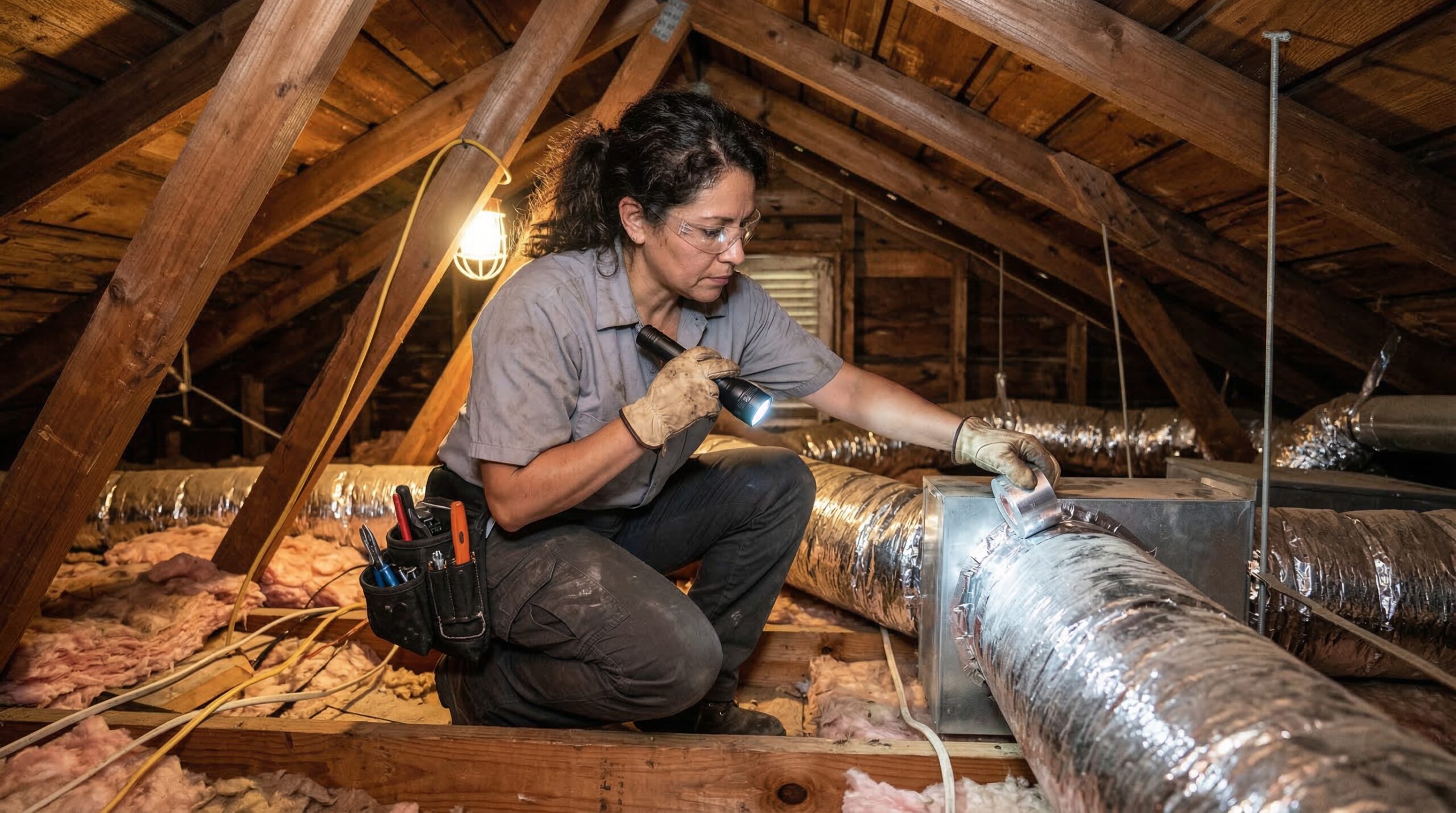
A large share of New Orleans homes predate 1940. Shotgun houses, the long narrow single-room-wide structures iconic to New Orleans neighborhoods, were designed for passive cross-ventilation through high ceilings and transoms, not for central air. Running ductwork through a shotgun house requires routing through an attic that may be extremely low-pitch, cramped, and already running 130–140°F in summer. Poor attic duct installation or inadequate insulation can cost homeowners 30% of their cooling energy in duct losses alone.
When ductwork does not exist or cannot be reasonably routed, the practical solution is a ductless mini-split system. That is often a better outcome anyway: mini-splits allow room-by-room temperature control, eliminate duct energy losses, and can be installed with minimal structural disruption to historic walls and ceilings.
ASHRAE Zone 2A — Extreme Cooling Demand
New Orleans sits in ASHRAE Climate Zone 2A (Hot-Humid), the same category as Miami and Houston. The city accumulates roughly 2,655 cooling degree days annually, compared to 700 for a city like Chicago or 1,100 for Atlanta. In practical terms, your HVAC system in New Orleans runs hard for 7–8 months of the year, not 3–4. That means higher-efficiency equipment pays back faster, proper sizing is more critical, and systems age faster than in moderate climates.
Humidity Control — Beyond Just Temperature
New Orleans averages 77% relative humidity year-round, with summer months regularly hitting dewpoints above 75°F. An oversized HVAC system short-cycles (runs briefly and shuts off) without removing enough moisture, leaving your home feeling clammy even at 72°F. A properly sized system, specified with a Manual J load calculation, removes 20–30 pints of moisture per hour during peak summer. Many New Orleans contractors also recommend two-stage or variable-speed compressors specifically for their humidity management advantages.
What HVAC System Works Best for New Orleans Homes?
The right system depends on whether your home has usable existing ductwork. Here is the practical breakdown:
Homes with Existing Ductwork
If your home has central ducts in reasonably good condition, a ducted split system or heat pump is the most cost-effective path. Look for SEER2 ratings of 15.2 or higher, which both qualifies for Energy Smart rebates and provides meaningful efficiency gains in the New Orleans heat load. Two-stage compressors are worth the upgrade cost here: they run longer at lower capacity during the day, controlling humidity better than a single-stage unit cycling on and off.
Shotgun Houses and Homes Without Ductwork
For New Orleans shotgun houses and older Creole cottages without existing ductwork, ductless mini-splits are often the cleanest solution. A multi-zone system with one outdoor condenser and two or three indoor air handlers can cover a 1,200–1,800 sq ft home efficiently without tearing out walls or fighting with low-pitch attic spaces. Installation typically takes one or two days, compared to a week or more for a full ducted system retrofit. Energy Smart rebates of up to $500 are available for qualifying ductless mini-split systems, which helps offset the higher upfront cost.
Historic District Homes — Additional Considerations
If your home is in the Vieux Carre, the Garden District, or another locally designated historic district, outdoor condenser placement may require approval from the Historic Districts Landmarks Commission (HDLC) or the Vieux Carre Commission (VCC). Typical issues include visible condenser placement on front facades, line sets running along exterior walls, and any structural modifications needed to accommodate equipment. Talk to your contractor about this before signing a contract. Permitting timelines in historic districts run longer than standard residential work.
What Rebates Are Available for New Orleans HVAC Replacement?
New Orleans has one of the better rebate programs in the Gulf South through Energy Smart NOLA, administered by Entergy New Orleans. You do not need to do anything special to access these: your licensed HVAC contractor fills out the rebate form with you after installation.
| Equipment Type | Efficiency Requirement | Rebate Amount |
|---|---|---|
| Central A/C | SEER2 15.2+ with ECM | $150/system |
| Central A/C | SEER2 16+ with ECM | $175/system |
| Central A/C | SEER2 17+ with ECM | $200/system |
| Air Source Heat Pump | SEER2 15.2+ / HSPF2 7.1+ | $200/system |
| Air Source Heat Pump | SEER2 16+ / HSPF2 7.7+ | $225/system |
| Air Source Heat Pump | SEER2 17+ / HSPF2 7.8+ | $250/system |
| Mini-Split Heat Pump | SEER2 17+ (replacing heat pump) | $250/system |
| Mini-Split Heat Pump | SEER2 17+ (replacing electric strip) | $500/system |
| Smart Thermostat | ENERGY STAR certified | up to $100 |
Source: energysmartnola.info, verified March 2026. All equipment must be ENERGY STAR certified and installed by an Energy Smart trade ally contractor.
On top of Energy Smart rebates, federal IRA tax credits apply in New Orleans. The 25C credit covers 30% of equipment cost, up to $600 for a qualifying high-efficiency central A/C system, and up to $2,000 for a qualifying air source heat pump. These are tax credits, not rebates, meaning you claim them when you file your federal return for the year of installation. Stacking the $500 mini-split rebate with a $2,000 IRA credit brings the effective cost of a new ductless system down by $2,500 before you factor in energy savings.
Do You Need a Permit to Replace HVAC in New Orleans?
Yes. A mechanical permit is required for all HVAC replacement work in New Orleans, and only a contractor holding a Class A City of New Orleans Mechanical A/C license can pull it. This is not a formality. Unpermitted HVAC work creates problems at resale and may void your homeowner’s insurance coverage for equipment-related damage.
Your contractor handles the permit application through the City’s One Stop App at nola.gov. Permit fees vary based on the type and number of components being installed. For a standard central split system replacement in an existing residential home, expect $150–$300 in permit fees, which should be itemized in your contractor quote. If your property is in a historic district, factor in additional review time (typically 2–4 weeks for HDLC or VCC approval).
When Is the Best Time to Replace HVAC in New Orleans?
The off-season window for HVAC replacement in New Orleans is narrow. Unlike cities with a clear fall/spring shoulder, New Orleans maintains significant cooling demand from April through October. The most practical replacement windows are:
- February and March: Lowest demand period for HVAC contractors. Labor availability is best, scheduling is easier, and some contractors offer off-season pricing. No hurricane risk.
- November through January: Reasonable window, though mild heating demand still keeps contractors moderately busy. Good time to plan and get quotes.
- Avoid June through August: Peak cooling demand means contractor schedules are full, emergency calls take priority, and some equipment models may have longer lead times.
One New Orleans-specific consideration: if your system failed during or after a hurricane, replacement timelines stretch significantly. Post-storm contractor demand can extend wait times to 4–8 weeks, and equipment pricing can run 15–25% above normal in the immediate post-storm period. If your system is aging and you are heading into hurricane season, replacing it in February or March eliminates that risk.
For a statewide overview including regional pricing comparisons, see our Louisiana HVAC replacement cost guide.
Frequently Asked Questions
How much does HVAC replacement cost in a New Orleans shotgun house?
It depends on whether the shotgun house already has ductwork. If not, expect two main options. A ductless mini-split system for a 1,200 sq ft shotgun typically costs $4,500–$7,500 installed and avoids the need for duct installation. A full central system with new attic ductwork runs $9,000–$14,000 or more, depending on attic access and the complexity of the duct runs. For most New Orleans shotgun houses, the ductless path is both cheaper and more efficient, since attic duct losses in this climate can waste 25–30% of your cooling energy.
What Energy Smart NOLA rebates are available for HVAC replacement?
Energy Smart NOLA offers rebates of $150–$200 per system on qualifying central air conditioners (SEER2 15.2 or higher with ECM), $200–$250 on qualifying air source heat pumps, and up to $500 on qualifying ductless mini-split systems (replacing an electric strip heater). A smart thermostat rebate of up to $100 is also available. Equipment must be ENERGY STAR certified and installed by an Energy Smart trade ally contractor. You can find the current rebate form and contractor list at energysmartnola.info. All data verified March 2026.
How does New Orleans humidity affect what HVAC system I should buy?
Humidity is the defining factor in New Orleans HVAC selection. The city averages 77% relative humidity, and summer dewpoints regularly exceed 75°F. The biggest mistake New Orleans homeowners make is buying a system that is too large: oversized units short-cycle (start and stop frequently), never running long enough to pull moisture out of the air. A properly sized system uses a Manual J load calculation for your specific home and runs longer cycles at lower capacity. Two-stage and variable-speed systems handle this better than single-stage equipment. If budget is a concern, a properly sized single-stage system is still far better than an oversized one.
Is a permit required for HVAC replacement in New Orleans?
Yes, a mechanical permit is required for all HVAC replacement and installation work in New Orleans. Only a contractor with a Class A City of New Orleans Mechanical A/C license can apply for the permit. Work done without a permit can create issues at home sale and may affect your insurance coverage. Permit fees are based on the components being installed and typically run $150–$300 for a standard residential replacement. Your contractor handles the permit application; it should appear as a line item in your quote.
How does a post-hurricane HVAC replacement work in New Orleans?
If your HVAC system was damaged by a hurricane, homeowner’s insurance typically covers the replacement cost minus your deductible, provided the damage was storm-caused and the system was properly permitted. File a claim before getting contractor quotes, and get at least two estimates. Post-storm contractor availability is tight: in the weeks following a major storm, expect 3–6 week wait times for standard replacements, with emergency repairs prioritized. Equipment prices can also run 10–20% above normal in post-storm periods due to demand and supply chain pressure. If your system is more than 12 years old and you are heading into hurricane season, proactive replacement in the spring off-season is worth considering.
What is the lifespan of an HVAC system in New Orleans?
Expect 12–16 years for a central split system in New Orleans with regular maintenance, compared to 15–20 years in a moderate climate. The combination of extreme cooling demand (running hard 7+ months per year), high humidity that stresses components, and the occasional hurricane exposure compresses the useful life of HVAC equipment. Systems that go without annual tune-ups tend to fail at 10–12 years. Salt air exposure for homes near Lake Pontchartrain or the Gulf can further accelerate corrosion of outdoor coils and electrical components. Annual maintenance checks are more important in New Orleans than almost anywhere else in the country.