
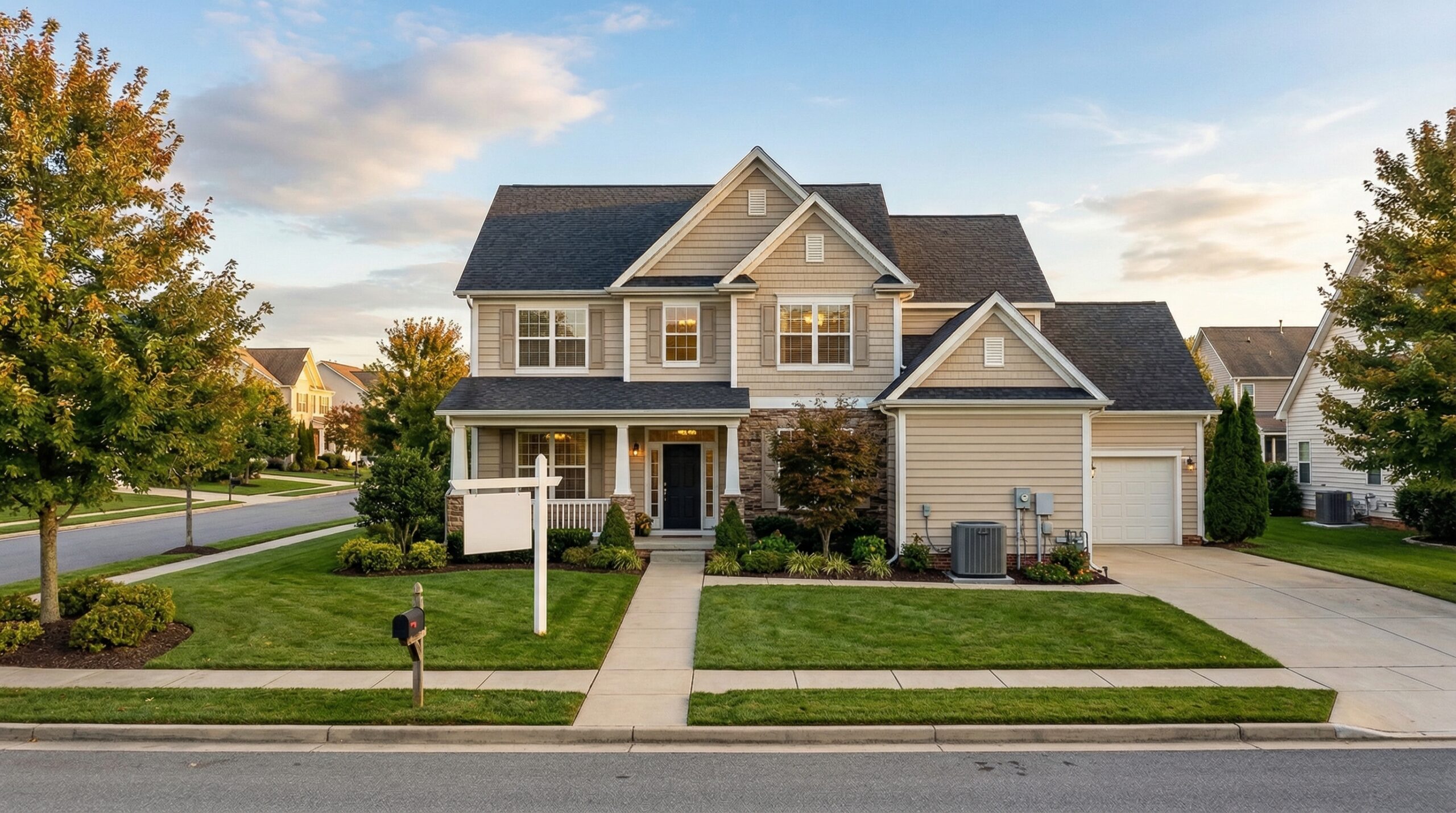
When a home inspector flags a 17-year-old air conditioner, buyers don’t just see an aging machine. They see an unknown repair bill, a negotiating lever, and a reason to walk. HVAC age is one of the top five issues buyers raise after an inspection, and a system near the end of its life can trigger $4,000–$12,000 in concession requests before you ever reach closing. Whether you’re selling next month or listing this spring, knowing how buyers and inspectors evaluate your HVAC system gives you real leverage. This guide covers what buyers look for, how system age affects your asking price, and the three paths available to sellers when the inspection report arrives.
What Do Buyers Look for in an HVAC Inspection?
Buyers and their home inspectors check three things first: age, operating condition, and refrigerant type. According to ENERGY STAR (EPA), air conditioning units older than 10 years and furnaces older than 15 years should be evaluated for replacement; those thresholds show up in inspection reports nationwide and immediately put buyers on alert. A system that runs during the inspection but is 16 years old still gets flagged as a near-term capital expense.
Standard home inspectors verify that the system heats and cools, check for obvious leaks or damage, and note the age from the unit’s data plate. That’s it. A dedicated HVAC inspection goes further: a certified technician tests refrigerant charge, inspects the heat exchanger for cracks, measures airflow at registers, checks electrical connections, and reviews the service history. Buyers in competitive markets increasingly request this second inspection before submitting an offer.
Refrigerant type is a specific flag buyers and agents watch for. Systems manufactured before roughly 2010 often use R-22, a refrigerant the EPA banned from US production and import as of January 1, 2020. An R-22 system that still runs today can’t be recharged if it loses refrigerant. Buyers know this. Sellers with R-22 systems face a harder negotiation regardless of whether the unit is currently functioning.
To understand how long HVAC systems typically last and what age benchmarks inspectors use, see the full breakdown on expected system lifespans by component type.
How Does HVAC Age Affect Your Asking Price?
A system in its final 3–5 years of useful life typically generates $4,000–$12,000 in buyer negotiation, according to HVAC industry pricing data. That negotiation comes in two forms: a price reduction before the offer is accepted or a closing credit requested after the inspection. Neither form shows up in the appraisal directly, but both reduce what you take home at closing.
Appraisers rarely adjust a home’s value specifically for HVAC age unless the system is non-functional. Buyers, though, are a different audience. They’re thinking about a $10,000 repair in year three of ownership and adjusting their offer accordingly. In a balanced market, a flagged HVAC system reliably costs sellers $3,000–$8,000 in negotiations. In a buyer’s market, that number climbs.
FHA and VA loans add another layer. Both programs require the HVAC system to be “functional” at closing. A system that runs intermittently or has a cracked heat exchanger may not satisfy underwriting requirements, which can delay or kill a sale financed with a government-backed loan. Cash buyers and conventional financing give sellers more room to negotiate; FHA/VA buyers may require a repair or replacement as a loan condition.
Here’s a straight-line comparison of the two most common seller paths when HVAC age becomes a negotiation point:
| Replace Before Listing | Offer Concession at Closing | |
|---|---|---|
| Upfront cost | $6,000–$14,000 out of pocket | $0 upfront |
| Effect on asking price | May support $3,000–$6,000 higher ask | Reduce price or offer credit ($3,000–$8,000) |
| Net proceeds impact | Recover 40–60 cents per dollar spent | Lose full concession amount at closing |
| Timeline | 1–3 weeks pre-listing delay | No delay; negotiated post-inspection |
| Buyer negotiation risk | Low (issue eliminated) | Medium to high (buyer may push further) |
| Best for | FHA/VA buyers, competitive buyer’s markets | Seller’s markets, cash buyers, tight timelines |
To run the numbers on a full system swap, the HVAC replacement cost estimator breaks down pricing by system type, size, and region so you can compare actual replacement cost against a projected concession.
Should You Replace HVAC Before Selling?
In most cases, no. Sellers rarely recover the full cost of a pre-sale HVAC replacement in their sale price. A new $10,000 system might support a $4,000–$5,000 higher asking price in a normal market, meaning you net a $5,000–$6,000 loss on the upgrade. The math only works in specific situations.
The three scenarios where pre-sale replacement makes financial sense:
- The system is non-functional or unsafe. A broken system isn’t just a negotiating issue; it’s a deal-killer. Buyers on FHA or VA loans can’t close on a home with a non-working HVAC. Even cash buyers will insist on either a deep discount or a fix.
- You’re in a competitive buyer’s market. When inventory is high and buyers have options, a flagged HVAC system gives them a reason to walk. Replacing it removes that exit ramp entirely.
- Your target buyer pool requires FHA or VA financing. These loan programs require functional HVAC at closing. If your neighborhood skews toward first-time buyers using FHA loans, a non-functional system is a loan condition that has to be resolved before closing regardless.
A quick filter the industry uses: the $5,000 rule. Multiply the system’s age (in years) by the cost of the repair needed. If the result exceeds $5,000, replacement is generally more cost-effective than repair. A 15-year-old furnace needing a $400 igniter fails this test ($15 x $400 = $6,000). That same system needing a $200 tune-up does not. The rule is a rough heuristic, not a hard formula, but it gives sellers and buyers a shared starting point.
HVAC prices are also trending up. Industry data projects a 5–10% cost increase in 2026 on top of 6–10% manufacturer increases in 2025, driven by tariffs and material costs. If a replacement is inevitable, doing it before listing may cost less than waiting 12–18 months.
For a structured framework on when repair makes sense vs. replacement, the repair vs. replace decision guide walks through the full cost-benefit analysis by system age and condition.
What Are Your Options as a Seller?
Sellers have three paths when HVAC age or condition becomes a negotiation point. Each carries different costs, timelines, and risk profiles. The right choice depends on your market, your buyer’s financing type, and how much negotiating room you have.
Option 1: Replace before listing. The cleanest sale, but the most expensive path upfront. A new system eliminates the inspection flag entirely, removes buyer leverage, and can marginally support a higher asking price. The tradeoff: you’ll spend $6,000–$14,000 and likely recover only 40–60% of that in the sale price. Best reserved for non-functional systems or highly competitive buyer’s markets where any weakness in the listing costs you multiple offers.
Option 2: Price concession or closing credit. The most common resolution. After the inspection report flags the HVAC, the buyer requests either a price reduction or a closing credit to cover future replacement. This preserves your cash before closing (you don’t pay out of pocket until you close), keeps the deal moving, and lets you sell the home as-is. The risk: buyers often request more than the actual replacement cost because they’re estimating under uncertainty. Providing a contractor quote with your disclosure can anchor the negotiation at a more accurate number.
Option 3: Disclose and hold firm. In a strong seller’s market, some sellers disclose the system’s age and condition upfront, set the asking price accordingly, and don’t negotiate further. This works when demand is high and buyers are willing to take homes with known issues. In a balanced or buyer’s market, it’s a risky play that can extend days on market significantly.
If Option 1 or Option 3 requires cash you don’t have before closing, financing a pre-sale replacement is a real option: some HVAC contractors offer deferred payment programs specifically structured for sellers who will be reimbursed at closing.
What Buyers Should Ask About HVAC Before Making an Offer
Most buyers rely entirely on the standard home inspection for HVAC information. That’s not enough. A general home inspector confirms the system runs, notes the age, and flags obvious visible issues. What they don’t do: test refrigerant charge, inspect the heat exchanger for cracks, or verify airflow balance room by room. Approximately 3.9% of real estate sales fail after the contract is signed, and HVAC findings are among the most common inspection deal-breakers, according to Inspection Support Network data.
Before making an offer on a home with a system that’s 10 or more years old, buyers should request:
- System age and model number (to look up the manufacture date independently)
- Last service date and records (a well-maintained 12-year-old system is a different conversation than a neglected 8-year-old one)
- Refrigerant type (R-22 = red flag; R-410A = acceptable; R-32 or R-454B = modern systems)
- Any prior repairs, replacements of major components, or active warranties
If the inspection flags an aging system, buyers have a specific window to negotiate: the inspection contingency period. A reasonable ask for a system over 15 years old is a closing credit of $4,000–$8,000, framed around documented replacement cost. Provide a contractor quote to anchor the request. Asking for the full replacement cost of a top-tier system when a mid-range unit will do is a negotiation tactic sellers can and will push back on.
Buyers switching to a heat pump as part of a replacement should also factor in that federal tax credits on new heat pump systems can offset 30% of the installation cost under the Inflation Reduction Act, which changes the real out-of-pocket math on a replacement.
What Are Your State’s HVAC Disclosure Requirements?
Most states require sellers to disclose known material defects in a property, and HVAC systems that don’t function properly qualify. The key word is “known.” If a seller is aware the system has a cracked heat exchanger, intermittent cooling, or a refrigerant leak and doesn’t disclose it, they’re potentially liable for non-disclosure even if the buyer doesn’t catch it during inspection. Real estate attorneys across the country consistently advise: disclose rather than conceal, because concealment is harder to defend if issues surface after closing.
The distinction that matters for sellers: “old” is not the same as “broken.” An aging system that functions normally doesn’t have to be disclosed as a defect. It does, however, typically show up on a seller’s disclosure form as a material fact (age, maintenance history, known repairs). Buyers can ask, and sellers should answer accurately.
A few practical steps for sellers navigating disclosure:
- Pull the system’s installation date and any service records before listing
- Have a licensed HVAC technician do a pre-listing inspection ($75–$200) to get a written condition report you can share with buyers
- Complete all state-mandated disclosure forms accurately; your real estate agent should have the correct forms for your state
- Consult a real estate attorney if you’re uncertain whether a specific issue rises to the level of required disclosure
Note: Disclosure requirements vary by state. This is general guidance, not legal advice. Consult a licensed real estate attorney for state-specific rules.
Frequently Asked Questions
Should I replace my HVAC before selling my house?
Only in three situations: the system is non-functional, you’re in a competitive buyer’s market where any listing weakness costs you offers, or the buyer is using FHA or VA financing (which requires functional HVAC at closing). In most other cases, offering a price concession or closing credit after the inspection is more cost-effective than replacing before listing. Sellers typically recover only 40–60 cents per dollar spent on pre-sale HVAC replacement.
What is the $5,000 rule for HVAC?
Multiply the system’s age (in years) by the estimated repair cost. If the result exceeds $5,000, replacement is generally more cost-effective than repair. A 14-year-old system needing a $400 repair scores $5,600 (replacement territory). A 10-year-old system needing a $300 tune-up scores $3,000 (lean toward repair). It’s a quick filter, not an absolute rule, but it gives both sellers and buyers a neutral starting point for negotiation.
How old is too old for HVAC when buying a house?
ENERGY STAR flags air conditioning units over 10 years old and furnaces over 15 years old for evaluation. A system within those age ranges isn’t automatically a deal-breaker, but it warrants a dedicated HVAC inspection beyond the standard home inspection and likely a concession request. A well-maintained 12-year-old AC unit is a different situation than a neglected 11-year-old one. Service records matter as much as age.
Can a buyer back out of a home sale because of HVAC?
Yes, if the purchase contract includes an inspection contingency, which most do. After the inspection, buyers can request repairs, a price concession, or a closing credit. If the seller declines all requests, buyers can invoke the contingency and cancel the contract without penalty, typically within a specified response window (often 3–7 days). In practice, most HVAC disputes are resolved through negotiation rather than contract cancellation.
Who pays for HVAC repairs found during a home inspection?
Typically the seller, either through direct repairs before closing or through a price reduction or closing credit that accounts for future replacement cost. The specific arrangement gets documented in a repair addendum or concession agreement signed by both parties. In a seller’s market, some sellers decline repair requests entirely and let buyers decide whether to proceed. In a buyer’s market, sellers who refuse to negotiate on a flagged HVAC system often lose the deal.
What Should Sellers and Buyers Do Before Closing?
HVAC age matters to buyers, and pretending otherwise costs sellers money. The good news: you don’t have to replace before listing to protect your proceeds. Disclosure beats surprises, a contractor quote anchors the concession negotiation at a fair number, and a closing credit resolves more HVAC disputes than pre-sale replacements ever do. Buyers who know the right questions to ask walk into inspections with more leverage and close with better deals.
Before the inspection report arrives, price out your options. The HVAC replacement cost estimator gives you a real number to bring into the conversation, whether you’re the seller deciding between replace-and-list vs. concede-at-closing, or the buyer deciding how much to request.