
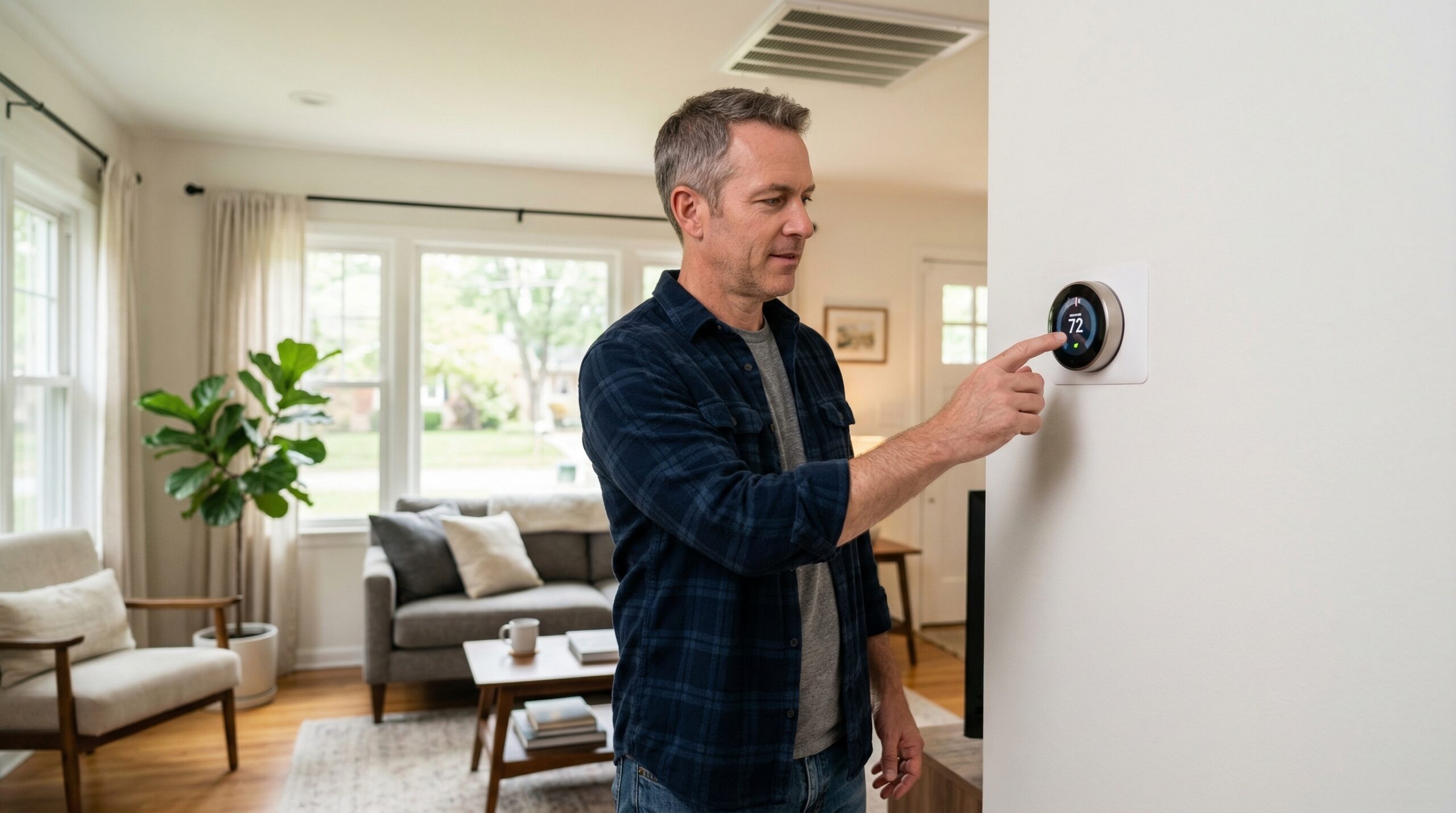
When your HVAC contractor hands you a replacement quote, the thermostat line item is often missing entirely. Many contractors install a basic programmable thermostat by default and never mention that the smart thermostat cost added during HVAC replacement is only $130–$400 more on a $5,000–$12,000 project. That gap in the conversation costs homeowners real money: smart thermostats save 8–12% on heating and cooling bills annually (ENERGY STAR, 2025), and bundling the install during HVAC replacement avoids a separate $100–$200 service call.
TL;DR: Adding a smart thermostat during HVAC replacement costs $130–$400 total (device plus bundled labor). Bundling saves the $75–$150 service-call fee you’d pay on a separate trip. Section 25C offered up to $150 back on ENERGY STAR thermostats but expired December 31, 2025. Use the HVAC cost estimator to see your full project cost with thermostat included.
How Much Does a Smart Thermostat Add to HVAC Replacement Cost?
Thermostat installation averages $184, with a typical range of $67–$500 depending on model and labor market (Angi, 2026). When you’re already replacing your HVAC system, bundled thermostat labor runs $50–$75 because the system wiring is already open. A standalone service call for the same work costs $100–$200. Total smart thermostat cost added to an HVAC project: $130–$400 depending on the model you choose.
Here’s how the numbers break down by thermostat tier:
| Tier | Device Cost | Labor (Bundled) | Total Bundled | Labor (Standalone) | Total Standalone |
|---|---|---|---|---|---|
| Basic (Honeywell T6 Pro) | $60–$80 | $50–$75 | $110–$155 | $100–$200 | $160–$280 |
| Mid-Tier (Sensi Touch 2) | $130–$160 | $50–$75 | $180–$235 | $100–$200 | $230–$360 |
| Premium (Nest or Ecobee) | $240–$260 | $50–$75 | $290–$335 | $100–$200 | $340–$460 |
The bundling savings are real: $50–$125 in avoided labor. On a typical HVAC replacement of $6,000–$10,000, that’s a rounding error, but the smarter argument is this: you’re already disrupting your home, the system is already being wired, and a new thermostat is the control layer for your $8,000 investment. Skipping it to save $200 today means paying $300 later.
Which Smart Thermostat Works Best With a New HVAC System?
For most new HVAC systems, the Google Nest Learning Thermostat 4th Gen ($240) and the Ecobee SmartThermostat Premium ($260) are the top two picks. Both are ENERGY STAR certified, compatible with standard 24V systems, and integrate with major smart home platforms. The right choice depends on your system type and whether you have a C-wire.
| Model | Device Cost | Key Feature | C-Wire Required | Best For |
|---|---|---|---|---|
| Google Nest Learning 4th Gen | $240 | Auto-schedule, Google Home | No (built-in battery) | Most single-stage and 2-stage systems |
| Ecobee SmartThermostat Premium | $260 | Room sensors, Alexa built-in | Yes (or adapter) | Multi-room homes, heat pumps |
| Honeywell T6 Pro | $60–$80 | Simple, reliable | No | Budget-conscious, straightforward setup |
| Emerson Sensi Touch 2 | $130–$160 | App control, utility rebates | Yes | Mid-budget with app features |
One important detail: if your home uses a communicating HVAC system (such as Carrier Infinity, Lennox iHarmony, or Trane ComfortLink II), you may need a brand-specific communicating thermostat rather than a generic smart model. Ask your contractor to confirm compatibility before purchasing. Standard single-stage and two-stage systems accept any of the models above without issue.
The Sensi Touch 2 earns a mention because it qualifies for utility rebates in many states, sometimes bringing its effective cost under $100. Check your utility’s rebate portal or HVAC tax credits and rebates guide for your state.
Does Your New HVAC System Require a Specific Thermostat?
Most new HVAC systems use a standard 24-volt control voltage and accept any compatible smart thermostat. Single-stage and two-stage systems have the fewest restrictions. Heat pumps require a thermostat with an O/B reversing valve wire. Variable-speed and communicating systems may require a proprietary model. Confirm system type with your contractor before buying.
Here’s a quick compatibility guide by system type:
- Standard single-stage: Any 24V thermostat works. Nest, Ecobee, Honeywell, Sensi all compatible.
- Two-stage cooling or heating: Confirm the thermostat supports two-stage operation (most premium models do).
- Heat pump: Requires a thermostat with O/B terminal support. Ecobee and Nest both support heat pumps.
- Variable-speed (inverter-driven): May require a proprietary or brand-approved thermostat. Ask your installer.
- Communicating systems (Infinity, iHarmony, ComfortLink): Require the brand’s own communicating thermostat. Standard smart thermostats won’t access advanced diagnostics or variable-speed controls.
If you’re unsure, have your contractor confirm the system’s control protocol during the quote process. This 5-minute conversation prevents a costly return trip after installation.
What Is the C-Wire Requirement and What Does It Cost to Add?
Most smart thermostats need a C-wire (common wire) for continuous 24V power. Homes built before 2010 often have only a 4-wire thermostat cable without a C-wire. Adding one during HVAC replacement costs $20–$75 in additional labor. Waiting until later means a $100–$200 service call, plus potential wall patching to run new wire.
If your home lacks a C-wire, you have three options:
- Run new 5-wire cable during replacement (recommended): $20–$75 in added labor while the contractor is already in your walls and attic. Cheapest window.
- Use a C-wire adapter ($20–$40): Devices like the Venstar Add-A-Wire steal power from an unused wire. Works on most systems but not all. Free to test before committing to a thermostat purchase.
- Choose a Nest Learning Thermostat: Nest’s built-in battery trickle-charges from existing wires, eliminating the C-wire requirement in most setups.
The C-wire question is the single most common reason a smart thermostat install gets complicated. Raising it during your HVAC replacement quote costs nothing and saves the most money if a new wire is needed.
Should You Bundle the Thermostat Now or Buy It Later?
Bundle it during the HVAC replacement. Thermostat labor bundled into an HVAC job typically runs $50–$75. A standalone service call for thermostat installation costs $100–$200, plus the technician’s drive time. You save $50–$125 by doing it the same day. There’s also a compatibility argument: the installer can test the thermostat with your new system before they leave and troubleshoot any wiring issue on the spot.
The only reason to wait: you want to research a premium communicating thermostat ($300–$600) that your contractor may not stock, or you need to live with the new system for a few weeks before committing to a model. In that case, ask the installer to run the C-wire now (cheap) and leave a basic programmable in place. You’ll add the smart thermostat later without the wiring complication.
A practical negotiating tip: ask your contractor to include thermostat installation at no added labor charge when you’re already paying for full HVAC replacement. Many will fold it in, especially if you supply the thermostat yourself. The labor to install it is 20 minutes when the system is already open.
See the full HVAC replacement cost breakdown to understand how thermostat cost fits into your total project budget.
Does a Smart Thermostat Qualify for an IRA Tax Credit in 2026?
Section 25C of the Internal Revenue Code offered a federal tax credit of up to $150 (30% of cost, capped at $150) for ENERGY STAR certified thermostats. That credit expired December 31, 2025, under the One Big Beautiful Bill Act (H.R. 1, IRS IR-2025-86). As of early 2026, there is no active federal tax credit for smart thermostat purchases. Verify current tax year status with your tax professional or IRS.gov before filing.
Two other federal programs cover HVAC equipment but not thermostats specifically:
- IRA Section 25C (heat pumps and HVAC equipment): Still active for qualifying heat pumps (up to $2,000) and high-efficiency AC/furnaces (up to $600). Thermostats were a separate line item that has expired.
- HEEHRA/HOMES rebates: Cover heat pumps and efficiency upgrades, but thermostats are not an eligible item under either program’s current guidelines.
Utility rebates are a different story. Many utilities still offer $50–$150 instant rebates for ENERGY STAR smart thermostats through programs like Oncor HEE, CenterPoint CoolSaver, and NV Energy PowerShift. Check your utility’s website or visit the IRA HVAC rebates 2026 guide for current program details.
Can You Install a Smart Thermostat Yourself After HVAC Replacement?
DIY thermostat installation is feasible for most homeowners on standard single-stage systems. The process is straightforward: photograph the existing wiring, label each wire, disconnect the old thermostat, connect the wires to the matching terminals on the new model, and run the setup app. For standard 4-5 wire systems, most installs take 20–30 minutes.
Two cautions specific to post-HVAC replacement installs: First, your new system may still be under a contractor workmanship warranty. Some warranty terms are voided if work is done after final inspection by someone other than the licensed installer. Check your contract before picking up a screwdriver. Second, if your new system is a communicating or variable-speed model, DIY installation of an incompatible thermostat can prevent the system from operating in its full efficiency modes, negating much of the reason you bought a premium system.
If you’re comfortable with basic wiring and your system is a standard single-stage or two-stage setup, DIY is reasonable. If there’s any doubt, the $50–$75 bundled installation cost is the lowest-risk path.
Frequently Asked Questions
How much does a smart thermostat add to an HVAC replacement quote?
Expect $130–$400 added to your HVAC project total, covering the device cost plus bundled labor. Basic models like the Honeywell T6 Pro add around $110–$155. Premium models like the Nest Learning 4th Gen or Ecobee SmartThermostat Premium add $290–$335 when installed during the same appointment.
What is the best smart thermostat to pair with a new HVAC system?
For most new systems, the Google Nest Learning Thermostat 4th Gen ($240) or the Ecobee SmartThermostat Premium ($260) are the top choices. Both support single-stage, two-stage, and heat pump systems. If you have a communicating HVAC system (Carrier Infinity, Lennox iHarmony), you’ll need a brand-matched communicating thermostat instead.
Do I need a C-wire for a smart thermostat?
Most smart thermostats require a C-wire for continuous power. Options if you lack one:
- Run a new 5-wire cable during HVAC replacement for $20–$75 in labor (cheapest option)
- Install a C-wire adapter ($20–$40) if your existing wiring has an unused wire
- Choose the Nest Learning Thermostat, which doesn’t require a C-wire in most setups
Does a smart thermostat qualify for the IRA rebate in 2026?
The Section 25C federal tax credit for ENERGY STAR thermostats (up to $150) expired December 31, 2025, under the One Big Beautiful Bill Act. As of early 2026, there is no active federal credit. Some utilities still offer $50–$150 instant rebates. Verify federal status with a tax professional before filing 2026 taxes.
Is it cheaper to install the thermostat at the same time as my HVAC replacement?
Yes. Bundled labor during HVAC replacement runs $50–$75 for thermostat installation. A separate service call costs $100–$200 for the same work. Bundling saves $50–$125, and the installer can test and configure the thermostat with the new system before leaving.
A smart thermostat is a $130–$400 investment that controls an $8,000+ HVAC system for 10–15 years. Bundle it during replacement, confirm C-wire compatibility, and choose a model matched to your system type. Use our HVAC replacement cost estimator to build a complete project budget including thermostat, equipment, labor, and permit costs.