
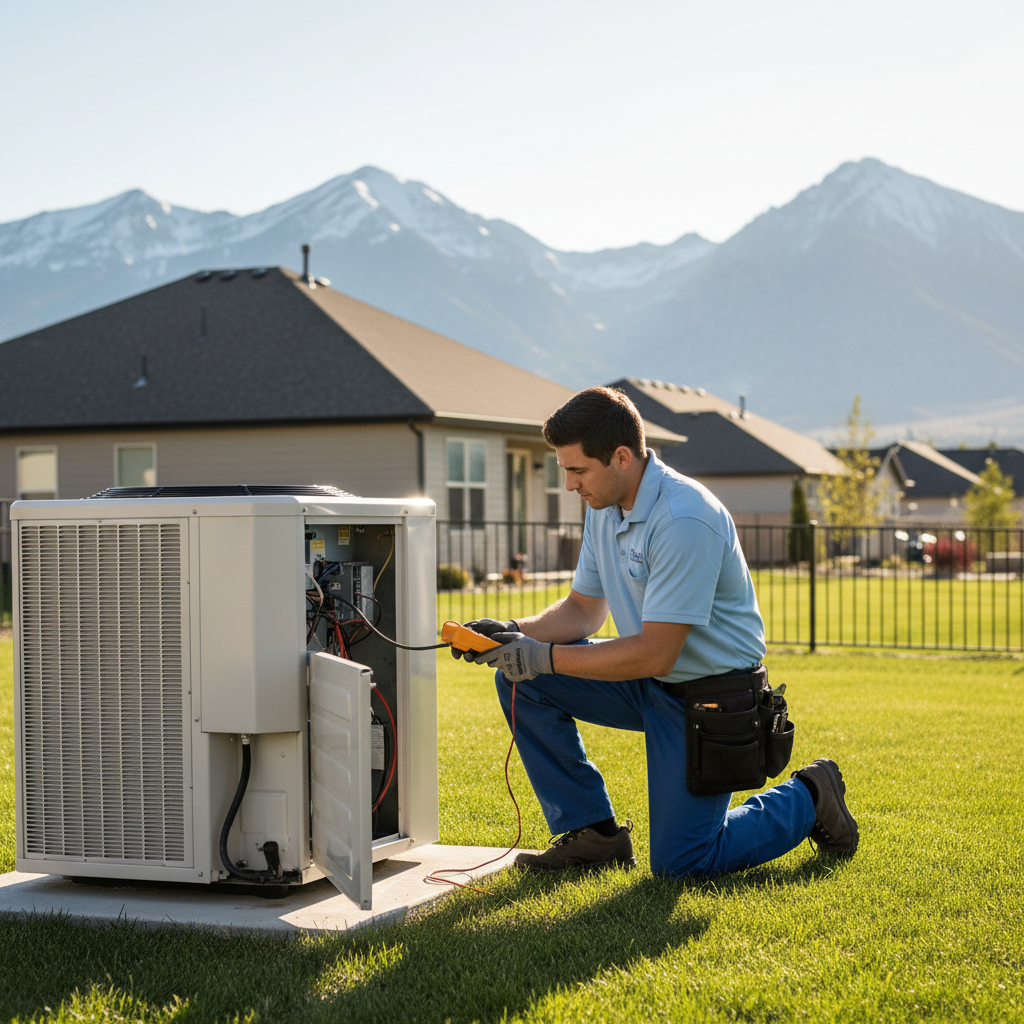
Utah homeowners pay $6,500 to $14,500 to replace an HVAC system in 2026, a wider range than the national average because altitude and climate extremes push both ends. Rocky Mountain Power’s wattsmart rebates (updated February 2026) and the federal IRA 25C tax credit can cut net costs by up to $4,000 on qualifying heat pump installations.
What Does HVAC Replacement Cost in Utah?
A complete HVAC replacement (furnace plus central AC, or a heat pump system with air handler) runs $6,500 to $14,500 for most Utah homes. Equipment-only replacements start lower. The table below shows 2026 cost ranges across the most common system types, including equipment and installation by a licensed contractor.
| System Type | Utah Cost Range | Typical Home Size |
|---|---|---|
| Central AC only | $3,500–$7,500 | 1,500–3,000 sq ft |
| Furnace only | $3,800–$8,200 | 1,500–3,000 sq ft |
| Full system (furnace + AC) | $6,500–$14,500 | 1,500–3,500 sq ft |
| Heat pump system | $8,000–$16,000 | 1,500–3,500 sq ft |
| Dual-fuel system (heat pump + gas backup) | $9,000–$17,500 | 1,800–3,500 sq ft |
For a 2,000 sq ft Utah home, expect $8,500 to $14,000 for a full system replacement. Salt Lake City pricing runs at or slightly above the statewide average. High-altitude communities like Park City and Brian Head can run 5 to 10% higher due to limited contractor availability and elevation-adjusted equipment sizing. St. George (Washington County) trends slightly lower on heating costs given the warmer desert climate. See the detailed Salt Lake City HVAC pricing guide for metro-specific data.
How Does Utah’s Climate Affect HVAC System Choice?
Utah’s arid continental climate (ASHRAE Climate Zone 5B) creates wide temperature swings that drive demand for both robust heating and cooling. Average July highs reach 101°F in Salt Lake City, while January lows drop to 21°F. Most Utah homes need a system that handles both loads effectively.
Altitude is a factor unique to Utah that most national cost guides ignore. The Wasatch Front sits at 4,000 to 5,000 feet above sea level. Thinner air at altitude reduces heat transfer efficiency, so contractors must apply elevation derating when sizing equipment. A furnace rated at 100,000 BTU at sea level delivers roughly 85,000 to 90,000 usable BTU at 5,000 ft. This means some Utah homeowners must buy a larger equipment tier than they would for the same home at lower elevation, adding $500 to $1,500 to system cost.
One local factor worth knowing: Salt Lake Valley inversion events trap fine particulate matter (PM2.5) at valley floor level during winter months. Sealed combustion (direct-vent) furnaces draw combustion air from outside the home rather than from indoor air. This reduces exposure to combustion byproducts during inversion season and is increasingly recommended by local contractors for air quality reasons. It is not a code requirement, but it is a meaningful differentiator for Salt Lake Valley homeowners.
Cold-climate heat pumps (qualifying models) work efficiently down to 5°F, which covers most winter conditions in Wasatch Front cities. They are less practical in high-altitude communities like Park City (6,900 ft elevation) and Brian Head, where a dual-fuel system pairing a heat pump with gas backup is a better fit.
What HVAC Rebates Are Available in Utah?
Rocky Mountain Power’s wattsmart program is Utah’s primary utility rebate for HVAC. As of the February 27, 2026 program update, qualifying air-source heat pumps are eligible for rebates up to $2,000. The IRA 25C tax credit stacks on top, adding another $2,000 for a qualifying heat pump, for a combined maximum of $4,000. See current program details at Rocky Mountain Power wattsmart and IRS/ENERGY STAR 25C credit details.
| Program | Rebate/Credit Amount | Key Requirement |
|---|---|---|
| Rocky Mountain Power wattsmart (heat pump) | Up to $2,000 | Program-eligible contractor; qualifying efficiency rating |
| Rocky Mountain Power wattsmart (central AC) | Qualifying central AC rebates available | Program-eligible contractor |
| Dominion Energy Utah (Questar Gas) | Efficiency rebates on high-AFUE furnaces | Verify current amounts at dominionenergy.com |
| IRA 25C tax credit (heat pump) | Up to $2,000 | ENERGY STAR certified; filed on federal return |
| IRA 25C tax credit (central AC or furnace) | Up to $600 | ENERGY STAR certified; filed on federal return |
Rebate stacking example: a homeowner installing a qualifying heat pump at $10,000 could apply $2,000 from Rocky Mountain Power wattsmart and $2,000 from the IRA 25C credit, reducing net out-of-pocket cost to $6,000. The contractor must be on Rocky Mountain Power’s Program-Eligible HVAC Contractor List for the wattsmart rebate to be processed. Ask about this before signing any quote. For a full breakdown of available IRA tax credits for HVAC, see the complete rebate guide.
Utah HVAC Costs by City — Salt Lake City, Provo, St. George, and More
Salt Lake City serves as Utah’s pricing baseline. Contractor density is highest along the Wasatch Front, which supports competitive pricing. Costs shift in both directions as you move away from the metro core.
| Utah City / Area | Typical Full System Cost | Key Market Factor |
|---|---|---|
| Salt Lake City | $7,000–$15,000 | Densest contractor market; strongest wattsmart rebate participation |
| Provo / Orem (Utah County) | $6,800–$14,500 | Similar to SLC; Utah County permit required |
| Ogden (Weber County) | $6,500–$13,500 | Slightly lower labor costs than SLC metro |
| St. George (Washington County) | $6,200–$13,000 | Warmer desert climate; higher cooling load; lower heating equipment spec |
| West Valley City | $7,000–$14,000 | Salt Lake County permit jurisdiction |
| Park City / Summit County | $8,000–$16,500 | High altitude; limited local contractors; elevation derating adds cost |
For a detailed breakdown of Salt Lake City pricing, contractor selection, and local permit specifics, see the Salt Lake City HVAC pricing guide. Use the free HVAC cost estimator to get a personalized range based on your home size and system type.
Do You Need a Permit to Replace HVAC in Utah?
Yes. Mechanical permits are required in all major Utah counties for HVAC equipment replacement. Requirements and fees vary by jurisdiction, but the underlying requirement is statewide.
Typical permit fees by county:
- Salt Lake County / Salt Lake City: $100–$250. Processing takes two to five business days. One inspection required after installation.
- Utah County (Provo, Orem): $100–$200. Similar timeline. Utah County issues permits at the city level for unincorporated areas.
- Weber County (Ogden): $75–$175. Inspection requirements similar to Salt Lake County.
- Washington County (St. George): $75–$200. St. George City issues permits for city limits; county issues for unincorporated areas.
- Summit County (Park City): $100–$250. Longer processing common in mountain areas with fewer inspectors.
Most licensed HVAC contractors pull the mechanical permit as part of their installation quote. If a contractor offers to skip the permit to lower the price, that is a red flag. An unpermitted HVAC system can void your homeowner’s insurance and create problems when selling your home.
Gas Furnace or Heat Pump — Which Is Right for Utah Homeowners?
Gas furnaces remain the standard in Utah due to cold winters and Dominion Energy’s natural gas infrastructure throughout the Wasatch Front. Heat pumps are growing as cold-climate models improve and Rocky Mountain Power rebates make them more cost-competitive.
Here is how the two options compare for Utah conditions:
- Gas furnace + central AC (traditional): Lower upfront cost in many cases. Proven performance at sub-zero temperatures. Natural gas prices in Utah are among the lower in the Mountain West. Good fit for high-altitude communities where heat pump efficiency degrades. No Rocky Mountain Power rebate available for gas-only systems.
- Cold-climate heat pump: Handles both heating and cooling in a single system. Qualifies for Rocky Mountain Power wattsmart rebate (up to $2,000) and IRA 25C credit (up to $2,000). Works efficiently down to 5°F for Wasatch Front conditions. Higher upfront cost before rebates. Less practical above 6,500 ft elevation.
- Dual-fuel system (heat pump + gas backup): Best of both worlds. Heat pump runs in moderate temperatures; gas furnace kicks in during extreme cold. Recommended for Park City, Brian Head, and other high-altitude communities. Qualifies for heat pump rebates if the heat pump component meets wattsmart requirements.
For Wasatch Front homeowners, the break-even on a heat pump versus a gas system has narrowed significantly with the combined Rocky Mountain Power and IRA credits. A typical payback analysis shows three to six years on the efficiency premium after rebates, depending on electricity and gas price trends. For a detailed comparison, see the full heat pump replacement cost guide and the furnace replacement cost guide.
How to Get Accurate HVAC Quotes in Utah
Get at least three quotes before committing to any contractor. Utah has a competitive contractor market along the Wasatch Front, and quotes for the same equipment and labor can vary by $1,500 to $3,000.
- Verify contractor is on Rocky Mountain Power’s Program-Eligible list. If you want the wattsmart rebate, the contractor must be enrolled in the program. Ask before any paperwork is signed. Rocky Mountain Power publishes the eligible contractor list at rockymountainpower.net.
- Request a Manual J load calculation. This is the ACCA industry standard for sizing equipment to your specific home. An oversized system short-cycles and wears out faster. An undersized system runs continuously and cannot maintain setpoint on the hottest or coldest days. Utah’s altitude makes accurate sizing especially important.
- Confirm the permit is included. Mechanical permits should be part of the installation quote, not an add-on. Ask which contractor or office pulls the permit and who handles the inspection scheduling.
- Ask about sealed combustion if you are in the Salt Lake Valley. Direct-vent furnaces are worth the modest cost premium for homeowners concerned about indoor air quality during inversion season.
- Compare financing options. Rocky Mountain Power and some Utah contractors offer on-bill financing or promotional rates for qualifying equipment. This can make a higher-efficiency system more accessible without a large upfront payment.
See the complete HVAC planning guide for a full quote checklist and what to ask every contractor before signing.
Frequently Asked Questions: Utah HVAC Replacement
How much does it cost to replace a furnace in Utah?
Furnace-only replacement in Utah typically runs $3,800 to $8,200 in 2026, including equipment and installation. A 96% AFUE gas furnace for a 2,000 sq ft home lands in the $5,000 to $7,500 range. High-altitude communities like Park City may pay 5 to 10% more due to limited contractor availability and elevation-adjusted sizing. Dominion Energy Utah offers efficiency rebates on qualifying high-AFUE units.
What is the Rocky Mountain Power wattsmart rebate for heat pumps?
Rocky Mountain Power’s wattsmart program offers rebates up to $2,000 for qualifying air-source heat pumps as of the February 27, 2026 program update. The contractor must be on Rocky Mountain Power’s Program-Eligible HVAC Contractor List. The rebate stacks with the IRA 25C tax credit, which adds up to $2,000 for qualifying heat pumps. Combined, that is up to $4,000 in savings on a qualifying installation.
Is a heat pump a good choice for Utah winters?
Modern cold-climate heat pumps work effectively down to 5°F, covering most winter conditions along the Wasatch Front. For Salt Lake City, Provo, and Ogden homeowners, a cold-climate heat pump is a practical option, especially with Rocky Mountain Power rebates improving the economics. For high-altitude areas like Park City (6,900 ft) or Brian Head, a dual-fuel system pairing a heat pump with a gas furnace backup is a better fit for the coldest days.
Do I need a permit to replace my HVAC system in Utah?
Yes. Mechanical permits are required for HVAC replacement in all major Utah counties. Permit fees run $75 to $250 depending on jurisdiction. Salt Lake County, Utah County, Weber County, and Washington County all require permits and inspections. Most licensed contractors include permit handling in their installation quote. Skipping the permit can void your homeowner’s insurance coverage and create resale complications.
How long does HVAC replacement take in Utah?
Most standard HVAC replacements in Utah take one to two days. A straightforward furnace or central AC swap typically takes four to eight hours. Full system replacements involving new ductwork can take two days. Permit approval adds two to five business days before installation can begin in most Utah counties. Spring and early fall are peak seasons; scheduling two to four weeks out is common. Off-season replacements in February or March typically have faster scheduling windows.
How does Utah’s altitude affect HVAC sizing and cost?
Utah’s elevation (4,000 to 6,000 ft on the Wasatch Front) reduces heat transfer efficiency in HVAC equipment. Contractors apply elevation derating when sizing systems: a furnace rated at 100,000 BTU at sea level delivers roughly 85,000 to 90,000 usable BTU at 5,000 ft. This can push homeowners into a larger equipment tier, adding $500 to $1,500 to system cost. Always confirm your contractor is running a Manual J load calculation that accounts for your specific elevation.
Utah City HVAC Cost Guides
For city-specific pricing, rebate details, and permit requirements, see the individual Utah city guide:
- Salt Lake City HVAC Replacement Cost: Salt Lake City metro pricing, Rocky Mountain Power wattsmart details, Salt Lake County permit fees
Use the free HVAC replacement cost estimator to get a personalized range for your home in under two minutes. See how Utah compares to neighboring states with the average HVAC replacement cost guide.