
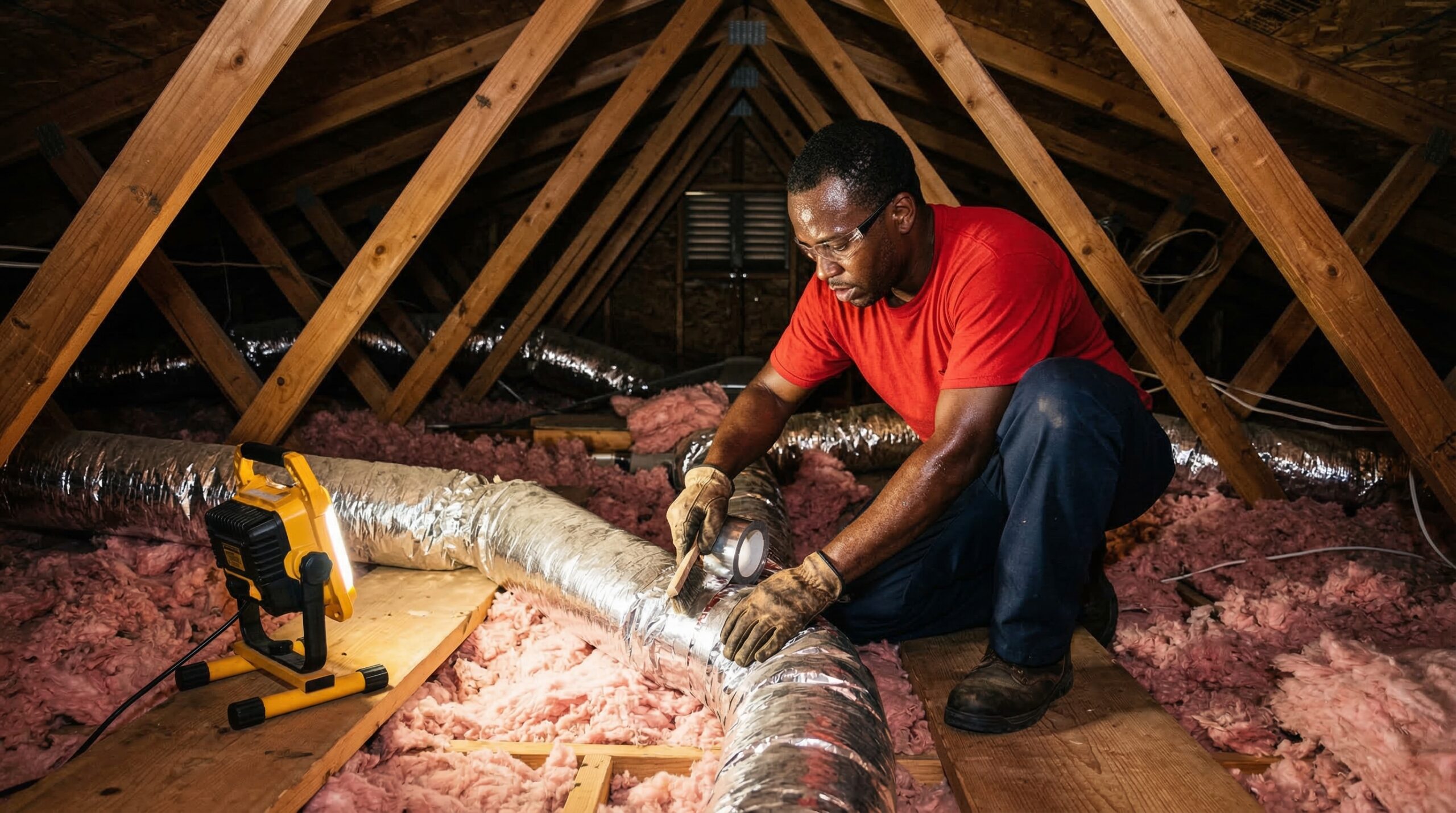
Las Vegas sits in one of the harshest HVAC climates in the country: IECC Zone 2B, a hot-dry desert where summer temperatures regularly hit 110°F and attics reach 150°F or more. Cooling dominates here year-round, and HVAC systems work harder and fail faster than in almost any other U.S. market. This guide gives you verified 2026 pricing, NV Energy PowerShift rebate amounts, permit requirements, and practical advice on when and how to replace your system for the best price.
TL;DR: Las Vegas HVAC replacement typically costs $5,400–$16,200 depending on system type and size. The climate is Zone 2B hot-dry desert: 70+ days above 100°F, minimal winter heating needs. NV Energy’s PowerShift program offers rebates up to $2,000 for qualifying heat pumps and up to $1,200 for high-efficiency AC units. A mechanical permit is required for all replacements ($100–$400). Get your instant estimate here.
What Does HVAC Replacement Cost in Las Vegas?
Las Vegas HVAC costs run about 8% above the national average, driven by the need for larger systems, premium attic labor, and high demand during the brutal May-through-September cooling season. Here are current installed price ranges for 2026:
| System Type | Low End | Mid-Range | High End |
|---|---|---|---|
| Central AC only (3–4 ton) | $4,200 | $7,800 | $13,500 |
| AC + Gas Furnace (full system) | $5,400 | $9,700 | $15,500 |
| Heat pump (full replacement) | $5,800 | $10,700 | $16,200 |
| Mini-split (1–2 zone) | $3,200 | $5,500 | $8,500 |
For a deeper look at national baseline costs by system type, see our AC replacement cost guide. Las Vegas sits well above that baseline for the reasons explained below.
Why Does HVAC Cost More in Las Vegas?
Five factors push Las Vegas installation costs above national averages:
- Oversized systems required. Las Vegas homes typically need 3–5 ton systems where a comparable square footage elsewhere might use 2–3 tons. Larger equipment costs more.
- Attic ductwork is grueling work. Most Las Vegas homes route ductwork through attics that reach 140–160°F in summer. Contractors start attic work at 5–6 AM to beat peak heat, and the physical demands carry a labor premium.
- High-SEER2 equipment pays off faster. With electricity running year-round for 70+ days above 100°F, efficiency upgrades recover their cost faster in Las Vegas than nearly anywhere else. Most homeowners opt for 16+ SEER2 systems, which cost more upfront.
- Permit required. Clark County and the City of Las Vegas require a mechanical permit for all HVAC replacements, adding $100–$400 to project costs.
- Summer surge pricing. Installations during peak cooling season (May–September) often carry a 5–10% premium versus off-season work in October through March.
How Do NV Energy PowerShift Rebates Work?
NV Energy’s PowerShift program pays cash rebates to Southern Nevada homeowners who install qualifying high-efficiency HVAC equipment. These are the primary financial incentives for 2026: the federal 25C tax credit was terminated for equipment installed after December 31, 2025. Here is what is currently available:
| Equipment | Efficiency Required | Rebate Range |
|---|---|---|
| Central AC | 16.0+ SEER2 | $300–$500 |
| Central AC | 18.0+ SEER2 | $500–$800 |
| Central AC | 20.0+ SEER2 | $800–$1,200 |
| Heat pump (base) | 15.0+ SEER2 | $500–$800 |
| Heat pump (ultra-efficient) | 19.0+ SEER2 / 9.0+ HSPF2 | $1,200–$2,000 |
| Duct sealing (professional) | Licensed contractor | $200–$400 |
| Smart thermostat | ENERGY STAR certified | $50–$100 |
Your contractor handles the rebate application in most cases. After approval, NV Energy mails the rebate check directly to you within 4–8 weeks. Two things worth knowing: rebate funds are budgeted annually and are distributed first-come, first-served. Historically, cooling equipment rebates are exhausted by mid-to-late summer. If you want to guarantee full rebate availability, schedule your installation between October and March. You can stack duct sealing ($200–$400) and a smart thermostat ($50–$100) on top of the equipment rebate for an additional $250–$500 in total savings.
Full program details: NV Energy PowerShift program.
Heat Pump or Central AC: Which Makes More Sense in Las Vegas?
Las Vegas winters are mild enough that a heat pump handles heating efficiently, and the higher rebate ($1,200–$2,000 vs. $800–$1,200 for AC) makes heat pumps financially attractive. That said, a few things to consider:
Heat pumps are designed to cool and heat efficiently, but extreme heat affects their cooling capacity. At 110°F outdoor temperatures, some standard heat pump models lose efficiency. If cooling efficiency and reliability in extreme heat is your top priority, a high-SEER2 central AC paired with a gas furnace may be the more reliable setup. If you want maximum rebate dollars and your home currently uses electric strip heat, a premium heat pump (19+ SEER2) gives you the best all-around value with the $2,000 rebate factored in.
Do You Need an HVAC Permit in Las Vegas?
A mechanical permit is required for all HVAC replacements in Las Vegas and Clark County. Here is the practical breakdown:
- Cost: $100–$400 for most HVAC replacement projects
- Processing time: 2–5 business days for permit issuance
- Inspections: 1 inspection required after installation
- Contractor requirement: You must use a Nevada-licensed HVAC contractor; homeowners cannot self-permit HVAC replacements
- Authority: Clark County Building Department (unincorporated areas) or City of Las Vegas Building and Safety Division
Any legitimate Las Vegas contractor will pull the permit for you and include it in their quote. If a contractor suggests skipping the permit to save money, that is a red flag: unpermitted work can void manufacturer warranties and create issues when you sell your home.
When Is the Best Time to Replace Your HVAC in Las Vegas?
October through March is the clear off-season window and the best time to replace. Reasons to schedule during these months:
- Contractor availability is higher; you can often schedule within days rather than 2–3 weeks
- No emergency pricing pressure
- NV Energy rebate funds are fully available (summer depletes them fast)
- Attic work is physically feasible in cooler conditions
- Installers can take more time to do a thorough job without the 5 AM heat race
Most emergency replacements happen in June and July when systems fail at the worst time. If your system is 12+ years old, replacing it proactively in October or November before summer gives you far more options on pricing, equipment selection, and scheduling.
Frequently Asked Questions
Do I need a permit to replace my HVAC system in Las Vegas?
Yes. Both the City of Las Vegas and Clark County require a mechanical permit for HVAC system replacements. Permit costs typically run $100–$400. Your licensed HVAC contractor will pull the permit and schedule the required inspection as part of the installation process. Work done without a permit can void manufacturer warranties and may require removal and re-inspection when you sell your home.
How do I claim NV Energy PowerShift rebates for a new AC or heat pump?
In most cases, your contractor handles the paperwork. The application requires proof of purchase, proof of installation by a licensed contractor, equipment specification sheets showing the efficiency rating, and a completed NV Energy rebate form. Once submitted and approved, NV Energy mails the rebate check directly to you in 4–8 weeks. You must be an active NV Energy residential customer to qualify. Rebate funds are limited and distributed first-come, first-served, so applying during the off-season (October through March) gives you the best chance of receiving the full rebate amount.
What size HVAC system do Las Vegas homes typically need?
Las Vegas homes generally require larger systems than comparable homes in milder climates. A 2,000 square foot home that might use a 2.5-ton system in Atlanta typically needs a 3.5–4.5-ton system in Las Vegas due to the extreme outdoor temperatures. Your contractor should perform a Manual J load calculation rather than simply sizing by square footage: the calculation accounts for insulation levels, attic temperatures, window placement, and local climate data. Oversized systems short-cycle and do not dehumidify effectively; undersized systems run constantly and fail faster.
Why does attic ductwork cost more to work on in Las Vegas?
Las Vegas attics reach 140–160°F during summer afternoons, which is physically dangerous working conditions. HVAC contractors schedule attic work starting at 5–6 AM to complete it before peak afternoon heat. The work windows are short, the conditions are physically demanding, and contractors charge accordingly. Sealing duct leaks in the attic (which NV Energy rebates $200–$400) is worth doing at the time of system replacement: ducts running through 150°F unconditioned space lose significant cooling capacity if they leak even a small amount.
How quickly do HVAC systems wear out in Las Vegas?
Faster than the national average. A system that lasts 15–20 years in a moderate climate often shows significant wear at 10–14 years in Las Vegas due to the extreme cooling season. The compressor runs for 70+ days above 100°F, refrigerant lines are stressed by thermal expansion and contraction, and attic ductwork degrades faster in extreme heat. If your system is 10 years or older and struggling to keep up in July and August, see our guide on signs your HVAC needs replacement to decide whether repair or replacement makes more sense before it fails completely during peak summer demand.
Are there income-based HVAC assistance programs in Las Vegas?
Las Vegas is the largest HVAC market in Nevada, but the state has two distinct climates. Reno and Northern Nevada run a Zone 5B high-desert climate with real winters and smaller average system sizes. For a comparison of Nevada’s two major markets, see our Reno HVAC replacement cost guide.
Yes. HELP of Southern Nevada and the Clark County Social Service Department offer HVAC repair and replacement assistance for income-qualifying homeowners. The federal Weatherization Assistance Program (WAP), administered through the Nevada Housing Division, provides free or reduced-cost HVAC upgrades for qualifying low-income households. These programs have limited funding and waitlists. Contact HELP of Southern Nevada at (702) 369-4357 or Clark County Social Service at (702) 455-4270 for eligibility information.