
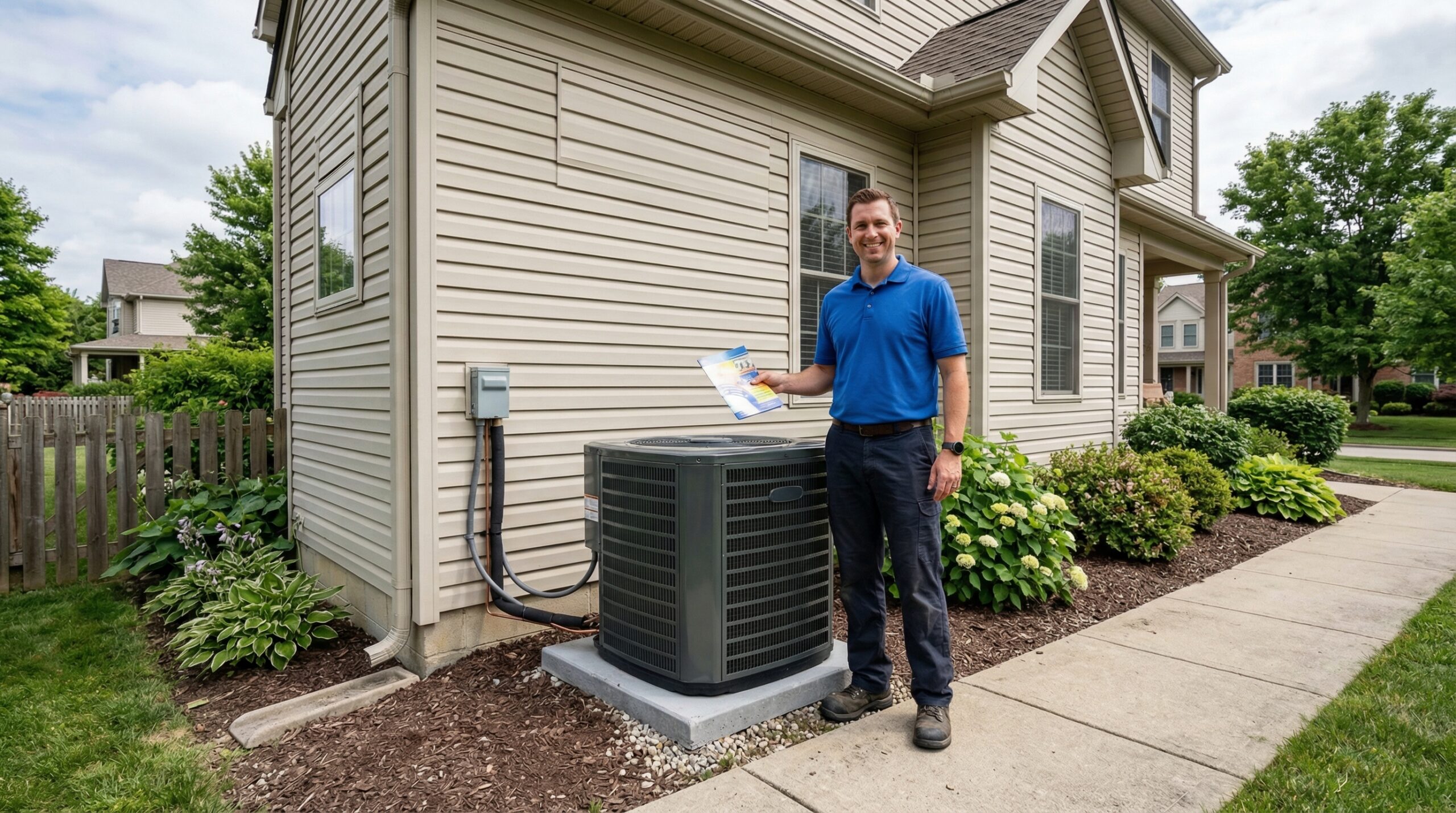
Your HVAC contractor just handed you a quote for a Heil system. The price looks reasonable, but you can’t verify it anywhere because Heil doesn’t sell at retail and has no public MSRP. That’s the Heil problem: it’s a contractor-only brand, which means most homeowners never chose it. The contractor chose it for them.
This guide gives you the outside data you need. You’ll find real installed cost ranges by system type and series, a plain-English breakdown of Performance vs. Ion Series, a side-by-side against Carrier (Heil’s parent company), and the current federal tax credit eligibility. If your contractor quoted Heil, these numbers tell you whether it’s fair.
TL;DR: Heil HVAC systems cost $3,000–$9,000 installed in 2026, depending on series and system size. Heil is an ICP brand owned by Carrier Global, with the same factory roots at a lower price point. Performance Series ACs run $3,000–$7,000; the Ion Series runs $5,000–$9,000. Qualifying units are eligible for up to $600 in federal tax credits (or up to $2,000 for heat pumps) through December 31, 2025. Use our free HVAC cost estimator for a personalized range.
How Much Does a Heil HVAC System Cost?
Heil HVAC installed costs range from $3,000 to $9,000 for a central AC unit, and up to $16,000 for a full system (AC plus furnace), according to HomeGuide (2025). Where you land in that range depends on the product series, system size, and what your local labor market charges. The table below shows the full range by system type.
| System Type | Entry (Performance) | Mid (Performance) | Premium (Ion Series) |
|---|---|---|---|
| Central AC | $3,000–$5,500 | $3,700–$6,500 | $5,000–$9,000 |
| Gas Furnace | $2,500–$4,500 | $3,500–$5,500 | $4,500–$7,500 |
| Heat Pump | $3,500–$6,000 | $4,500–$7,500 | $6,000–$10,000+ |
| Full System (AC + Furnace) | $5,500–$9,500 | $7,500–$12,000 | $10,000–$16,000 |
All prices above are fully installed. They include equipment and standard labor for a straightforward swap-out on an existing duct system. They do not include ductwork replacement ($270–$500 per run), electrical panel upgrades, or permit fees ($100–$250). If your home needs any of those, add those costs on top.
For a side-by-side look at where Heil fits against other brands, see our AC replacement cost guide and the full average HVAC replacement costs across all major brands.
Heil Performance Series vs. Ion Series — Which One Did Your Contractor Quote?
Heil sells two main AC product lines: the Performance Series (budget-to-mid range, $3,000–$7,000 installed) and the Ion Series (premium, $5,000–$9,000 installed), per Modernize (2026). The series you get depends entirely on what your contractor stocks and recommends. Here’s how they compare.
| Feature | Performance Series | Ion Series |
|---|---|---|
| SEER2 Rating | Up to 17 | Up to 19–21 |
| Compressor Type | Single-stage or two-stage | Variable-speed |
| Smart Home / Wi-Fi | No | Yes (Smart Sense technology) |
| Noise Level | Standard | Quieter (variable-speed motor) |
| Dehumidification | Standard | Enhanced |
| Installed Cost Range | $3,000–$7,000 | $5,000–$9,000+ |
| Best For | Budget-conscious homeowners, simple replacements | Hot/humid climates, smart home users, efficiency-focused buyers |
The Performance Series covers five models, from the entry N4A4S (16 SEER2, single-stage) up to the N4A7T (17 SEER2, two-stage). The Ion Series flagship is the HVA9, a variable-speed unit rated up to 21 SEER2 with Smart Sense Wi-Fi control built in.
The payback math on upgrading from Performance to Ion: the Ion Series typically saves 15–25% on cooling costs versus a 16 SEER2 single-stage unit, but costs $1,500–$2,500 more upfront. In a hot climate where the AC runs five or more months a year, you’ll typically recover that gap in 6–9 years. In milder climates, the payback period stretches past 10 years and may not be worth it.
What Drives the Cost of a Heil HVAC Installation?
System size is the biggest single cost driver. A 1.5-ton unit for a small home costs $3,000–$5,500 installed; a 5-ton unit for a large home runs $4,500–$9,000. The table below maps home size to tonnage and installed cost range.
| Unit Size | Home Size (sq ft) | Installed Cost (Performance) |
|---|---|---|
| 1.5 ton | 600–900 | $3,000–$5,500 |
| 2 ton | 900–1,200 | $3,300–$5,800 |
| 2.5 ton | 1,200–1,500 | $3,500–$6,000 |
| 3 ton | 1,500–1,800 | $3,700–$6,500 |
| 3.5 ton | 1,800–2,100 | $4,000–$7,000 |
| 4 ton | 2,100–2,400 | $4,300–$8,000 |
| 5 ton | 2,400–3,000 | $4,500–$9,000 |
Beyond size, these factors add to your total:
- SEER2 tier: Each efficiency step up adds $300–$800 to equipment cost.
- Labor rates: Urban markets and high-demand regions charge $800–$1,500 for installation labor; rural areas may run $500–$900.
- Permit fees: $100–$250 for AC replacement; up to $1,500 if ductwork is also permitted.
- Ductwork condition: Damaged or undersized ducts add $270–$500 per run.
- Warranty registration: Register your unit within 90 days of installation. The 10-year limited parts warranty drops to 5 years if you miss the window. This is a hidden cost risk that’s easy to avoid.
Use our free HVAC cost estimator to get a personalized installed cost range based on your home size, climate zone, and system type.
Heil vs. Carrier — Same Family, Different Price Tag
Carrier acquired International Comfort Products (ICP) in 1999. Since then, Heil and Carrier have shared manufacturing infrastructure, refrigerant systems, and core engineering under the Carrier Global umbrella. The result: Carrier charges $2,000–$6,000 more than Heil for comparable efficiency tiers, even though the engineering roots are the same (HomeGuide, 2025).
Here’s how the two brands compare on installed cost by tier:
| Tier | Heil Installed Cost | Carrier Installed Cost | Price Gap |
|---|---|---|---|
| Entry (budget) | $3,000–$5,500 | $4,000–$7,000 | ~$1,000–$2,000 |
| Mid-range | $4,500–$7,000 | $6,000–$10,000 | ~$2,000–$3,000 |
| Premium (variable-speed) | $6,000–$9,000 | $9,000–$15,000 | ~$3,000–$6,000 |
What most homeowners don’t realize: Heil is just one brand in a larger ICP family. Arcoaire, Day & Night, Keeprite, Tempstar, and Comfortmaker are all ICP brands, all manufactured in the same U.S. facilities (Tennessee, Oklahoma, and Texas). If your contractor quoted any of those names, it’s the same product as Heil at a different label. The brand name on the box doesn’t change the components inside.
The real differences between Heil and Carrier are noise level (Carrier’s premium line runs quieter, as low as 51 decibels), brand-name resale value perception, and dealer network density. If you’re staying in the house long-term and efficiency is the priority, Heil delivers the same core performance for less. If you’re selling in the next five years and want a recognizable name on a home inspection report, Carrier may be worth the premium.
For a full breakdown of Carrier’s model tiers and pricing, see our Carrier HVAC pricing guide.
Heil vs. Goodman — Budget-to-Mid Tier Comparison
Goodman is the most common budget alternative homeowners consider alongside Heil. Both brands occupy the $3,000–$7,000 installed range for standard AC units and offer 10-year limited parts warranties with registration. The key difference isn’t price: it’s where you can buy.
Goodman is sold at retail through Johnstone Supply, HVAC distributors, and sometimes through online marketplaces, which means homeowners can price-check equipment separately from labor. Heil is contractor-only. When your contractor quotes Heil, you’re trusting their markup without a public baseline. That’s not a knock on Heil’s quality; it’s a transparency gap that’s worth knowing about before you sign.
| Feature | Heil | Goodman |
|---|---|---|
| Installed Cost Range (AC) | $3,000–$9,000 | $3,200–$6,500 |
| Max SEER2 | Up to 21 | Up to 24.5 |
| Warranty (with registration) | 10-year parts + replacement on select models | 10-year parts |
| Retail Availability | Contractor-only | Available through distributors |
| Parent Company | Carrier Global (ICP) | Daikin Industries |
Goodman’s “No Hassle Replacement” warranty equivalent is less comprehensive than Heil’s on premium Ion Series models. If your contractor is comparing these two brands, push for the Heil Ion Series if you’re in a hot climate and want the variable-speed efficiency. If budget is the only factor and a simple replacement is all you need, both are solid choices at similar price points.
Federal Tax Credits for Heil HVAC Systems
Qualifying Heil units are eligible for IRS Section 25C Nonbusiness Energy Property Credits under the Inflation Reduction Act, per Heil’s official tax credit page. The credits are available for equipment purchased and installed through December 31, 2025.
| Equipment Type | Efficiency Threshold | Maximum Credit |
|---|---|---|
| Split AC (Section 25C) | SEER2 ≥17.0, EER2 ≥12 | Up to $600 |
| Packaged AC (Section 25C) | SEER2 ≥16.0, EER2 ≥11.5 | Up to $600 |
| Gas Furnace (Section 25C) | ≥97% AFUE | Up to $600 |
| Split Ducted Heat Pump (Path A) | SEER2 ≥16.0, HSPF2 ≥8.5 | Up to $2,000 |
| Packaged Heat Pump | SEER2 ≥15.2, HSPF2 ≥7.2 | Up to $2,000 |
The credit equals 30% of the installed cost, up to the caps above. You claim it by filing IRS Form 5695 with your federal tax return for the year the equipment was placed in service. The credit is non-refundable: it reduces your tax liability but doesn’t generate a refund if it exceeds what you owe.
Beyond federal credits, many utilities offer rebates for high-efficiency HVAC upgrades. Ask your contractor to confirm the unit’s SEER2 and EER2 ratings before installation, then check your state’s DSIRE database and your local utility’s website for additional incentives that stack with the federal credit.
For context on heat pump pricing and incentives across all brands, see our heat pump replacement costs guide.
Is a Heil HVAC System Worth It?
Heil is a solid mid-range choice for homeowners whose contractor already stocks ICP equipment. You’re getting Carrier-engineered components at a lower price point, a legitimate 10-year warranty (if you register within 90 days), and availability of service parts through the ICP network. The brand’s track record is real: some homeowners report Heil units running 25–29 years without major issues (r/hvacadvice, 2024).
Real-world pricing from r/hvacadvice threads in 2024–2025 confirms full-system quotes (AC + furnace) in the $7,000–$9,000 range for mid-tier Heil equipment in most U.S. markets. Single-unit AC replacements with Performance Series equipment come in at $4,500–$6,500 for a 3-ton unit in the same threads. Those figures align with the HomeGuide and Modernize ranges above, which means a Heil quote in that territory is not padded.
When Heil is the right call:
- Your contractor is an authorized ICP dealer and Heil is their primary line.
- You want Carrier-level engineering without the Carrier-level price tag.
- You’re in a moderate climate where you don’t need the highest-efficiency Ion Series to get a good payback.
- You’re doing a simple like-for-like replacement and want to keep costs reasonable.
When to ask about alternatives: If you’re in a hot climate and run the AC six-plus months a year, the Carrier Infinity or Trane XV series may earn back their premium through lower utility bills. And if you want to comparison-shop equipment pricing, ask whether your contractor also quotes Goodman or Lennox so you have a real baseline.
Regardless of brand, schedule an annual tune-up ($70–$200) to extend system life and maintain warranty coverage. A 15-to-20-year lifespan is typical for well-maintained Heil equipment, according to HomeGuide (2025).
Frequently Asked Questions About Heil HVAC Replacement Cost
Who makes Heil HVAC systems?
Heil HVAC systems are manufactured by International Comfort Products (ICP), a wholly-owned subsidiary of Carrier Global Corporation. ICP also produces Arcoaire, Day & Night, Tempstar, Keeprite, and Comfortmaker, all sharing components and engineering across brands. U.S. manufacturing facilities are located in Tennessee, Oklahoma, and Texas.
Is Heil as good as Carrier?
Heil and Carrier share the same parent company (Carrier Global) and similar engineering roots. Carrier units are generally quieter and carry stronger brand recognition. Heil costs $2,000–$6,000 less installed for comparable efficiency tiers, making it a strong value for homeowners who don’t need the Carrier name on the unit.
Where can I buy a Heil HVAC system?
Heil is sold exclusively through licensed HVAC contractors. It is not available at Home Depot, Lowe’s, or any retail outlet. If your contractor recommended Heil, they are an authorized ICP dealer. You cannot purchase equipment separately and hire a different installer without potentially voiding the manufacturer warranty.
Does Heil qualify for federal tax credits?
Yes. Qualifying Heil units are eligible for IRS Section 25C tax credits through December 31, 2025. Qualifying split air conditioners (SEER2 17.0+, EER2 12+) earn up to $600. Qualifying heat pumps earn up to $2,000. File IRS Form 5695 with your federal return to claim the credit. Ask your contractor to confirm the unit’s efficiency ratings qualify before purchase.
How long does a Heil HVAC system last?
A properly maintained Heil central AC or heat pump lasts 15 to 20 years. Gas furnaces typically last 20 to 25 years. Annual tune-ups ($70–$200) extend system life significantly. Register your unit within 90 days of installation to secure the 10-year limited parts warranty rather than the default 5-year coverage.
If your contractor quoted a Heil system, the ranges in this guide give you a benchmark to evaluate it. Performance Series quotes in the $3,000–$7,000 range for AC, and $5,000–$9,000 for Ion Series, are fair market in 2026. Full system replacements (AC plus furnace) in the $7,500–$12,000 range are typical for mid-tier equipment in most U.S. markets.
Register your unit within 90 days of installation to lock in the 10-year warranty. Check eligibility for the 25C tax credit before the December 2025 expiration. And run the numbers through our free HVAC cost estimator for a personalized installed cost range based on your home size, climate, and system type.